Literature
A Report on Mostafa Malekian's Lecture at a Discussion of Somerset Maugham's The Razor's Edge
In his review of The Razor's Edge, Mostafa Malekian stresses the importance of reading the works of the teacher of the 'art of living' and, by introducing the concept of the 'life image,' examines the difference between a successful life based on comparison and a fulfilling one.
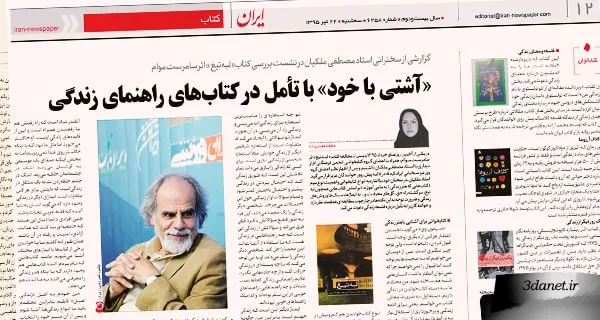
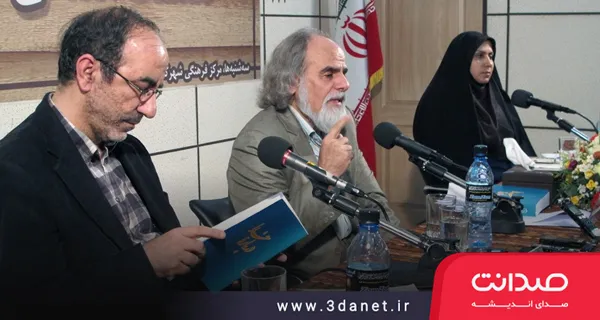
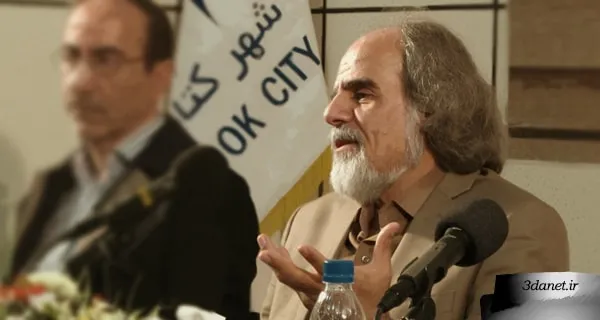
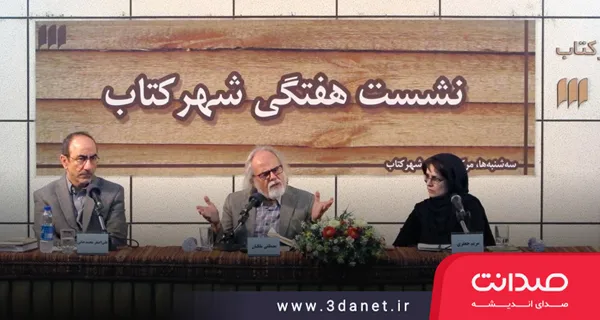
On one of the last days of Khordad 1395 (June 2016), after reading Somerset Maugham's The Razor's Edge, we had a meeting with Professor Mostafa Malekian along with members of the Afraz Cultural Association's book club. Following comments from the group members, he delivered a speech, which is presented below for our dear readers. In his talk, Professor Malekian, referring to different types of reading and the importance of the third type (books that teach us the art of living), based on books such as The Razor's Edge, The Way of the Wanderer, Flowers of Wisdom, etc., considers the images, styles, and methods of living and the necessity of paying attention to these points within the framework of purposeful study, and invites readers to reflect on the philosophy of life.
.
A Report on Mostafa Malekian's Lecture at a Discussion of Somerset Maugham's The Razor's Edge
"Reconciliation with the Self" through Reflection on Guidebooks for Life
Reading to Become Acquainted with the Art of Living"Simone Weil" says the first expectation everyone has of another is attention. Acceptance is optional, but attention is something else. I ask my friends to pay attention to my words, but I do not ask for acceptance, because one cannot expect human beings to be made alike. I believe we have three categories of reading in life. The first category, we read out of the necessity of livelihood. That is, to continue living and enjoy independence, we need an income so that our lives can both continue quantitatively and, morally speaking, turn us into independent human beings. For income, I need a job and a profession, and for a job and profession, I must specialize in a science, technique, or art so that I can have a job and profession. Now, for this specialization, I must study the books related to it. There is no escaping this type of reading, and it is also widely practiced in our country. Certainly, in book clubs, due to the diversity of jobs and professions, this type of book is not studied, and it is the second and third types of books that distinguish countries in terms of reading volume. The second category is books read for pleasure. Human beings seek pleasure in life. Whenever any of a human being's desires are satisfied, the person experiences pleasure. One of these desires is the sense of curiosity. One type of curiosity is scientific curiosity. Scientific curiosity can be about history, astronomy, or other subjects. Depending on various factors that constitute my personality and character, these second-category books also differ among individuals. Genetics, upbringing, age, mental experiences, and psychological type make up my personality and character, and this makes people's subjects of curiosity differ from one another. This type of reading also exists more or less in the lives of us Iranians, but not to the extent of the first category. The third category consists of books that, in my opinion, suffer from the greatest deficiency and lack of attention in terms of reading, and they neither bring me income nor give me pleasure, but rather teach the art of living. Because the art of living is a very complex art. We believe in instruction for every art, like playing an instrument, but how is it that we do not believe in instruction for the art of living! By learning the art of living, we can endure less pain and suffering ourselves, and also impose less pain and suffering on others. The study of these books has been becoming more prevalent in the West since the 1960s, and they are referred to by various terms. Sometimes they are called practical philosophy, sometimes philosophy of life, sometimes philosophy in life, sometimes philosophy for life, and sometimes books of wisdom and sagacity. "Living sagaciously" means living in such a way that the benefit of living is maximized and its cost is minimized.
The Razor's EdgeThere is much to read and hear about the "art of living"; its first point is what your "image" of life is. To date, in world history, we have had 25 images of life. An image means what metaphor you see as the most fitting metaphor for your life, and you see life as that. In that case, your image creates questions that differ from another person's metaphor for their own life. For example, one person's metaphor for life is a game. For someone who sees life as a game, their entire effort is to live in such a way that their probability of winning in life increases and their probability of losing decreases, and all their questions about life revolve around these probabilities. Another person sees life as a puzzle; this person's questions will certainly differ from the previous person's, and their questions about life are: what guides exist in life that, by using them, one can solve this puzzle? Another person sees life as a journey. They pay attention to what vehicle to travel with in life, which roads to take, where the guide signs of life are installed, and which guides have been good guides on this journey and which have not been good guides. Another image is that life is hell, so how should I live to suffer less torment? Writers in this field teach ways of numbing oneself so that, through numbness, we suffer less torment, and some others teach ways of escaping this hell. Some others see life as a race and pay attention to their rivals in order to win the race. Yet others see life as a seesaw, where for one to rise higher, someone else must come down. Another person sees life as a theater, and their questions about life are how they can play their role in the most convincing way so that the viewers of their life perceive that they are truly living well. Thus, each of these images creates different questions about life. There are those who truly define life through theoretical comparison and practical competition. That is, throughout life, they think they must constantly compare themselves with others and be in competition with them. It is here that they seek ways to increase wealth, political power, social prestige, status and position, fame, and popularity. In the book "The Razor's Edge," what matters to Isabel, in fact, is what others think of her, and that others see her success in acquiring more wealth, power, status and position, and social power. This is called living for greater success. On the other hand, Larry sees life in greater contentment. Fame, wealth, academic knowledge, etc., are not important to him. Each person must determine their own image for themselves, and no book or leader can specify which image I should pursue. The most important question we must ask ourselves is: do we want a successful life or a contented life? A successful life lies in surpassing others in one or more of the seven social desirables. These seven desirables are wealth, political power, social prestige, status and position, fame, popularity, and academic knowledge. Those who pursue success—and I do not intend to condemn them—constantly see themselves in comparison with others. This life has both benefits and costs. Therefore, one must constantly weigh the costs and benefits of this type of life, lest the cost exceed the benefit. In this method, first, one must not take a path where the cost exceeds the benefit, and if we are forced onto such a path and realize midway that the cost exceeds the benefit, we must take action to correct it. But a person living based on contentment forgets the competition with others and only pays attention to whether they themselves are satisfied with their situation, not, of course, in the sense of a dissolute life. In this life, one must make peace with oneself and be in friendship, replacing the equation of "competition with others" with "peace with oneself."
A Wanderer on the Path of Truth
There is another kind of life that Francis of Assisi addressed in his book The Wanderer on the Path of Truth. He sees life as a play in which I must act. I must see what the playwright has asked of me. Francis considers the playwright to be God, and because he considers Christ to be the Son of God and Christ bore the cross his entire life, he said I too must be like that, taking no pleasure in life and living with pain and suffering. I drink water to stay alive, but I drink lukewarm water so as not to take pleasure, for God wishes to pass us through the heart of pain and suffering. Ghazali, in his book The Revival of the Religious Sciences, also pointed to this method. He said God has asked me to sustain life temporally, so I must eat, but not food from which I take pleasure and which causes my attachment to this world. Ghazali said God wanted me not to become attached to this world, but Francis said God asked me to live with pain and suffering. This, too, is an image of life. Of course, from our perspective, the costs of Francis's life may seem high, but he is so joyful that even his walking is accompanied by dancing, and this is one of the benefits of his life. He eats ashes, but he was not like us, who, though we do not sprinkle ashes on our food, as soon as the sound of music reaches our ears, tears well up in our eyes. Tears welling up in the eyes is a sign of a problem in life, the reason for which differs for each person. There is another image in life that says human beings are born only to be a guide to salvation. Such people are constantly seeking to build a society where justice, freedom, security, and welfare exist. As I said, by reading certain books, we become acquainted with different images, like the books I mentioned. Of course, there are also books that, while introducing the art of living, also give us pleasure. I myself believe in the principle of the "authentic life," so I believe one must become acquainted with various kinds of lives and then choose one's own path. I also recommend reading these books to friends. One is the book Flowers of Knowledge by Éric-Emmanuel Schmitt, whose first story describes an ascetic life. The second story takes place within the Islamic faith, and the third story (Oscar and the Lady in Pink) takes place within the Christian faith; I strongly recommend reading the third story to friends. My next recommendation is the story of Emmanuel the Good (the Martyr) from the book Abel and several other stories by Miguel de Unamuno. In closing, I will mention this point: everyone has ambiguities and problems in their life that they themselves are aware of, but one cannot address them by being entangled in the flow of daily life. It is like a person driving their car and hearing a noise from it, but while driving, they cannot repair it. They must pull over, stop, and repair their car. A person might, by pausing for a week, find their life's path, and another by pausing for 10 years. Also, there is no guarantee that my image will remain the same throughout my entire life. My image at 25 is different from at 50. What is important is that in each period, I am happy and content with my own image.
.
.
PDF file of the Iran newspaper report on Mostafa Malekian's lecture at the discussion of the book The Razor's Edge by Somerset Maugham
.
.
A Report on Mostafa Malekian's Lecture at a Discussion of Somerset Maugham's The Razor's Edge
"Reconciliation with the Self" through Reflection on Guidebooks to Life
Iran Newspaper / Issue 6258 / Tuesday, July 12, 2016
.
.

Discussion0 comments
No comments yet; let yours be the first voice.