Religion
Eighteenth Anniversary Celebration of the Darolekram Institute with Mohammad-Ali Movahed, Mostafa Malekian, and Mohammad-Reza Shafiei Kadkani
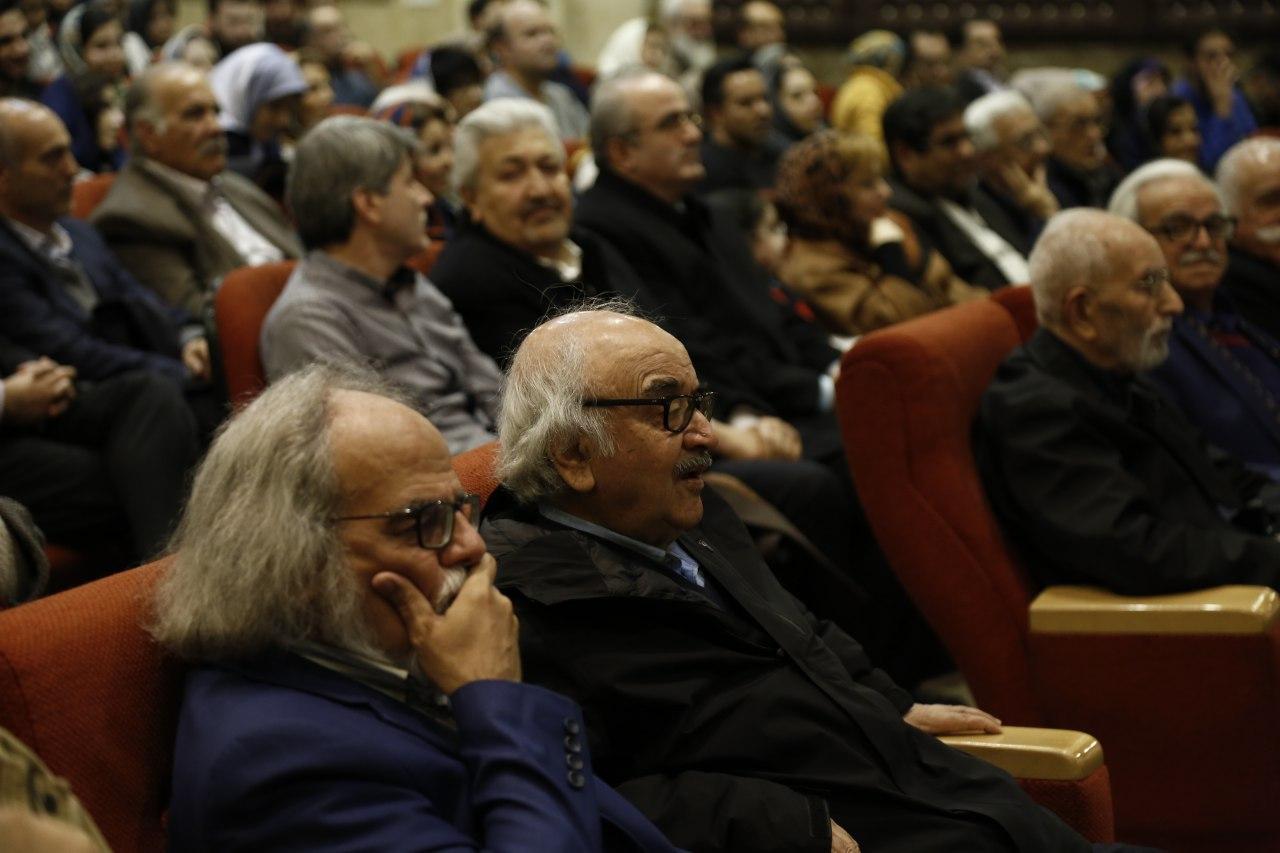
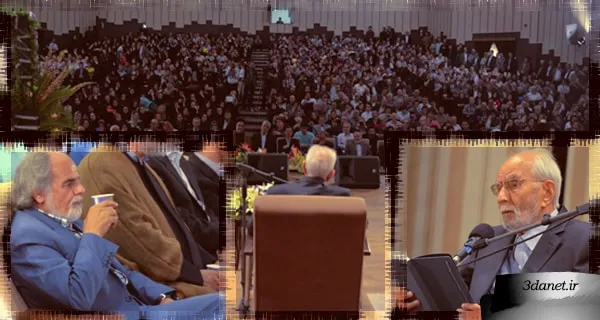
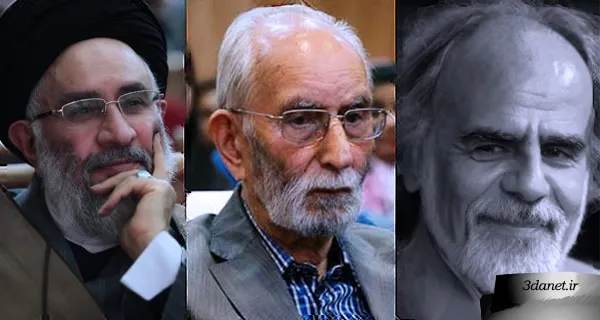
At the 18th anniversary of the Dar al-Ekram Charity, Mohammad-Ali Movahed spoke on generosity and self-sacrifice, while Mostafa Malekian examined the psychological barriers to turning goodwill into good deeds, with Mohammad-Reza Shafiei Kadkani in attendance.

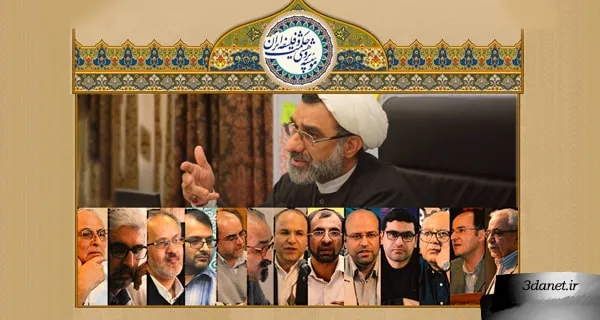
Darolekram Institute: We celebrate the kindness of your warm hands, which now fragrance the land from Mashhad to Shush, from Zahedan to Azarshahr in Azerbaijan. We celebrate the 18th birthday of the institute... We will have an afternoon tea together, listen to the local music of our country, honor our honor-winning students, dear supporters, founders, and helpers, and enrich our gathering with wisdom and kindness through the words of the esteemed professors Mohammad-Ali Movahed and Mostafa Malekian.
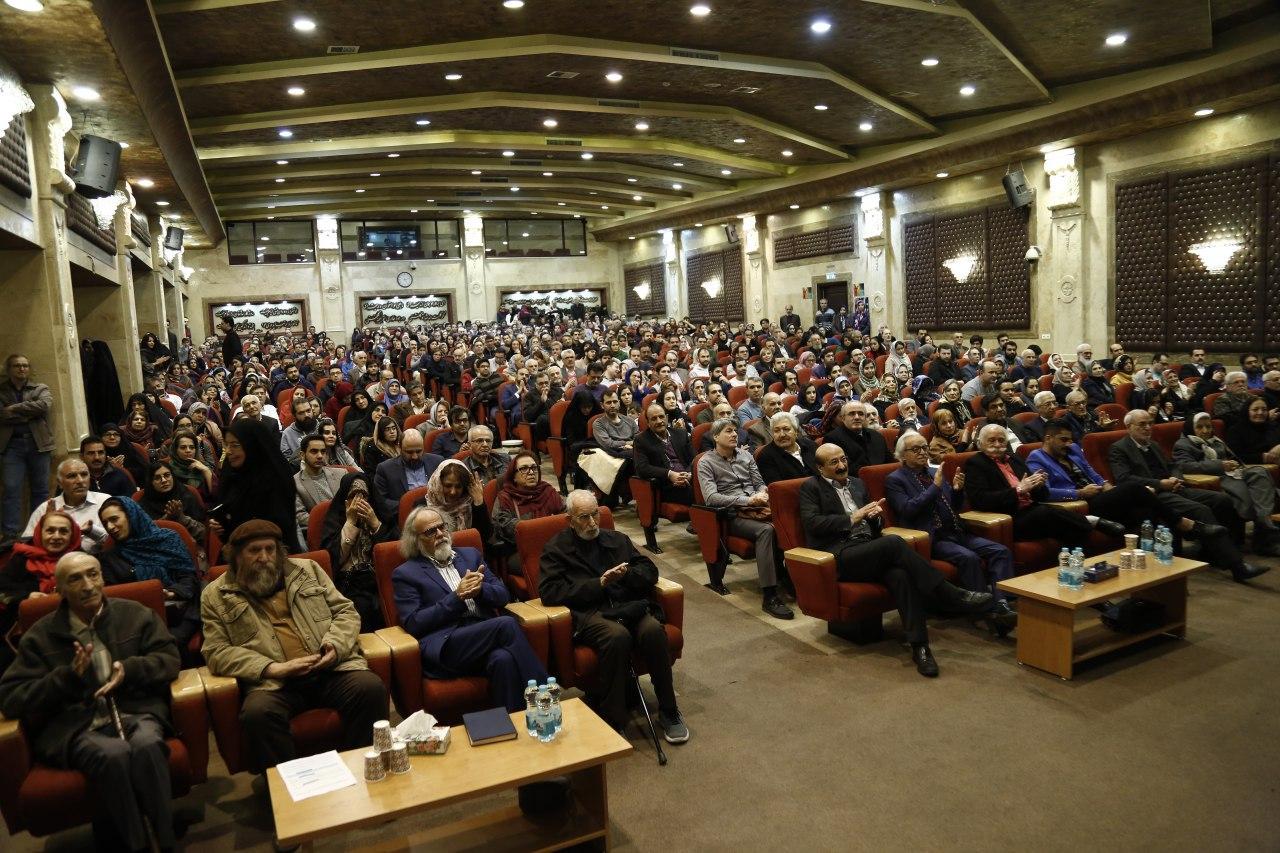
Darolekram Institute, supporting the education of over 4,000 students without effective guardians who are at risk of dropping out, with 16 branches in 50 cities across the country.
.
.
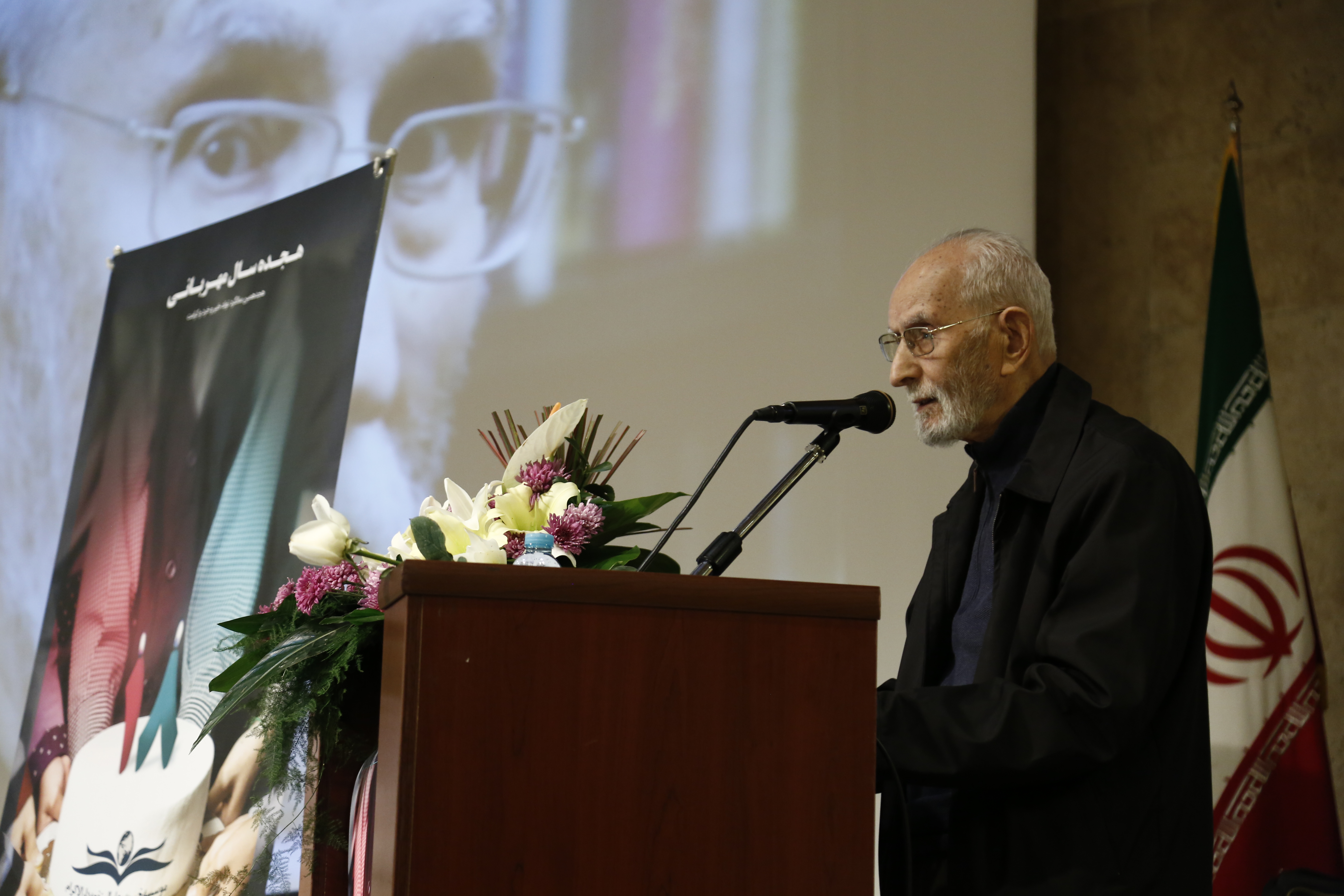
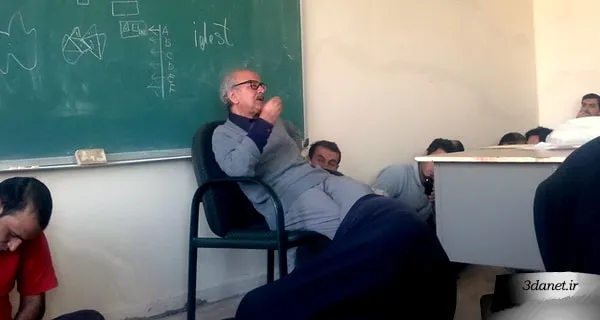
Mohammad-Ali Movahed's speech at the 18th anniversary celebration of the Darolekram Institute on the importance of charity and self-sacrifice
Audio of Mohammad-Ali Movahed's speech
Given my limitations and my own state of illness, I preferred to write a few lines, if I can read them. My problem is not just speaking; reading is also a difficulty. Giving away wealth, or charity, is the key to salvation, emphasized throughout the Holy Quran. In the last part of the Quran, there are surahs whose content is entirely or mainly concerned with charity. In Surah Al-Baqarah, the longest surah of the Quran, the exhortation to charity is repeated from beginning to end like a refrain at short intervals. Charity leads to spiritual elevation when it embodies the meaning of self-sacrifice, and self-sacrifice, in Quranic terminology, is overcoming the ego and preferring another over oneself. This can only be realized when charity is given throughout one's lifetime, not at its end—that is, when you yourself still have an attachment to wealth, you give charity. If you have wealth and at the end of your life you bequeath that a certain amount of your property be spent on a good cause, this is of course good and its reward is not lost before God, but it does not affect your spiritual elevation or the purification and refinement of your soul. Should charity be given in secret? So that if the right hand gives, the left hand knows nothing of it? Yes, such charity has greater virtue. But announcing charity and revealing the name of the donor, especially in gatherings like the one we are attending today, also encourages others and promotes goodness. Verse 271 of Surah Al-Baqarah states: "If you disclose your charitable expenditures, they are good;" that is, announcing participation in a good deed is good and has social benefit, but "but if you conceal them and give them to the poor, it is better for you." Charity given alone, without anyone knowing, is more beneficial for the donor themselves, and "He will remove from you some of your misdeeds [thereby]. And Allah, with what you do, is [fully] Acquainted," emphasizing its effect on the purification of the soul and the cleansing of one's inner self. In four sections of the Holy Quran, secret charity and open charity are recommended together and simultaneously, including in verse 274 of Surah Al-Baqarah, that is, almost immediately after verse 271 which we mentioned: "Those who spend their wealth [in Allah's way] by night and by day, secretly and publicly—they will have their reward with their Lord. And no fear will there be concerning them, nor will they grieve." In the "Darolekram Institute," which I have the honor of participating in, the way is open for both forms. Those with good intentions can act in either of the two ways, or both simultaneously. The founder of Darolekram and several of his companions are old friends of mine, who spent their years of service in sensitive management positions in the oil industry with honesty and a good reputation, and after retirement, devised the blessed plan of such an important institute, whose 18th anniversary you celebrate today. May God's hand be with them, and the resolve of benevolent, open-handed well-wishers be their aid.
.
.
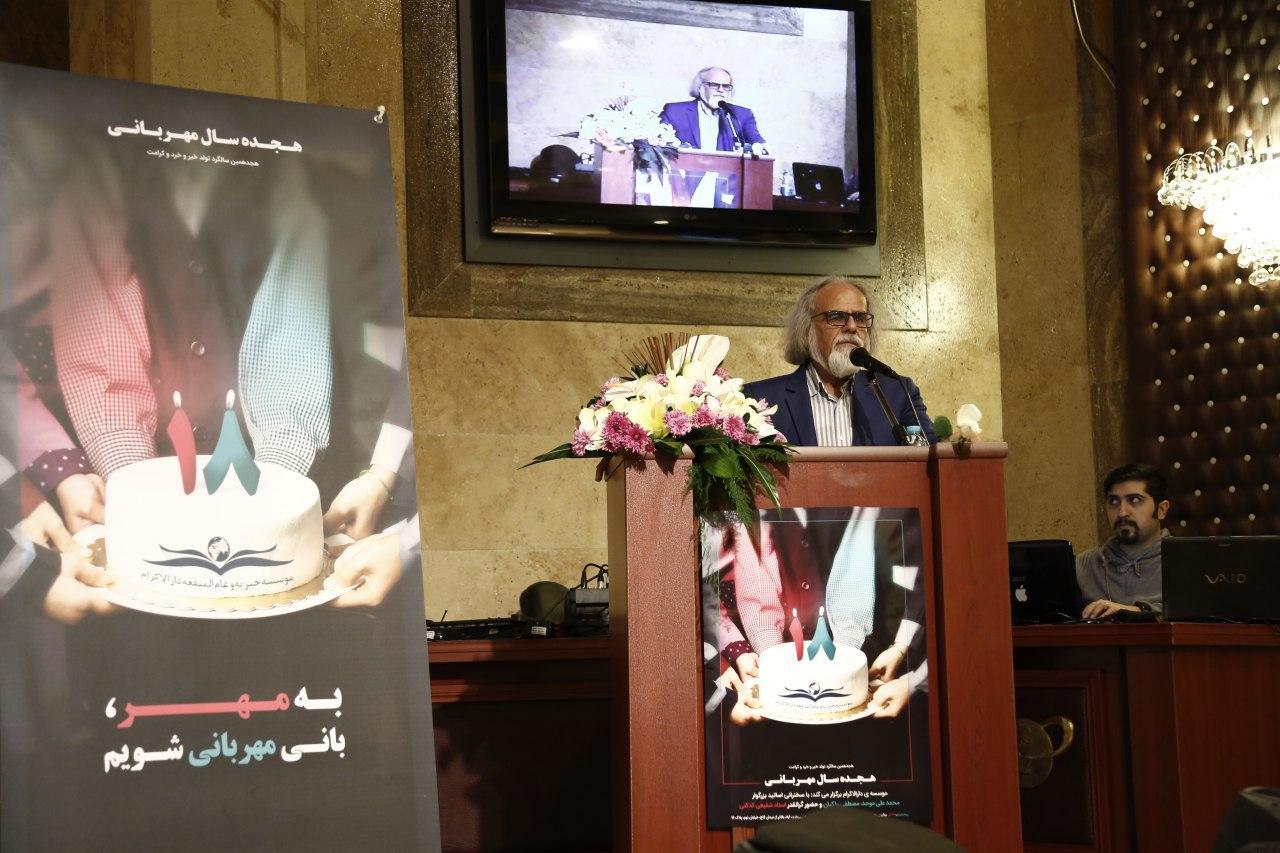
Mostafa Malekian's speech at the 18th anniversary celebration of the Darolekram Institute on the six factors that prevent benevolence from turning into beneficence.
Audio of Mostafa Malekian's speech
Greetings and salutations to the ladies and gentlemen, and with apologies to my masters, Dr. Mohammad-Ali Movahed and Dr. Mohammad-Reza Shafiei Kadkani, whose student I have always been and will always be honored to be, and with thanks to all the officials and staff of the charitable and public-benefit Darolekram Institute.
In the roughly fifteen minutes I will be in the presence of these esteemed individuals, I will raise a discussion related to the field of moral psychology with the utmost brevity, and I hope, with clarity.
There is no doubt that, theoretically, infāq—that is, financial infāq, giving up one's own wealth in the service of one's fellow human beings—is one of our important moral duties. No school, no system, and no moral theory has ever held that financial infāq is not one of the human being's moral duties.
Giving up wealth and self-sacrifice in terms of property for the well-being and happiness of fellow human beings is a matter of consensus as one of our major moral duties. But the question is: why, despite the fact that theoretically, all human beings more or less consider financial infāq a moral duty, in practice, it is not carried out to the extent that it is theoretically accepted? That is, why, even though I am fully aware that this financial assistance is my moral duty, do I perform this moral duty less in practice, and perhaps not at all? This is a point in moral psychology. My discussion in this session is limited solely to financial infāq; other moral duties are outside the scope of my discussion. The point is that I may be a moral person, meaning I am benevolent toward my fellow human beings and believe that a person has a duty of benevolence toward their fellow human beings—and in this case, financial benevolence—but in practice, I do not act upon this benevolence. In simpler terms, why does benevolence not always turn into beneficence? Benevolence exists, but it does not turn into beneficence.
In my mind, in my conscience, within me, there is benevolence toward my fellow human beings (in our discussion, financial benevolence is intended), but why does it not turn into financial beneficence? That is, why does what happens in my inner world, in the world of my mind and conscience, in the world of my psyche, not flow into my hands and feet? What is the cause of this gap that exists in between? What creates the gap between benevolence and beneficence? Only, of course, here, meaning in the matter of financial infāq; in other moral discussions, moral psychologists have explored related interests. In simpler terms, set aside those who are not benevolent toward humanity, but let us assume that we are among those who are benevolent toward humanity and therefore fundamentally believe in something as a moral duty and obligation toward financial self-sacrifice. Why is this financial self-sacrifice, whose moral value we inwardly affirm, not necessarily carried out in practice? This is a matter for discussion and dialogue in all moral duties, but I am speaking only about benevolence in terms of self-sacrifice.
It is here that I wanted to point to these factors that are effective in preventing benevolence from turning into beneficence, causing me to remain solely in my inner world. I just wanted to point to these factors. The factors that are discussable here are six factors; all of these six factors belong to the category of our delusions, to the category of our cognitive errors. Yet, despite all this, it is possible that these cognitive errors and delusions arise and cause me to be unable to turn my benevolence into beneficence.
The first factor is this: we may be intensely emotional human beings. An emotional person engages in charity, but only when a pitiful scene is before their eyes. When I see an old beggar, a man or woman in tattered, sickly clothes, this scene, if I am an emotional person, affects me deeply, and when they ask for my help or tell me of their financial need, the possibility of my giving financial aid is high because I am an emotional person. But regarding the beggars I do not see, I do not have these feelings toward them. Emotional people are intensely sensitive to the scenes within their view, but they are not sensitive to scenes that are out of sight and beyond the reach of their senses. These are people who help others emotionally, but they do not do so morally. For a person who is moral, it makes no difference whether the recipient of help has created a pitiful scene before their eyes or not. You have often seen that we cannot say no to beggars at intersections, in streets and alleys, but we can fail to think of the beggars we do not see, to be unconcerned with their affairs and their daily lives. Being emotional is different from being moral. If being emotional becomes an emotionality governed by rationality, it transforms into being moral. If I am merely emotional and my emotionality is not governed by rationality, then I only react appropriately to what I see before my eyes, but I show no sensitivity to all the poverty, misery, suffering, bitterness, hardship, and afflictions that are not before my eyes. A moral person is not like this; for a moral person, it does not matter whether they have a scene before their eyes or not. Therefore, the first factor is that instead of being a moral person, I am merely an emotional person and have not brought my emotionality under the governance and rule of rationality. If this is the case, only heart-wrenching scenes stimulate me, and scenes that are absent and not before my eyes do not excite me or impel me to action and deed. That is the first point. Now, the story of how emotionality can become morality—that is, how emotionality can come under the rule of rationality and an emotional person, while remaining emotional, can become a moral person—is another matter, which lies outside the scope of my discussion.
The second factor is that someone might suppose that financial aid is not the most important kind of help one can offer to one's fellow human beings. I am benevolent; I greatly desire to see the well-being and happiness of my fellow humans, but I do not believe that financial aid is the most important task for the well-being and happiness of my fellow humans. That is, I imagine that non-financial aid is more important. For example, I might think that political aid is more important, cultural aid is more important, educational and developmental aid is more important, and I may not pay attention to the fact that, despite the importance of those forms of aid, financial aid—because it meets the necessities of livelihood, that is, biological and physiological necessities—certainly takes precedence over other forms of aid. Then you see that my benevolence in other realms turns into charitable action, but in the realm of financial matters, because I do not, as it were, attach primary importance to financial matters, my benevolence here remains mere benevolence and does not turn into charitable action. This is the second factor.
The third factor is that I may not trust those who act as intermediaries between me and the poor; I may not trust the organizations that, under the names of charitable institutions, public-benefit organizations, and institutions engaged in poverty alleviation of any kind, may lack honesty, and I may believe that while I provide financial assistance, my financial assistance does not reach its deserving recipients as I intended. If I do not trust these intermediaries and believe that no institution exists in my society that can, with honesty and integrity, deliver exactly what I give to those who are deserving and worthy, then my benevolence will not transform into charitable action. However, since in today's mass societies there is less possibility of providing direct financial assistance, and financial aid in most cases requires intermediaries, well, if I am suspicious of these intermediaries or if I have a bad opinion of these institutions and believe that no institution can be exempt or excluded from my mistrust, then I may well cease to give, because I believe this aid does not reach where it should, is not placed in its proper location, and will not be spent in its rightful place. This, too, is an illusion. It is not the case that all charitable institutions in society lack transparency in their work and that one cannot have rational trust in their honesty and integrity; this is, in fact, an illusion.
A fourth perspective may also be at play here, which is that the intermediary institutions are trusted by the people; all their officials and staff, from the lowest to the highest, are trustworthy and upright individuals, and therefore my financial assistance certainly reaches the poor. But something else is at work: there are those, and others, who may misuse this financial assistance. For example, governments may misuse the financial aid provided by charitable institutions, because charitable institutions reduce poverty, thereby reducing public discontent, and political regimes exploit this reduced public discontent. My assumption might be that this aid serves as a safety valve for oppressive political regimes—regimes that do not fulfill their duties and regimes that harbor ill intentions. Then I might say, I trust this institution, but because I know that others will misuse the results of this institution's work, I do not contribute. I refrain from contributing to these institutions so much that public discontent with poverty increases, and political regimes come to their senses, pay more attention to the nation, and realize that if this situation continues, their downfall, their decline, is possible, and they might reform themselves. In fact, in this notion, individuals all seem to think that my act of giving is itself correct, and my aid does reach the poor, but others misuse the process of my giving and the assistance provided by affiliated institutions, and to prevent their misuse, I withhold this aid. There are not a few who, unfortunately, think this is a correct notion, but this notion is not correct. Whether political regimes misuse our financial assistance to the people and the reduction of public discontent regarding poverty, or whether such misuse does not occur, we cannot forget our moral duties; no one's moral duty is ever nullified under any circumstances because of the misuse that another or others might make of the fulfillment of this moral duty.
The next point is that someone might not subscribe to any of these views but might believe that enough help is already being provided in our society, so there is no need for my small contribution. They say enough assistance is given, and this paltry bit of help I offer will no longer make a difference for anyone. The aid is so abundant and the people's livelihood gaps are filled by it that there is no longer any need for me to help. Well, this too is nothing more than an illusion. Even in the advanced countries of the West, even in countries that have both a developed and healthy economy and are politically governed by wise regimes, benevolent regimes, and dutiful regimes, even in those countries, poverty can still exist, and even in those countries, there are people who cannot meet the needs and necessities of their own lives. One should never assume that there are others who will help, rendering my own help worthless; this, too, is an illusion.
But the final illusion that exists is that someone might say we are also in need of help in other respects, and since our future is uncertain, why should I give what I have saved to the poor? Tomorrow, my own children might be among the poor. In countries where the future is ambiguous, in countries where one has no trust at all in the future of their country—economically, politically, legally—then someone might think: yes, I currently have a surplus beyond my needs in my monthly income, something beyond my requirements, but who knows what tomorrow will bring? It is possible that tomorrow, due to a wrong economic policy, a wrong political policy, or a wrong legal course of action, I myself might become in need of others' help, and my own family might become in need of others. Wouldn't it be better, instead of spending the surplus of my current income on the current poor, to set it aside for the future poor, who might be my own children? In all countries where the future is fraught with ambiguity—and unfortunately, our country is one of the most prominent countries where such ambiguity exists—there may be people who are well-wishers of humanity, but they say, 'Charity begins at home.' I am a well-wisher of others, but what can I do if tomorrow I myself might be in need of this? Therefore, it seems to be in my interest to set this saving aside for those who are my relatives, my close ones, who constitute my nuclear family, and to narrow the scope of my benevolence and dedicate it to my family and relatives. This, too, is nothing more than an illusion. When there are people in a society suffering from hunger, lack of hygiene, and lack of education, we cannot, because of a future that may or may not come, postpone our moral duty. In other words, we must not abandon certainties for the sake of what is merely conjectural.
O Lord, make the end of the matter such / That You are pleased, and we are saved.
.
.
Watch on Aparat | Watch on YouTube
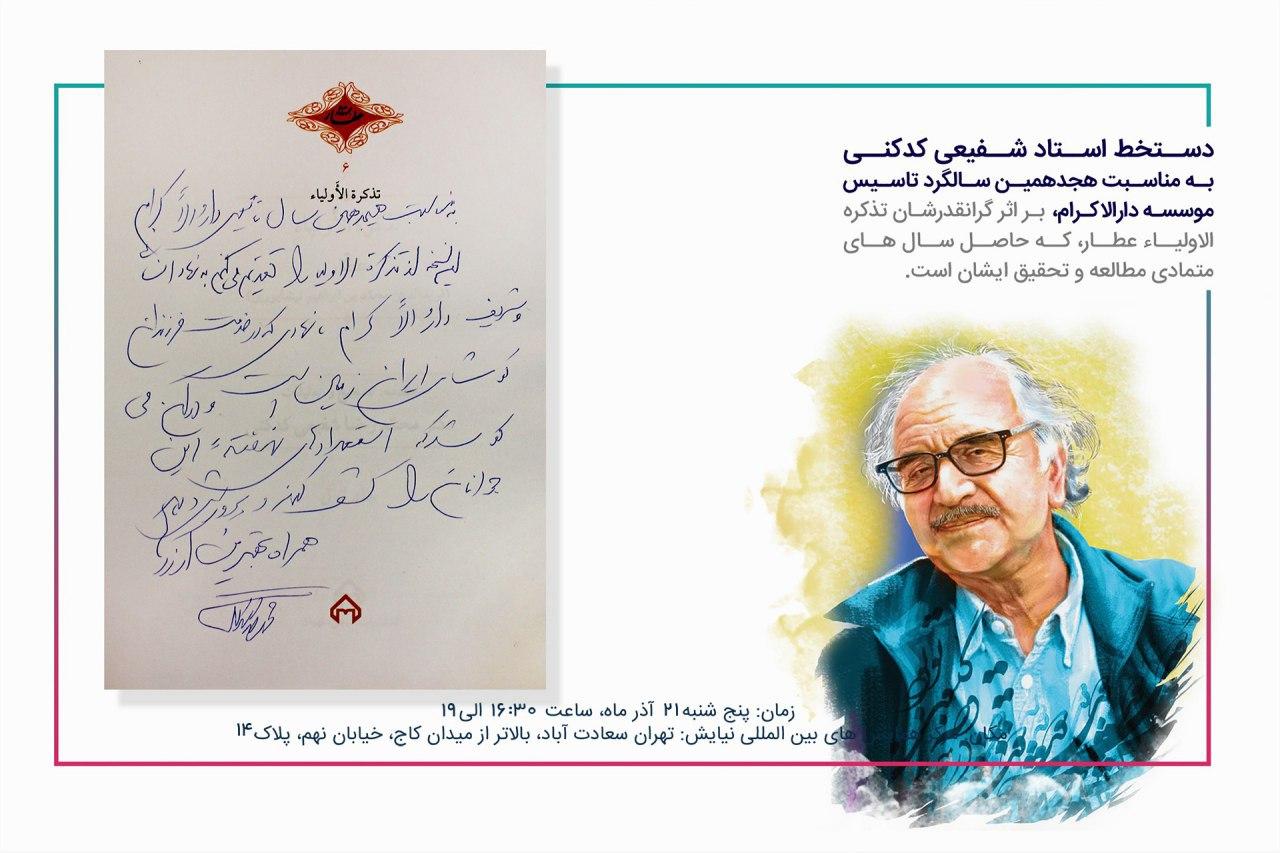
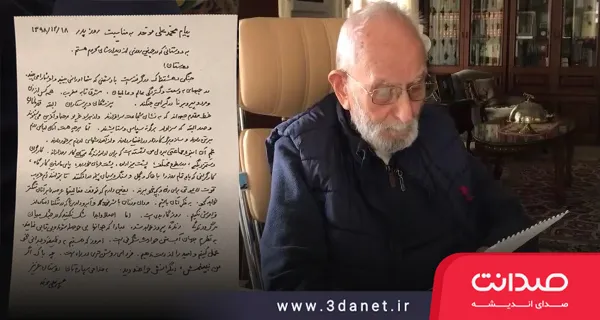
The distinguished writer, author, and researcher in the fields of mysticism, history, and literature, and the poet Professor Shafiei Kadkani, wrote a message for the eighteenth anniversary of Darolekram at the beginning of his recent work, Attar's Tazkirat al-Awliya. This book, the fruit of his years of research, inquiry, and study, is a precious legacy for devotees of mysticism, literature, and art. He, who has taught for over 50 years while occupying a student's seat, demonstrated through this historic work how much he values the education of underprivileged students at risk of dropping out. Darolekram, which supports talented students lacking effective guardians, appreciates the companionship of this great master of the land of Iran. And we ask the Merciful God for his long and dignified life.
.
.
Darolekram Institute Telegram Channel
Darolekram Institute Website
.
.
Darolekram Institute
Thursday, December 12, from 4:30 PM to 7:00 PM
Niyayesh International Conference Center
Tehran, Saadat Abad, above Kaj Square, 9th Street, No. 14
.
.

Discussion0 comments
No comments yet; let yours be the first voice.