Philosophy
Rahimi: Someone We Desperately Need More of His Kind
Mostafa Malekian describes Dr. Rahimi as an intellectual who, despite his socialist leanings, was free of dogmatism and maintained a balance between social concerns and individuality—a moderation that left him isolated, but one we desperately need in others like him.
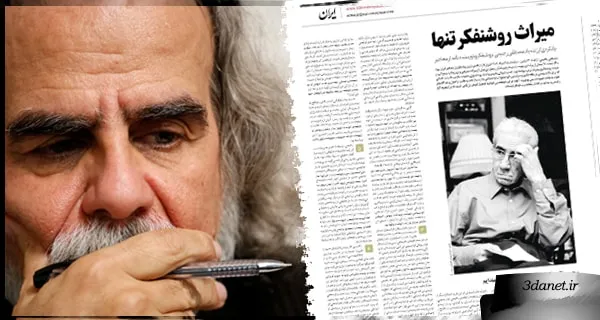
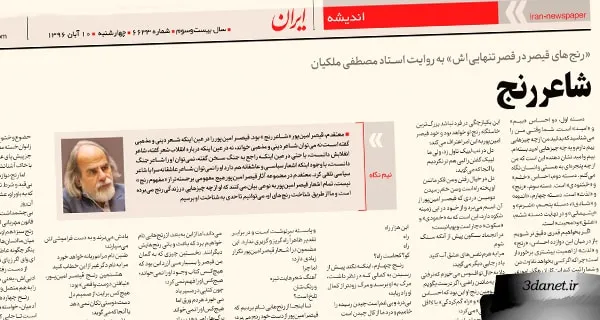
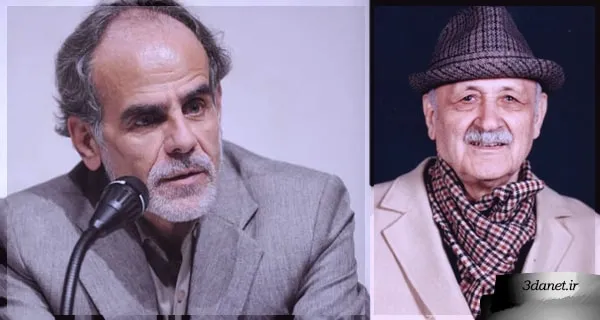
Mostafa Malekian: Dr. Mostafa Rahimi, while being a jurist, university professor, and translator, was also one of the most virtuous, compassionate, liberal, and devoted intellectuals of this land: an intellectual who was distinguished both in terms of knowledge, understanding, and wisdom, and in terms of benevolence, humility, and purity. In this very short piece, I do not intend to examine the record of his scholarly or intellectual activities; I only want to say why he was so dear to me; and to achieve this purpose, I will point to aspects of his personality and character.
1) Mostafa Rahimi, despite clearly having socialist leanings, never harbored bigotry and dogmatism toward socialism or undue negative prejudice (and what prejudice is not undue?) toward liberalism. Consequently: first, when confronting these two social and political schools, he did not abandon fairness and was neither blind to the weaknesses of some views and opinions of certain socialist thinkers nor to the strengths of some views and opinions of certain liberal thinkers; second, he had no absolute affiliation with any socialist faction or party; third, while, in his own words, he clearly saw the “deepening crisis of the capitalist world,” his eyes were also keenly open to the “injustices that, in countries claiming to have a socialist creed, were becoming more visible every day.”
In my opinion, the secret of his isolation and the astonishing silence that our socialists and liberals have maintained and continue to maintain regarding him lies in nothing else. In circumstances where attachment and devotion to a school, doctrine, disposition, creed, religion, sect, faith, and rite have not yet given way to attachment and devotion to truth, and few people, instead of, in Gandhi’s words, seeing truth as confined to their own religion, make the pursuit of truth their religion, it is predictable that someone like Rahimi would remain alone and find no friend or supporter in any camp.
2) Rahimi, despite having an intense and undeniable concern for social issues and problems—both as a philanthropic and ethical human being, as an intellectual, and as someone with socialist leanings—was also drawn to the philosophical movement of existentialism. As everyone knows and historians of philosophy agree, this is a philosophical movement that, whether in its theistic, atheistic, or antitheistic branches, is entirely concerned with the individual, not with society or membership within it. This fact indicates that Rahimi, through the power of his thought, the depth of his understanding, and his benevolence, contemplated both the inescapable membership of the human being in society and their irreducible individuality. This is another aspect of Rahimi's intellectual moderation and balance. On the one hand, he knew that man, as Aristotle rightly said, is a social animal and therefore cannot live outside the vessel of social life; on the other hand, he was aware that every human individual is a unique, unparalleled, and singular being who, if they forget this uniqueness in the tumult of social life and/or relinquish it to gain membership in society and social groups, is deprived of a good, happy, and valuable life. Ignoring membership in society and social groups is not possible, and ignoring individuality is not desirable. One neither can nor should wash one's hands of membership, nor of individuality. Hence, a true intellectual and reformer, like Rahimi, cannot and should not neglect either of these two facets of human life. On the one hand, a one-sided emphasis on membership reduces human beings to the level of ants, termites, and honeybees, demanding they be uniform, identical, and alike, and destroys their individual character for the benefit of their social personality. Such human beings are scarcely more than wind-up machines and artificial puppets that have an external presence but lack inner existence; they have apparent movement but no inner action or deed; tasks are performed and progress is made by their hands, but they themselves do nothing and make no progress; they have public speech and conduct, but no singular beliefs and thoughts, feelings and emotions, or desires, values, and ideals; in short, they have behavior, but no mind. On the other hand, a one-sided emphasis on individuality reduces the human being to the level of a rhinoceros that fixes its gaze only on its own goal, transforming them into a creature that sees the universe merely as a path to reach its destination and purpose, and making them a person who sacrifices their social personality at the altar of the god they have fashioned from their own individual character. Such a person views the entire universe, including all their fellow human beings, as tools whose value lies only in the degree of help they offer them on the path to achieving their goals. They see themselves as a god whom everyone must serve and be a slave to, and they desire the closeness or distance of every other person according to the greater or lesser degree of this servitude and slavery.
It is as if, in a way, they are a solipsist, because they conceive of the universe as consisting of themselves, their goals, and the tools at their disposal, and, in a way, they are an outist, because they do not desire proper connection with others and/or lack the ability to create such a connection. From the gathering of such individuals, a society cannot emerge, because the cement and mortar of society—that is, what causes social solidarity—is absent in such a gathering. Here, we can only have something akin to, in the words of the American thinker David Reisman, the lonely crowd.
The upshot is that we human beings must both fulfill our right to membership in social life and our right to individuality. Hence, we need both Aristotle and Socrates, both Marx and Kierkegaard, both Russell and Nietzsche, both Arendt and Jaspers, both Steinbeck and Unamuno: we need freedom, justice, order, security, welfare, humanism, democracy, tolerance, dialogue, rationality, law, and peace, as well as liberality, moderation, love, faith, death-awareness, self-knowledge, authenticity, honesty, solitude, feeling and emotion, the meaning of life, and tranquility. Rahimi had well understood this subtle and profound point.
3) Among the twentieth-century French philosophers, there are two whom, in this respect—that is, in terms of combining individual concerns with social concerns—I love far more than the other French philosophers of this century: one is Simone Weil, and the other is Albert Camus; and Rahimi, who was mostly captivated by French culture, had an abundant affection for the latter, and I must confess that one of the reasons for my own fondness for Rahimi was this very great fondness of his for Camus. Until now, no one has introduced Camus, this lovable, noble human being, to Persian speakers as much as he has. When Rahimi expresses his affection for Camus and then describes him from his own perspective, one can understand from the descriptions he gives of him what qualities of Camus are the cause of his affection, and, in this way, one can discern what qualities he himself admires in a person, and through this, one can come to know him. (And this rule is generalizable.) Now, let us hear some of the qualities he enumerates for Camus: "[He holds] a high station in writing," "the world has found more evidence for the soundness of his social views," "from the very first days of entering the world of writing, he had, with logical reasons, enumerated the shortcomings and deviations of both camps [capitalism and socialism]," and "he never lived a moment forgetful of freedom and justice (two concepts most dear to Camus)."
4) Rahimi, despite loving his homeland, never fell into two traps: one, the trap of baseless or counterfactual claims about the superiority of Iranians over other races, ethnicities, nations, and societies, and the other, flattery and sycophancy toward the people of Iran. His truth-seeking prevented him from falling into these two traps; moreover, he saw the expression of such claims as being neither in the interest of us Iranians ourselves, nor for the good and well-being of the intertwined, complex, fragile, and brittle world in which we live. Love and affection for all human beings, including one's compatriots, is a sign of a person's psychological health and moral virtue; but transforming love and affection for one's compatriots into unfounded positive beliefs about them is an instance of wishful thinking, which is one of the greatest and most dangerous logical fallacies. Every person's homeland is like their mother; but, just as I have the right to love my mother more than anyone else's mother, I do not have the right to turn this love for my mother into a basis for a belief such as "my mother is more beautiful, or stronger, or healthier, or more moral, or purer, or more self-sacrificing, or... than any other mother." I have every right to love my homeland far more than the homeland of non-compatriots, but I have absolutely no right to consider this deep positive emotion as a reason for a belief asserting any kind of superiority for my homeland. This is from the perspective of truth-seeking; and as for the perspective of expediency, it is clear what such baseless, superiority-seeking claims bring upon international relations in the world we live in.
There are intellectuals who, inwardly and in reality, neither believe in the superiority of Iranians over others nor harbor much love or compassion for Iranian citizens, yet, merely with the intention of finding a place in people's hearts and enjoying popularity and acceptance among them, they resort to expressing such baseless claims contrary to their own beliefs and emotions. In any case, Rahimi was entirely pure and free from these impurities contrary to truth and expediency.
5) Rahimi, perhaps partly because he had a legal education and had engaged with legal discourse, paid full attention to the semantic weight of the linguistic expressions he spoke and wrote; he avoided, as much as possible, using expressions that carried a significant positive or negative emotional charge, and prevented the emotional charge of expressions from overshadowing their semantic meaning. If, from this perspective, we look at his linguistic expressions, including words, phrases, and sentences, and especially his more frequent expressions, we see that, compared to the language we find in other intellectuals, they rarely possess a distinct and prominent emotional charge; therefore, Rahimi's language is much closer to the language of scholars and researchers, and the meaning of this statement, simply put, is that he deals more with the reason and rationality of his audience, rather than their feelings and emotions. We Iranians, who, by the dictates of our tradition and historical background, are more agile in the use of emotional and sentimental language, have a dire need for this cold, unexcited, thought-provoking, and eye-opening language.
6) Rahimi almost always carried out his intellectual work in the form of writing (essay-writing) and avoided spoken formats, such as lectures, interviews, dialogues, roundtables, and debates; and I consider this choice to be due to his commitment to the correctness, precision, and gravity of his speech, as well as his avoidance of sensationalism and seeking disciples. Regarding this second aspect, which may be less obvious, let me say that in spoken formats, the speaker can use factors such as body language to conceal the weakness and feebleness of their words, and the listeners, influenced by the collective atmosphere and mood that has arisen, are more ready to accept their words. Conversely, the writer is deprived of any factor except the degree of strength and solidity of their writing, and the reader of their work, too, almost always reads the work in solitude and privacy, and it goes without saying that solitude and privacy increase the possibility, power, and inclination to refer to one's own reason, knowledge, and understanding; the result being that the listener is more influenced by their feelings and emotions, and the reader more by their reason. For this reason, while accepting that each of the two formats of speech and writing has its own merits and demerits, on the whole, the written format is more recommendable, and the true intellectual should, if they see their ability in the two formats as equal, use writing more than speech as much as possible.
***
In my opinion, Rahimi's works have neither lost their relevance and appropriateness to the issues and problems of our society, nor has their truthfulness and correctness diminished. Therefore, we are not without need of referring to them, and consigning them to oblivion can in no way be the right thing to do. It is fitting that the collection of his works, both authored and translated, be printed and published in a single collection and made available to the young Iranian generation. Forgetting and causing to be forgotten this true intellectual and reformer is not in the interest of our society today.
May his memory remain alive and enduring in the hearts of the wise!
.
.
Author: Mostafa Malekian - 97.5.2
Published in Iran Newspaper - Issue: 6840, 9 Mordad 1397
.
.



Discussion4 comments
مثل همیشه ملکیان در اینجا نیز منصفانه و حکیمانه به داوری درباره کسی پرداخته است که گرایشهای چپ و مارکسیتی او آشکار بوده است، با اینکه خودِ ملکیان همواره از این گرایشها بری بوده است. او بیشتر از هر چیز مجذوب اخلاق انسانی و اخلاق علمی و پژوهشی رحیمی است. و از این رو همچنان که خود ملکیان تصریح کرده است، چنین مجذوبیتی حاکی از شباهتِ نویسنده (ملکیان) به این دو ویژگی رحیمی است. دوستانی مانند سلطانی و صفایی پرسیده اند: چرا ملکیان به آن نامه کذایی رحیمی به رهبر انقلاب در مخالفتش با جمهوری اسلامی نپرداخته است؟! اولاً، خود ملکیان در ابتدای نوشته اش گفته است که در اینجا قصد پرداختن به آثار علمی و روشنفکرانه او را ندارد. ثانیاً، شاید شان متفکری مانند ملکیان بالاتر از این باشد که در فضای سیاستزده ی جامعه ایرانی خود را درگیر چنین موضوعاتی نماید. همین که ملکیان رحیمی را فردی آزاداندیش و آزاده قلمداد کرده است میتواند حاکی از اشاره اش به همین نامه رحیمی به رهبر انقلاب هم باشد.
مقاله جالبی بود ولی تعجب می کنم چرا نویسنده محترم به مقاله انتقادی ایشان تحت عنوان "چرا با جمهوری اسلامی مخالفم" که قبل پیروزی انقلاب در سال۵۷ نوشتند و زیرکانه بسیاری از مشکلات امروز را پیش بینی کردند اشاره ای نکرده اند
رحیمی حقوقدان روشن بین و آگاهی بود و نامه او به رهبر فقید انقلاب به تنهایی نشان دهنده تشخیص صحیح استاد ملکیان است من هم حدس می زدم ملکیان به این نامه اشاره بکند. به هر حال خوانندگان را دعوت می کنم آن نامه را بخوانند و عمق درک مصطفی رحیمی را ببینند و بدانند که ملکیان به درستی گفته است: "رحیمی کسی که به همانندانش سخت نیازمندیم". سپاس از این که یاد او را تذکر دادزد
سپاس از معرفی این مقاله woooow عجب آدمی بوده این انسان