Philosophy
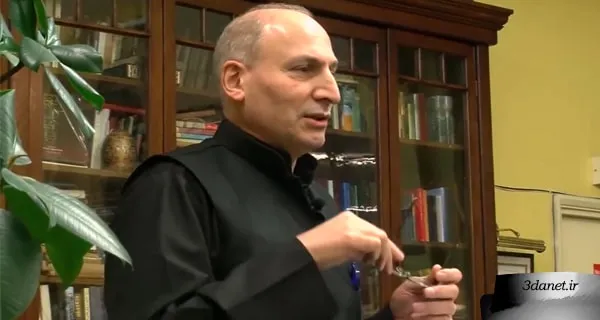
Ramin Jahanbegloo's Lecture: 'The Role of Philosophy in Today's Civilization-Averse Society'
Pointing to the contemporary civilizational crisis and the rise of mass man, Ramin Jahanbegloo sees the role of philosophy as Socratic questioning to overcome this condition. Philosophizing can help us properly understand freedom and dismantle the walls of institutionalized norms.
1- The Civilizational Crisis Dominating the Contemporary Era
I begin my talk by quoting a phrase from Ortega y Gasset, the 20th-century Spanish philosopher: "We do not know what is happening to us, and this is precisely what is happening to us—not knowing what is happening to us." And perhaps not knowing what is happening to us is more dire than the very thing that is happening to us. The context of this ignorance, which is the age of information and exposure to news, also adds to this anxiety. Although, philosophically speaking, being informed does not necessarily mean being aware.
Today, humanity is in an era where the process of giving meaning to life and thinking about it has fallen into crisis. In the view of many, the current human era is the best of all possible worlds in terms of science and technology. This crisis, contrary to what is often stated, is not merely existential, nor does it solely pertain to a specific aspect or aspects such as the economic, political, cultural, etc., but rather it is a civilizational crisis. This crisis is, in brief, the result of viewing the world as a usable resource by humanity, the centrality of purely calculative thinking in the human type, and human beings acquiring a numerical identity. The direction of this crisis is de-civilization and civilization-aversion. This de-civilization and civilization-aversion can be broken down into several axes:
1) The severance of humanity's connection with its civilizational heritage: The destruction of historical monuments by the Taliban, ISIS, and European-raised youths who have joined extremist groups are examples of this component.
2) The calculative gaze and the consideration of human beings as numerical identities or identification cards: As Adorno said, Auschwitz is realized where someone who looks upon the slaughterhouse does so with an impartial and unconcerned gaze. The result of such a gaze upon human beings is the violence of figures like Stalin, ISIS, the Taliban, and so on. The meaninglessness of death, and consequently of life, causes an implicit indifference to human catastrophes. This is in contrast to the past civilizational view of human beings as peoples, nations, a folk spirit, etc.
3) The emergence of the mass-man: Today, human beings are merely soulless, dense masses in social and political spaces, without any role-playing. As Ortega y Gasset says in The Revolt of the Masses: the mass-man ascribes no special value to himself or others; he does not believe in categories such as self-worth and greatness of spirit; he does not consider thinking his duty or priority; freedom is not his concern. In fact, when this individual does not consider thinking his duty and priority, he has deprived himself of freedom. On the other hand, the direction of thinking is the beginning of change and transformation, and the mass-man also considers his current state desirable. He feels no need for change, nor for the thought that precedes it. Likewise, beauty is no longer a concern for him, because beauty, according to some theories including those of the Romantics, can be considered concomitant with truth. Such a human being naturally cannot distinguish between beauty and Botox. Among the results, and not the causes, of this decline of thought and the regressive course of historical awareness are figures like Trump.
4) Mediocrity being considered a virtue: In such an atmosphere, which sets the stage for the rise of populism, mediocrity has become globalized and generalized, and being average is considered a virtue. This mediocrity can be defined as follows: the flattening of humanity's civilizational prominences and the leveling of people's thoughts. Civilization is a multi-dimensional category, and its reduction to a specific dimension is itself a sign of mediocrity. The result of such a phenomenon is the decline of great thinkers, all in the contemporary era and after the second decade of the 21st century. Because a declined civilization no longer needs first-rate human beings; its only need is for populist leaders.
Humanity before the Enlightenment era had experienced this mediocrity. And fundamentally, the Enlightenment project is the exit of human beings from immaturity and bringing them to a degree of civilizational maturity, the result of which is humanity's general acquaintance with human responsibilities.
5) The Meaninglessness of Politics and Political Life: The traditional view of politics was that political life is, in truth, a moral commitment to the common good and the acceptance of responsibility in the public sphere. Today, many societies, such as Turkey, which had begun a liberal movement, are regressing towards a dictatorship. In the current situation, politics is a prisoner of the present and lacks any future-oriented theorizing.
6) The Regression of the Ethics of Empathy and Compassion: The importance of the ethics of empathy and compassion lies in the fact that this moral disposition is the common horizon of human beings in different civilizations. Furthermore, the ability to correctly understand the suffering of another is also made possible in this type of ethics. In the absence of such an ethics, human beings are not ends but means. Alongside this, the spread of moral relativism and the equal valuation of different value categories is also worth mentioning.
2- The Redemptive Power of Philosophy
Considering these historical facts, it seems that philosophy has, in the past, had the task of self-awareness, self-education, and helping to understand the human condition. As Hegel said, the task of philosophy is to think about its own time, and every philosopher must be a child of their own time. Of course, today, philosophy faces unprecedented difficulties in carrying out its inherent task. Because the general direction of human endeavor is the attainment of individual and social desires, and philosophizing is, in a way, opposed to such a procedure.
The concern of philosophy is the Socratic view that considers the unexamined life meaningless and without value. The work of philosophy is to pose critical questions and help understand the human condition in the current world. From this perspective, the nature of democracy depends on questioning. In the 26 centuries since Socrates until now, the main concern of philosophy has been to pose various questions about human life and how to organize it. This teaching is very essential for the people of the East and the Middle East who, in their longing for freedom, seek a change of power.
Essentially, there is a firm link between philosophical thought and the possibility of freedom. The gift of philosophical thought is freedom, and freedom is the opener of philosophical thought. In today's civilization-averse atmosphere, freedom is one of the most important concepts that is not only not understood, but is also subject to various misunderstandings and misuses. Many struggles are not truly for freedom, and ultimately their ethnic, ideological, secessionist, etc., underpinnings are revealed.
Philosophy, in the sense of philosophizing and not academic study or teaching, can, in carrying out its civic duty, help in the correct understanding of freedom. Because the philosophical question itself is a state of thought that can tear down the wall of institutionalized thoughts, standards, and norms in society. And instead of reducing politics to the changing of individuals, it presents it in the sense of understanding the political order of society.
The weapons of philosophy are concepts, ideas, and questions. And of course, these concepts, ideas, and questions must also be dangerous. Exiting this new immaturity requires a new enlightenment. There are two types of encounter with civilizational heritage: one is touring like a tourist, and the other is a thoughtful journey. In the latter case, we must place the Socratic question of politics at the heart of today's civilization. This is the Socratic moment of philosophy, and its continuation requires a tireless struggle against meaninglessness.
In conclusion, and again in the words of Ortega y Gasset: "If we do not know what man will become, we do know what he will not become." If man does not turn towards philosophy, freedom, etc., he will no longer be a civilized human being.
.
.
Audio of Ramin Jahanbegloo's lecture titled "The Role of Philosophy in Today's Civilization-Averse Society"
Video of Ramin Jahanbegloo's lecture titled "The Role of Philosophy in Today's Civilization-Averse Society"
.
.
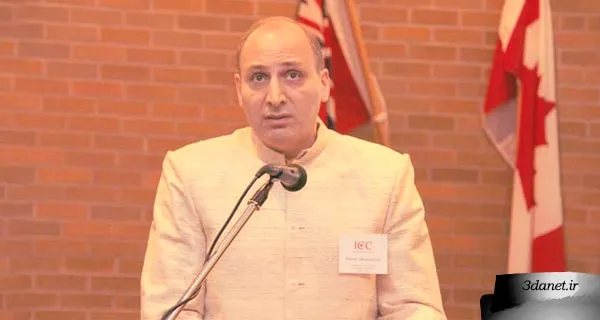
Dr. Ramin Jahanbegloo
The Library for Iranian Studies, London
The Role of Philosophy in Today's Civilization-Averse Society
Saturday, 25 February 2017
.
.


Discussion0 comments
No comments yet; let yours be the first voice.