Philosophy
Saeed Garmaroudi: A Brief Examination of Donald Hoffman's Views
Saeed Garmaroudi examines the views of Donald Hoffman, a cognitive scientist who argues that idealism is more compatible with the field's findings than materialism, contending that evolutionary mechanisms have obscured the true nature of reality.
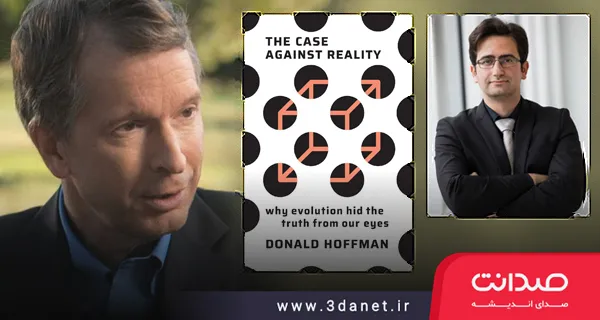
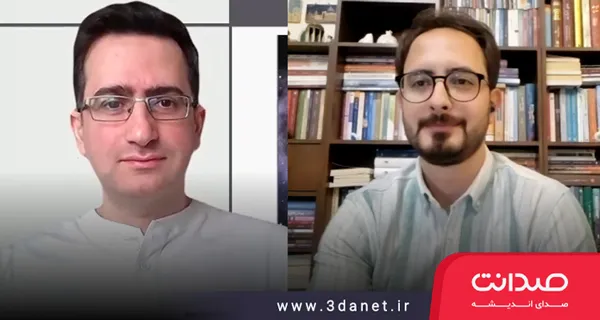
In this video series, Saeed Garmaroudi, a researcher in the field of psychology, provides a brief examination of Donald Hoffman's views. Saeed Garmaroudi holds a degree in management from the University of Tehran and is currently a doctoral student in psychology at Clemson University in the United States. He is specifically engaged in research in the areas of organizational culture and the psychology of religion.
The mind-body problem is one of the intriguing topics among philosophers and scientists. The debates ongoing in this area are influenced by the results of research in cognitive science and neuroscience. For example, the discovery of correspondence and synchronicity between brain activities and the contents of consciousness led many away from Cartesian dualism toward materialism. However, Donald Hoffman, a veteran professor of cognitive science at the University of California, Irvine, considers neither dualism nor materialism, but rather (in agreement with Kant and Berkeley) idealism to be the view most compatible with recent findings in cognitive science. In his recent book, titled "The Case Against Reality," he has attempted to show why the presuppositions of materialists conflict with certain scientific observations, whereas the alternative approach, namely consciousness-centrism, is more consistent with recent scientific findings. The book also examines his mutual correspondence with Francis Crick, the Nobel laureate who considered consciousness to be the result of the activity of brain neurons.
Donald Hoffman has spent over thirty years of his life studying consciousness, perception, and evolutionary psychology. In his famous 2015 TED Talk titled "Do we see reality as it is?," he spoke about how evolutionary mechanisms have caused the reality of existence to remain hidden. He received his doctorate from MIT and, alongside Bernardo Kastrup, is considered one of the most prominent contemporary defenders of the idealist perspective.
.
.
Watch the first session on YouTube | Aparat
Watch the second session on YouTube | Aparat
Watch the third session on YouTube | Aparat
Watch the fourth session on YouTube | Aparat
Watch the fifth session on YouTube | Aparat
Watch the sixth session on YouTube | Aparat
Watch the seventh session on YouTube | Aparat
.
.




Discussion0 comments
No comments yet; let yours be the first voice.