Religion
Session: “The Qur’an: Word of God or the Prophet’s Dream?” with Jafar Nekounam and Khalil Ghanbari (1)
Khalil Qanbari and Jafar Nekounam have critiqued Abdolkarim Soroush's theory of the 'Prophetic Dream.' Qanbari outlined its Western roots and the role of dream language in explaining religious propositions, while Nekounam examined it through an exegetical approach.
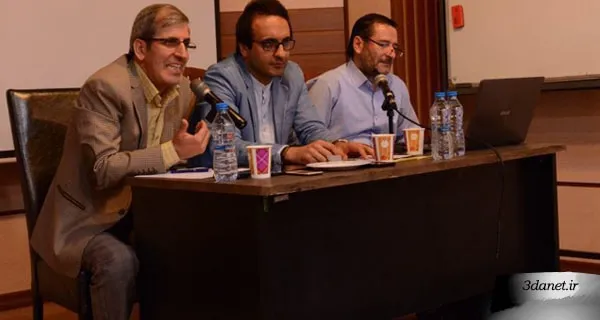
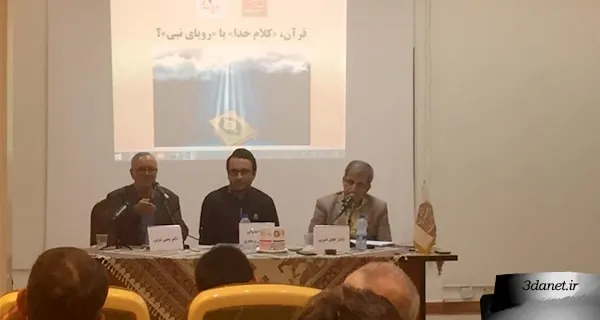
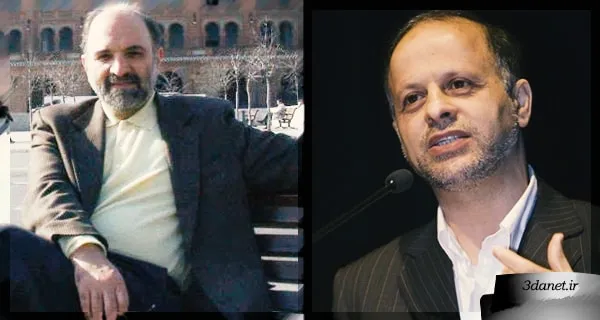
The session “The Qur’an: Word of God or the Prophet’s Dream?” focusing on the explanation, critique, and examination of Abdolkarim Soroush’s theory of the Qur’an as a dream was held by the thought group of the Andisheh va Ghalam (Thought and Pen) Association on the evening of Monday, June 7, at the Kafa Center (University Culture and Thought Hubs). At this session, Jafar Nekounam, professor at the University of Qom and vice-president of the Association for Qur’anic Studies and Islamic Culture, and Khalil Ghanbari, professor at the University of Religions and Denominations and member of the Qom Qur’anic Debates Association, presented their opinions and views. Dr. Khalil Ghanbari began the session by stating that the history of the discussion about whether the Qur’an is divine revelation or a prophetic dream, contrary to what is commonly believed, does not date back to the era of Dehlavi. He said that to understand Dr. Soroush’s perspective, one must refer to Western thought and understand what has transpired in Western thought, seeking clues for the discussion there. He added: In his theory, Abdolkarim Soroush points to a set of data and claims that this data cannot be explained by traditional religious thought or even modern religious thought, so we must turn to a new explanation. The professor at the University of Religions and Denominations, stating that a category of religious propositions are among those that cannot be rationalized through reasoning and theorizing; that is, no matter which way we look at them, we face an intellectual dead end, or as Dr. Soroush puts it, a predicament, explained: According to Kant’s view, theological propositions are antinomic, and one cannot provide proof for their truth or falsehood. That is, there are propositions that are theoretically inexplicable; those influenced by Kant, if they were religious and devout, tried to somehow escape this predicament, and their solutions can generally be divided into three categories. The first group believes that religious propositions are non-cognitive. That is, if you consider the mother propositions, meaning the propositions related to God, as non-cognitive, you have seemingly escaped the predicament you face. They also say these propositions are not issues that human thought can overcome, because they are non-cognitive and merely stimulate and provoke human religious and mystical feeling. The second response from this group of thinkers was that although these propositions are of the nature of thought, they are cognitive propositions. That is, one can reason about them and substantiate them. However, cognitive propositions are divided into two categories: cognitive propositions that follow logic and can therefore be formulated with logic, and cognitive propositions that are beyond the realm of reason and illogical. And this second group believed that religious propositions are cognitive, trans-logical propositions beyond the realm of reason. Therefore, one cannot use the tools of logic to understand religious propositions, and religious propositions cannot be rendered into logic and argument. This was the second response that formed in this space. They had accepted the problem; there exists data called religious propositions that are either non-cognitive or, despite being cognitive, are beyond the realm of reason. Ghanbari continued: We also have a third path among Western thinkers, which can be attributed to John Hick, and that is that religious propositions are cognitive and logical, but they are not a translation of our knowledge of the ultimate reality; rather, they represent the way we humans encounter the ultimate reality. That is, they reflect that phenomenal ultimate reality for us, and not the ultimate reality itself in itself. Therefore, all theological propositions are not about God in itself but about our way of looking at God, so one can easily derive another meaning from these propositions. Ghanbari explained: All three of these approaches have accepted that if we consider religious propositions, at first glance, to be about God or the ultimate truth, we cannot provide a correct explanation of these religious propositions. Therefore, they are inexplicable. This issue and these answers have existed before. What Abdolkarim Soroush does is acknowledge the problem itself. That is, religious propositions are propositions that, if we consider them cognitive, if we believe they arose from human reason and thought in a state of wakefulness, we are unable to explain them and we always get caught in intellectual and logical dead ends. In Soroush’s words, the reservoir of all those approaches was to either consider the language of wakefulness as non-cognitive, or consider it cognitive but beyond the realm of reason, or consider it a cognitive language that is a phenomenon of human knowledge. Soroush believes that, as it happens, religious propositions are not non-cognitive; rather, they are cognitive propositions that are beyond the realm of reason, contradictory and paradoxical, or, in his words, scattered and disordered. One cannot easily find a logical order among them. On the other hand, he also accepts the third approach, namely that religious propositions, instead of manifesting ultimate reality as it is, reveal that ultimate reality in a formed and humanized manner. But he believes that instead of making the repository the language of wakefulness, you should make it the language of sleep or the language of wakefulness. If you believe in the language of sleep, you can hold that religious propositions are cognitive propositions beyond the realm of reason. If you believe in the language of sleep and dreams, you can accept that religious propositions manifest that ultimate truth and reality which has taken on a human form. Soroush believes that with the theory of the Prophetic Dream, if we believe in the language of dreams, from among these three approaches that Western philosophers have proposed regarding religious propositions and had accepted that religious propositions are inexplicable and sought a way to explain them, we can arrive at the second and third approaches. The language of dreams is the most crucial point, which is evident both from the titles of the articles and demonstrates its epistemic status and standing. I emphasize this point that the epistemic origin of this theory is that religious propositions cannot be explained with the language of logic and wakefulness, but with the language of dreams and sleep, you will easily be able to explain these propositions. Those religious propositions that have been inexplicable until now become explicable now. Contradiction in the language of wakefulness is not a virtue but a flaw, but contradiction and ecstatic utterances in the language of dreams are a virtue. After the first part of Ghanbari's speech, Nekounam began his lecture and said: Mr. Ghanbari's approach to the discussion is philosophical, but I deal with the verses of the Qur'an, evidence, and my own interpretive method. Therefore, my words are not in response to his words; rather, my view is about Soroush's theory of the Prophetic Dream. According to Soroush's theory, the Qur'an is the Prophet's narration of a dream he saw, and the type of dream is a symbolic dream. Because dreams are divided into three categories: 1- Symbolic dreams, like the dream that Prophet Joseph saw, where what he saw exactly did not correspond with its interpretation, 2- Corresponding dreams, meaning exactly what we see in the world of dreams happens in the real world as well, similar to the dream that the Holy Prophet saw that he would be in the Sacred Mosque in security and would perform the Hajj, which happened exactly in the real world, and 3- Psychological dreams, meaning the same states, expectations, and requirements that exist in the human body and soul are reflected in dreams. Nekounam, pointing out that regarding the origins of this theory, I must say that whether we justify it or not, there are problems in the Qur'an, said: One of these problems is the disjointedness of the verses; for example, we see in one surah that various subjects are spoken about. Another is contradiction in the verses, which scholars of legal theory have divided into various types, such as abrogating and abrogated, clear and ambiguous, and so on... or some verses related to nature that are contrary to science, like the verse "And We have certainly beautified the nearest heaven with lamps and have made [from] them what is thrown at the devils," or verses in the Qur'anic stories that are said to be contrary to reality and contrary to history, like the story of Gog and Magog and the barrier of Dhul-Qarnayn. These problems have led to theories being proposed to understand what the reality of the matter is. Soroush has previously offered other theories until he finally arrived at the Prophetic Dream. When he encounters these verses, he says that these are dreams, they should not be taken seriously, and he eliminates the problem itself, ultimately offering no solution. He says you should consider that you have seen in a dream a flame of fire or a meteor chasing devils. He himself does not say what its interpretation is and leaves us in ambiguity, and ultimately it is not a productive theory and has problems in other cases as well. Regarding why Soroush has proposed this theory, he said: One of the reasons is a narration that says dreaming is an aspect of prophethood, and as it happens, we also have in the Bible that the prophets of the Children of Israel received revelation through dreams. Or it is the observation of the Prophet's state during revelation, which was like a state of sleep. He has also observed evidence in mystical discussions; for instance, in the world of mysticism, they distinguish two stages of witnessing. The first stage is the imaginal, which pertains to the world of forms and images, and after that is the formless world.He, citing these states, posits stages for the Prophet in which the Prophet's higher self becomes like God and Gabriel and imparts to the Prophet's lower self, and in reality the Qur'an originates from the Prophet himself. Among the problems with this theory is that it is unclear and contains many ambiguities. One of the ambiguities is that it is not clear who the interpreter is and how they should interpret. How can the verses be interpreted? What are we to do in the end? Should we pray or not? Is Hajj obligatory for us or not? After Nekounam's remarks concluded, Ghanbari, pointing out that one should reflect more on the recent objection raised to Soroush's theory—namely, why he says the verses of the Qur'an must be interpreted and dream-interpreted but does not do the dream-interpreting for us himself—and that this objection can be answered, said: We must answer this question: if articles have been written under the title of Prophetic Dreams, to which field of knowledge and science do they belong? Is this a theological theory? Is it a mystical theory? Is it a jurisprudential theory? The Prophetic Dream was not written by a natural scientist, and how clear is this point? We might say that just as we agree Soroush is not a natural scientist, then he is a scholar of religious sciences. We might say it is true that he is not a traditional theologian or religious scholar, but he is a modern theologian or religious scholar. My answer is that it is not the case that this theory emanated from the mind of a modern religious scholar or theologian. Neither a natural scientist nor a religious scholar, whether traditional or modern, has presented this theory. Sciences, in a general classification, are divided into first-order and second-order sciences. First-order sciences are sciences that observe the real world, such as chemistry, physics, jurisprudence, theology, etc. All of them study a fact; one studies God and another studies matter. But second-order sciences are sciences that observe other sciences, such as the philosophy of physics, the philosophy of sociology, the philosophy of religion, and the like. The philosophy of physics is not about matter. The philosophy of physics is about the science that physicists have produced. According to this classification, it becomes clear that the theory of the Prophetic Dream is a theory in the second-order sciences. That is, it observes the sciences that religious scholars have created. Soroush wants to say: on what presuppositions are these religious sciences, which religious scholars have constructed and elaborated from the beginning until now, based? On what methods are they based? Can these methods be replaced with other methods? Can the presuppositions with which religious scholars have thought and theorized until now be set aside and other presuppositions recommended to them, or not? Mr. Soroush says that religious sciences and theology, both traditional and modern, both of these share a common point and have a single presupposition, despite the differences that exist between them. Their single presupposition is that the language of revelation is based on the language of wakefulness, not dreams. Why do the religious sciences fail to answer the questions? He says the reason religious scholars cannot untie the knots of religious texts is that these sciences, from yesterday to today, have been based on one presupposition, which is the language of wakefulness. The philosopher of religious sciences says that sciences are based on a method. It is the religious scholars who must do the dream-interpreting. The dream-interpreter and interpreter is the religious scholar. Soroush is more a philosopher of religious sciences than a religious scholar and religious thinker. In my opinion, to understand Soroush's theory, it is necessary to change our paradigm. In that case, many of our problems with his theory will be resolved. As the session continued, Nekounam, in response to Ghanbari's explanations, said: I cannot understand Mr. Ghanbari's statements at all. I imagine that if someone proposes a theory, firstly it must be self-evident and clear, and secondly it must correspond. For someone to propose a theory and then say its interpretation is not my job is philosophizing. In other words, he throws a stone into a well and then expects others to pull it out. Ultimately, to solve these problems, a solution must be shown. In reality, with this theory, we are erasing the problem statement. A theory must also have demonstrative evidence, and there are problems with its demonstrative evidence as well. A theory must also correspond with reality, whereas this theory does not even correspond with the verses of the Qur'an. In my belief, Soroush's theory is a garment not tailored to fit the Qur'an. If we want to somewhat accommodate and go along with Dr. Soroush's theory, we must say that representations occurred for the Prophet.یعنی اینکه در عالم رویا یا در عالم خلسه صُوری را مشاهده میکرده ناظر به اقوام گذشته، قصص انبیا و همینطور ناظر به رخ داد های آینده. اما خود پیامبر اینها را گزارش نکرده بلکه ما ساختار قرآن را که نگاه می کنیم می بینیم که خطاب به پیغمبر است. ایشان در پاسخ به این مشکل شاعران را مثال می زند که در اشعارشان نام خودشان را آورده -مثلا "سعدیا"- و خودشان را خطاب قرار می دهند. در حالی که این امر در زمانه ی خودش یک رسم جاافتاده بوده و همه می فهمیدند. بالاخره پیامبر متوجه شده که به او خطاب شده بوده یا نه؟ چطور ما یک مورد نداریم که پیامبر بگوید من خودم این خواب و رویا را دیدم. در حالی که هم در قرآن و هم در روایات می بینیم که فرشته ای به جبرئیل یا روح الامین یا روح القدس آن ها را به پیامبر القا می کند. ظاهر آیات هم که خطاب به پیغمبر است. اما خود او اینها را گزارش نکرده است خود قرآن خطاب به پیغمبر(ص) است اگر واقعا اینها را خود پیغمبر گفته بالاخره خودش متوجه خطاب شده یا خیر؟ ما حتی یک مورد هم نداریم که مشخص کند این بیان خود پیغمبر باشد در قرآن و روایات میگوید که یک فرشتهای این را بر من القا میکند. در حالی که اگر کسی یک رویایی یا مکاشفه ای ببیند می گوید که این مکاشفه بر من حاصل شد. چنان که ما در روایات داریم که پیغمبر در دره ای گذر می کند که می گوید من الان دارم می بینم که مثلا حضرت یونس چکار می کند. یعنی مکاشفه برایم حاصل شد و آن گذشته بر من متمثل گشت و آن را می بینم. اگر واقعا این ها صوری است که برای پیامبر حاصل شده باید خود پیغبر به آن تفطن پیدا بکند. جالب این است که سروش می گوید خود پیامبر هم نمی تواند معبّر قرآن باشد و در تعبیر دچار اشتباه می شود. مثلا به آیه ای استشهاد می کند که راجع به جنگ بدر است که پیامبر در خواب مشرکان مکه را قلیل می بیند و می گوید که پیامبر در تعبیر خواب اشتباه کرده است. حال آنکه این آیه با نظریه سروش تطابق نمی کند و در روز جنگ و زمان بیداری هم دشمنان و مشرکان در موقعیتی قرار گرفته بودند که پیغمبر آنان را اندک دید. یعنی خواب با واقعیت تطابق داشت. همه ی خواب هایی که از پیامبر در قرآن آمده مطابقی هستند. یعنی همانطور که پیامبر در خواب دیده بود در واقعیت هم اتفاق افتاده است. سروش می گوید که حضرت ابراهیم هم در تعبیر خواب خودش اشتباه کرد. در تطابق نداشتن با واقع مشکلات دیگری هم هست. راجع به احکام نمی توانیم بگوییم این ها رویا است. مردم با استناد به این آیات نماز می خوانند و روزه می گیرند. یا آیاتی که مربوط به اتفاقات تاریخی زمان پیغمبر مانند جنگ بدر و حنین و صلح حدیبیه است. این ها تعبیر نمی خواهند بلکه عین واقعیت هستند. این در حالی است که همین مضامین مانند قصص انبیا، بهشت و جهنم، آفرینش جهان و بسیاری از آموزه های اخلاقی و احکام در کتاب مقدس و عهدین با تفاوت هایی آمده است. به هر حال یک نظریه باید همه ی موارد مشمول خودش را توضیح دهد و تعبیر کند. همین مضامین در احادیث و روایات ما هم آمده است. از طرفی تناقضات احکام قرآنی با حقوق بشر را چگونه می توان با رویای رسولانه حل کرد؟ در ادامه قنبری با اشاره به اینکه صرفا در مقام پاسخگویی نیست به طوری که گویا همه چیز برایش روشن شده و بخواهد همه ی اشکالات این نظریه را برطرف کند، گفت: اشکالات مربوط به آیات احکام را وارد می دانم اما دلیل دیگری برای آن دارم نه به جهت نگاهی که آقای نکونام دارند. اگر بپذیریم که این تئوری یک نظریه درجه دوم است، باید از یک فیلسوف علوم دینی دیگر انتظار داشته باشیم که آن را نقد کند. هر نظریه درجه دومی ناظر به علوم متحقق در عالم خارج است. باید ببینیم که عالمان دینی وقتی می خواستند قرآن را تفسیر بکنند، به راحتی از پس تفسیر آیات قرآن بر می آمده اند و به راحتی حجاب نفهمی را کنار می زده اند و اندیشه روشن و شفاف آشکار می شد یا با هم کاملا در ستیز بودند و در بعضی از آیات می بینیم که تضارب آرا وجود دارد و مسئله خاتمه نایافته اعلام می شود. در اینجا فیلسوف علوم دینی نتیجه میگیرد که چه شده است که عالمان دینی علی رغم این همه جهد و جهاد و تسلط بر مقدمات علم خودشان خود از پس کشف معانی این آیات بر نیامده اند. یا باید بگوییم عالمان دینی ناتوانند یا باید بگویم متن اصلا معنا ندارد. عالمان دینی اگر به دین و متن دینی اعتقاد دارند باید اشکال را در متدولوژی خود بدانند. یک فیلسوف علوم دینی هم به جای آنکه اشکال را در متن جست و جو کند، اشکال را در روش عالمان علوم دینی جست و جو می کند. ناقدان رویاهای رسولانه، آن را یک نظریه درجه اول فرض کرده و نقد می کنند حال آنکه رویاهای رسولانه یک نظریه در فلسفه علوم دینی است و از این منظر به عنوان یک نظریه درجه دوم باید آن را نقد کرد. Nekounam, in response to Ghanbari’s remarks, said: I agree with him that we are discussing the philosophy of the Qur’anic text and adopting an external perspective on it, but in any case, a theory is like a shirt we want to tailor for someone’s body, and it must fit that body. A theory must possess both pillars of self-evidence and correspondence, whereas this theory lacks them. We have alternative and more efficient theories, and we can answer all the problems Dr. Soroush has raised. Our scholars are not yet so helpless. Soroush’s theory is not efficient for us and has even undermined the Qur’an in such a way that one cannot rely on the signification and rulings of the Qur’an. He further elaborated on the instances of this theory’s inefficiency: Soroush’s theory does not tell us, after all, in what sense we should take the verses about the Resurrection? Should we pray or not? How should we interpret the verses about nature? In general, Soroush’s theory confronts us with a dead end, and such a theory is not worth defending. Ghanbari, regarding the dead end reached by the theory of the Qur’an as a dream, said: We must first show what problems this theory has before we can draw such a conclusion. If we look from a second-order perspective, every argument presented is an argument against another religious scholar. The philosopher of religious sciences must uncover the presuppositions of the religious sciences, describe them, and, if they are inefficient, possibly offer new presuppositions. But presuppositions are of two kinds: one kind concerns the scholars of the religious sciences. That is, the text and intra-religious theology are based on an extra-religious theology. But there is a second kind of presupposition that Soroush emphasizes, which is not of this type. He does not discuss the content and referent of the verses but discusses the structure of a text. He says the structure of the Qur’anic text is dream-like. Soroush says the structure of all sacred texts is like this. That is, the structure of religious texts is based on the presupposition that the language of the religious text is the language of dreams. But as for what its referent is, the scholar of religious sciences must have this as a presupposition for himself, which is a first-order presupposition. We must differentiate so that every extra-religious discussion is not necessarily considered a second-order discussion. Every second-order presupposition is an extra-religious presupposition, but not every extra-religious presupposition is necessarily a second-order presupposition. Self-evidence is also not an acceptable criterion. Mere self-evidence is, in reality, a dream that cannot be found. Soroush must be understood from the perspective that his philosophical and epistemological foundations rest on critical rationalism, and someone who believes in critical rationalism is not, philosophically speaking, a foundationalist, and someone who is not a foundationalist does not believe in self-evident propositions. Furthermore, simplicity is also a criterion. That is, any theory with which we can more easily explain the real world is preferable to other theories. Soroush has, in fact, provided reasons and substantiated his theory, contrary to what critics say. We have confined reason to analogy and induction. According to traditional epistemology, our claim is either substantiated based on induction or substantiated based on analogy. But does the real world only have these two types of reasons, so that whenever someone’s reasoning is neither inductive nor analogical, we say they have not spoken with proof? Philosophers of science and epistemologists believe there is a third type of reason, and that is inference to the best explanation. Indeed, in *The Prophetic Dream*, Soroush has claimed that this theory is the best explanation for the data. If you look from this perspective, you cannot say he has not provided reasons. One may disagree with his reasons, but one cannot say he has not provided reasons. Rather, one can say his reasons are not justified. Nekounam, in response to Ghanbari’s remarks, said: Soroush emphasizes that the basis of his theory’s superiority is its simplicity, and he says that with one simple theory, I solve all problems, but in reality, it is not efficient. However, we have theories just as simple, and even simpler, that can also solve the problems. For example, we say that the Qur’an was revealed in the conventional language of the Arabs of the Hijaz at the time of revelation. Each surah of the Qur’an is like a sermon that was revealed in view of the circumstances and conditions of that time, and this theory solves all these problems. Ghanbari, in summarizing his remarks, said: We must change our presupposition regarding Soroush’s thought and works. That is, we must see Soroush as a philosopher of religious sciences. *The Theoretical Contraction and Expansion of Sharia* is his most important work in the field of the philosophy of religious sciences. Religious scholars felt that this theory was against them. This feeling should not have arisen among religious scholars. Philosophers of religious sciences should have considered this theory their rival.
If we change this presupposition, we must also view the prophetic dream in this way, as a second-order theory. We must see whether this philosopher of religious studies has succeeded in his task or not. But the more religious scholars engage with him, the further they drift from this theory. A dialogue between a religious scholar and a philosopher of religious studies logically cannot take place. In his concluding remarks, Nekounam addressed the theory of revelation he advocates and explained it as follows: If our understanding is that the language of the Qur’an is conventional language, then during the Hajj ceremony, there were those who delivered speeches to the pilgrims coming from various tribes and places, speaking in response to the diverse needs and requests present during the Hajj. This disjointedness and fragmentation was the nature of the sermons of that time, as they addressed the various needs, requests, and issues that occurred and existed during the Hajj season. When we consider the Qur’an as a sermon, this disjointedness is justified. If there are verses in the Qur’an contrary to science, it is because the Prophet was in the position of a preacher who was not meant to correct the physics and chemistry of the audience of the time of revelation, and he spoke within their discursive framework. The Prophet spoke based on their assumptions and addressed them, not us. If we place ourselves in that context, we will not see contradictions in the verses. The verses of the Qur’an were revealed over 23 years and addressed numerous issues. This principle of generality in the principles of jurisprudence has ruined things, and these issues and sciences that were developed later have created problems. Knowledge of the Qur’an is like a spring of water: the further we move from the source, the muddier the water becomes. These issues and problems are accidental; they did not exist from the beginning. To solve these problems, we must substitute ourselves with those who lived in that era. With the principle of substitution, all problems are solved. It cannot be that for 14 centuries, all commentators, scholars, and people have misunderstood the Qur’an, and that God the Wise intended one thing all this time while people understood something else. This theory has many false implications. The session continued with a question-and-answer discussion with the audience. The conference hall was filled with enthusiasts, to the extent that some were forced to sit on the floor and requested more time to continue the discussion. The session was conducted with complete calm and respect, yet in a serious manner, by the participants and organizers.
.
.
Download the audio of the session "The Qur'an: Word of God or the Prophet's Dream?"
Download from Server 1 | Download from Server 2
.
.
This session, titled "The Qur'an: Word of God or the Prophet's Dream?", was held with the presence of Dr. Jafar Nekounam, professor at the University of Qom and vice president of the Association for Quranic Studies and Islamic Culture, and Dr. Ghanbari, professor at the University of Religions and Denominations and member of the Qom Quranic Debates Association, on Monday, June 7, from 6 to 8 PM at the Center for University Culture and Thought.
.
It is worth noting that this program was organized by the thought group of the Andisheh Qalam Association, and future programs concerning this theory and the examination of its various dimensions will be announced to those interested.
.
.
Related Content:
Session "The Qur'an: Word of God or the Prophet's Dream?" with Yahya Yathribi and Khalil Ghanbari (2)
.
.

Discussion3 comments
ولی به نظر بنده دیدگاه سروش وقتی به آیات قرآن می رسد اینگونه است که به طورکلی صورت مسئله را پاک می کند و به بیان دیگر گویی وی درباره برخی از آیات می گوید که آنها را جدی نگیر چون فقط یک رویاست! جملات بالا از آقاي نكونام است كه جاي تعجب دارد ايشان دچار مغالطه پهلوان پنبه شده است براي رد ،نقد و تاييد يك نظريه بايد از متن آن وام گرفت نه اينكه برداشت غلط خود را بجاي سخنگو گذاشت سروش كجا گفته بعضي ايات قران را نبايد جدي گرفت و از كدام كلام ايشان چنين برداشتي مي توان كرد ؟اينكه بعضي ايات پيامبر در مقام مشاهده گر بوده چگونه به جدي نگرفتن منجر مي شود؟
بله. این چنین است به گمان من هم.
ممنون. هر آنچه که در این باره قضاوت کنیم، در خیرخواهی سروش و بازرگان و دیگران، هیچ شکی نیست.