Political Science
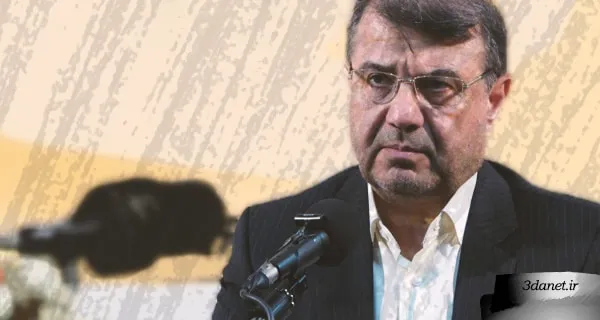
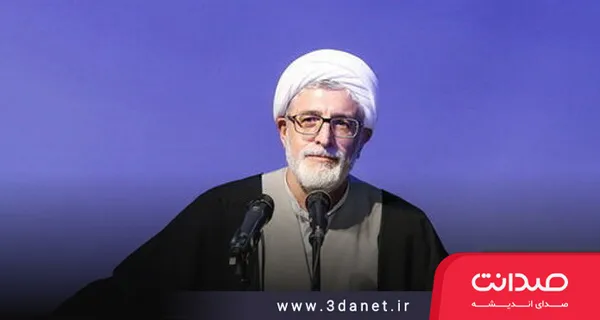
Seyyed Hamid Tabatabai's essay 'A Word with Professor Renani: “Error of Composition” or “Composition of Error”?'
Seyed Hamid Tabatabai critiques Mohsen Renani's claim that the root of all the country's crises is a 'composition error'; in his view, extending an economic rule to politics and culture without argument is an invalid analogy and an unreliable induction.

A Word with Professor Renani: “Error of Composition” or “Composition of Error”?
Seyyed Hamid Tabatabai
“The contemporary thinker, Dr. Mohsen Renani, in a relatively lengthy note recently, has enumerated the root of all the country’s problems, in his own words, as the ‘fallacy of composition,’ writing: ‘On February 28, 1979, at the Fayziyeh School, Ayatollah Khomeini stated, “We shall build both this world and the hereafter…” … It took me twenty years to realize that this statement is the result of a logical argument accompanied by a “fallacy of composition,” and … today, I consider all the existing crises in our country to be the result of this very “fallacy of composition” … The initial point of the fallacy of composition infiltrating the system of governance after the revolution is this very notion of the possibility of a successful combination of “Republic” and “Islamic,” as reflected in the Constitution.’[1]
Later in the article, he first explains how he discovered this error in social behaviors (which, of course, is irrelevant to our discussion) and then, in order to provide a definition of the ‘fallacy of composition,’ resorts to numerous examples. But without offering a precise definition, he considers only those few examples sufficient for his audience’s understanding, and then arrives at his conclusion, which is the very claim he alluded to at the beginning of his remarks.
There are points to be made about his writing. But before entering the discussion, it is necessary to briefly point out that, in my view, his argument suffers from four major flaws:
First: An invalid and unfounded analogy between issues of different sciences (non-authoritative allegory)
Second: Using and inferring a general rule from a few particular cases and examples (non-authoritative induction)
Third: The rule’s failure to correspond to the examples (lack of a major premise)
And Fourth: Confusion between differences in plans and methods, and values and principles
…..
But the detailed account:
One) From the totality of his examples, one can infer that Renani’s definition of the ‘fallacy of composition’ is as follows:
‘What is considered a plan for achieving individual good is not a plan for achieving collective good.’
To support this claim, he draws attention to the differences between microeconomics and macroeconomics, writing: ‘The conventional example of this in economics is the “paradox of thrift.” When one person decides at the beginning of the year to spend less by the end of the year than the previous year, at the end of the year they will be wealthier than the year before. But if all the people of a society decide at the beginning of a year to spend less by the end of the year than the previous year, at the end of the year that society will be poorer than the year before.’
Two) The first question for him is whether this rule (which is proposed in economics) has universality in all economic matters, or is it only correct in certain economic issues and subjects? He does not raise this question at all, but it is unlikely that he sees this rule as having such comprehensiveness that he would want to apply it to all economic values, plans, policies, methods, and structures. For instance, is the relationship between employment and poverty on a national scale the inverse of, or at least different from, the relationship between these two on a family scale? And is ‘increasing income through raising productivity’ contradictory on a national scale and an individual scale? It is clear that if we hypothetically accept that a rule applies only within the scope of a few issues (which we technically call a particular affirmative), we cannot extend it to all issues, and for induction, we need to present similar and dissimilar instances.
Three) Another question for him is why he has extended a rule (which in economics is neither universal nor comprehensive) from economics to other sciences? And how has he so easily imposed it on politics and culture? And how has he extended it to other sciences? This extension (which they call analogy) is a clear fallacy. For every science, besides having its own specific research method, employs its own particular proofs and premises (and, technically speaking, has different conceptual and assertoric principles).
He might answer that "the reason for the rule's application in other cases is not that this rule is established in economics; rather, the application of this rule in every science has its own specific reason." In that case, it must be said that in his writing, no argument has been presented for the rule's application in the domains of politics and culture. And it is clear that a few examples (whose exemplification of the rule is severely flawed) cannot be considered an argument.
Four) It is highly probable that Mr. Renani will say that his writing was not at all meant to present evidence and merely recounted and elaborated his claim. In that case, it must be said that "bringing numerous examples" to establish a claim is a kind of fallacy, and at best a kind of polemic, which should be far removed from the conduct of scholars. Moreover, his examples (as we shall discuss) are also deeply flawed.
Five) To clarify why we consider his examples flawed, it is appropriate to review them:
Five-One) First example: Democracy:
He writes: "In political science, too, the discussion of the 'voting paradox' that exists in elections is one instance of the error of composition. … That is, in voting on an issue, even if all voters are rational and vote sincerely, there is still no guarantee that the result of the vote will be to the benefit of the whole society. Because even if individuals have truly voted based on their preferences and priorities, there is no guarantee that the decision emerging from the election will secure their public and collective interests. For this reason, in the voting paradox, it is proposed that democratic people must elect a temporary dictator (called the president) so that he, in their place, can discern and decide on collective interests. …. In real democracies, both the term of a temporary dictator is limited and the electoral system is party-based so that a temporary dictator cannot act contrary to promises, agreements, and rules."
To what extent this statement aligns with the thought of democracy and Mr. Renani's other theories, I leave to the readers, and I only ask him:
Firstly, if the sum of all voters' opinions is not correct and sound, and one must turn to a reformer dictator, how is it known that the reformer dictator's opinion (even if his term is limited) is correct and sound? Is that ruler infallible? He might raise the existence of oversight institutions to prevent error. In that case, it must be said that, after all, the collective opinion has been taken as the criterion for discernment, and for this reason, a criterion for oversight has been found.
And secondly, why not turn to several people instead of appointing one person, or even several people (a parliamentary system)?
And thirdly, who has said that the election of a president in democratic systems is due to this very reason that Mr. Renani states? How is it known that the existence of the process for determining a ruler was not because (which is indeed the case) decision-making on all issues by everyone is not feasible (or is not feasible in the short term)?
Fourthly, with what scientific backing has he claimed that the decision-making process in—for example—Mexico, Argentina, and Pakistan (with what he calls a temporary dictatorship) has been better than such a process in England (with a parliamentary system)? Or why has the outcome of the "permanent dictator system in China" been worse than the "parliamentary system in India"? It seems Mr. Renani has taken the matter far too simplistically.
Five-Two) In another example, he writes: “Years before the Syrian civil wars, if the Muslims who are now members of Al-Qaeda or ISIS were asked whether they would be willing to massacre, burn alive, or behead other Muslims, the answer would undoubtedly have been negative; yet the same individuals, once they found a collective identity and were placed in the context of collective action (as collective voting), proceeded to massacre other Muslims.”
This is also one of his most peculiar arguments. For, firstly, did ISIS truly emerge through a democratic process? Is a group with thousands of members choosing to follow a path not different from the people of a country wanting something? That is, were the majority of the people of Mosul and Aleppo truly in agreement with ISIS’s behavior?
And secondly, who says that the behavior of the leader of ISIS is any less violent than the behavior of their collective?
And thirdly, he must be reminded that, in fact, ISIS’s actions were the result of abandoning collective reason and the dominance of a caliphate-like mode of governance, which submits solely and exclusively to the decree of the caliph, without regard for the opinion of the Ummah.
Five-Three) He then provides another example, writing: “For instance, the policy of agricultural self-sufficiency, which has been on the agenda of the highest officials of the regime over the past three decades and has been seriously pursued by all post-war governments, is a policy arising from the error of composition. The self-sufficiency of an individual or a family may lead to the empowerment and independence of that family, but self-sufficiency at the national level leads to the destruction of that nation’s natural resources, the result of which in Iran has been the annihilation of the country’s underground water reserves.”
Regarding this, it must be said that:
Firstly, if issues such as environmental impacts are also relevant within a family, then independence must be relinquished there as well (for example, imagine if a family sought self-sufficiency, they would have to forgo education. Naturally, in such a situation, one must pursue the paramount expediency).
And secondly, this example in no way serves his argument. For in this example, he has conceded that self-sufficiency is “power-generating,” both at the national and individual levels, but he posits that there are harms associated with self-sufficiency in certain cases. Thus, he accepts that if we are independent of others in oil and gas, this is our national power, and if America is independent in wheat, that is its power. However, for environmental reasons, this matter sometimes entails more harm than benefit.
Five-Four) Mr. Renani then goes on to refer to the cultural elite and the community of engineers, extending the notion of the “error of composition” to the behavior of clerics and engineers, writing: “They brought the seminary’s intellectual apparatus—which was specific to the domain of individual believers’ conduct…—into the realm of politics—which is the domain of the behavior of collective identities—and thus ensnared the system of governance in a systematic error of composition. And, of course, engineers (whose expertise also lies in micro, particular, and individual domains) greatly exploited this error of composition by the clerics and deceived the clerics utterly.”
Here too, one cannot overlook what lies at the foundations of this reasoning and the misdirection it presents. For, firstly, who has said that jurisprudence pertains to the individual relationships of believers? Note that I am not criticizing Dr. Renani for finding fault with and objecting to jurisprudence and jurists. It is clear that this is his right. Rather, my objection is to this general and unsubstantiated claim of his: where have you found this definition of jurisprudence? Why were you heedless of the chapters on trade, enjoining the good, testimonies, blood money, retribution, jihad, and so on? Has any jurist or Islamic scholar defined jurisprudence according to his understanding?
Secondly, even supposing the country is now beset by insoluble problems, how has he discerned that this stems from an error of composition? Why does he not attribute it to the erroneous performance of the executors? Is Turkey, which is grappling with deep problems, also afflicted by an error of composition? And does Lebanon, and any other country facing the same problem, have the same problem?
Six) Of course, in fairness, I must say there is one point in his discourse that is worthy of reflection and is, to some extent, accepted. And that is his claim that:
“Every individual, under the influence of the group, exhibits behavior that is different and at variance with their individual behavior,” and therefore one can say, “the duties of ‘the human being as an individual’ in certain cases (note that I say only in certain cases) differ from the duties of ‘the human being in the group,’ and so the program you devise for this single individual must differ according to the different circumstances (solitary presence or presence in the group).”
But what does this have to do with his claim? Pay attention: his claim is not merely that a program which is good for a “human being as an individual” is not good for “the same human being in the group.” Rather, in addition to programs, he extends this statement to “values” as well, and when he speaks of the “negation of the bond between religion and politics” and introduces jurisprudence as pertaining to the human being’s relationship with God, he has in fact claimed that “individual values differ from collective values, and the values of religion are good for the ‘individual human being’ and bad for the ‘human being in the group.’”
So it is as if Renani, by proving the “necessity of difference in programs,” seeks to conclude a “difference in values” and to say: “In economic, social, and political matters, what is a value on the individual scale is not a value on the national and collective scale, and what is considered a program for attaining individual values is not a program on the national scale for attaining national values,” whereas this reasoning is extremely weak.
If you doubt the attribution of this matter to Mr. Renani, it suffices to pay attention to this opening sentence of his: “When Ayatollah Khomeini stated on March 1, 1979, at the Fayziyeh School, ‘We shall build both this world and the Hereafter…,’ for me, a thirteen-year-old adolescent who had grown up in a religious family, it was very pleasing … It took me twenty years to realize that this sentence is the result of a logical argument accompanied by an ‘error of composition’ … Today, I consider all the existing crises in our country to be the result of this very ‘error of composition,’ which has since then flowed deeply through all the pillars of the decision-making system of the Islamic Republic. The initial point of the infiltration of the error of composition into the system of governance after the revolution is this very notion of the possibility of a successful combination of ‘Republic’ and ‘Islamic,’ which is reflected in the Constitution.”
It is clear to the reader that he does not accept a value titled “building this world and the Hereafter” for the “human being in the group,” and it seems he considers only the individual human being to possess this goal. But are we faced with two human beings? And is the “human being in the group” other than the “individual human being”? And do values such as justice, freedom, equality, spirituality, independence, fidelity to promises, and spiritual felicity have no meaning or validity for the “human being in the group” and are they considered values only for the individual human being? And is the human being, in their legal personality, not obligated to observe their moral values? And then, how must this human being act in their behavior, and to which value must they submit?
Seven) So, if we wish to correctly restate Dr. Renani’s correct sentence, we must conclude that “to attain transcendent values such as justice, spirituality, etc., the program presented for the ‘individual in society’ may (I emphasize may) not be the same as the program presented for ‘them in a state of solitude.’”
But this statement not only does not contradict the Imam’s words, but it is precisely “Imam Khomeini’s statement” on the necessity of the emergence of “governmental jurisprudence and the role of time and place in ijtihad.” So we have not gone astray if we say that Dr. Renani, with the “composition of his own error with the existing discontent,” has doubly misled the reader.
However, if Dr. Renani had said, “Imam Khomeini said he wanted to build both this world and the Hereafter. And we must know that ‘building this world and the Hereafter for an individual’ may have a different program than ‘building this world and the Hereafter for the group,’” this statement would have been correct. Of course, then Renani should have continued: “And this very difference in methods was also what Imam Khomeini had in mind. And the Imam went even a step further than this, and in addition, said that the programs that were proposed for society in previous centuries must be changed today.”
Thus, the program of the “individual-in-community” differs from the program of the “individual-separate-from-community” (governmental jurisprudence), and the program of the “individual-in-community” of previous centuries differs from his program in the present century (the role of time and place in ijtihad). And all this while a single value governs all programs, which is the “simultaneous construction of this world and the hereafter.”
[1] Mohsen Renani’s essay titled “The Republic of the Fallacy of Composition”




Discussion1 comments
ولی ایشان به ایراد اصلی دکتر رنانی جواب نداند که جمهوریت و اسلامیت با هم قابل ترکیب نیست زیرا اسلامیت میگوید خدا چه میگوید و جمهوریت میگوید مردم چه میخواهند و اگر بین خواست مردم و قوانین اسلامی فاصله افتاد باید از کدامین چشم پوشی کرد