Philosophy
Seyyed Javad Tabatabai's Analysis of the Paris Terrorist Attacks
Drawing on German idealism and Kant's theory of unity, Seyyed Javad Tabatabai analyzed the Paris terrorist attacks; Iran, due to its national continuity and non-dissolution into the caliphate, differs from Arab countries. Situated 'inside the outside' of the Islamic world, Iran preserved its ancient identity and renewed its culture.
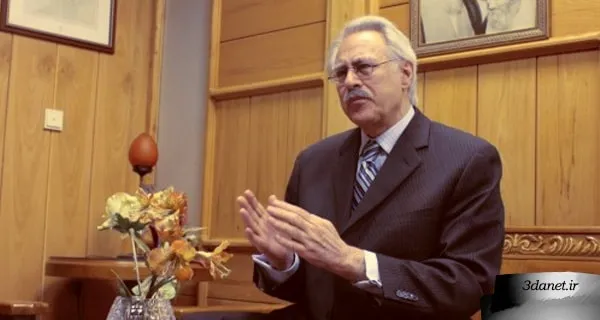
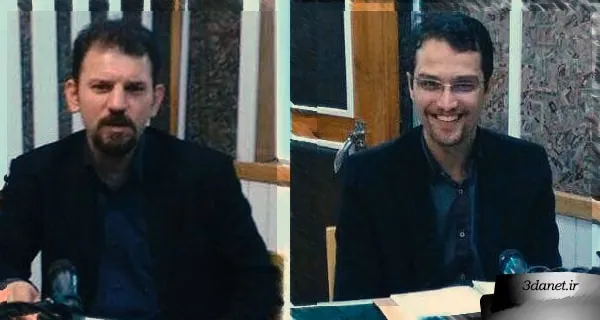
During his lecture series titled “German Idealism” held at the Baharan Kherad va Andisheh Institute, Seyyed Javad Tabatabai, in the course of expounding Kant’s theory of unity and in light of the recent terrorist events in France, the possibility of whose spread to Iran also exists, offered an analysis . . .
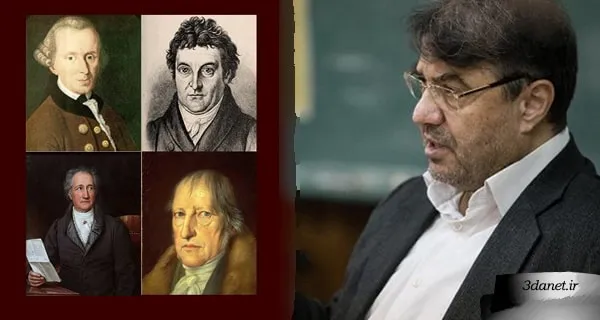
With regard to the recent terrorist events in France and referring to Kant’s theory of unity, Dr. Seyyed Javad Tabatabai said: Kant primarily speaks of unity; therefore, his theory, and German Idealism in general—which reaches its zenith in Hegel—is, in terms of the system of concepts it created concerning the theory of unity, very important for understanding the new world. The entire discussion of this school ultimately led to this conclusion: how can unity be created in the new world? The fundamental issue for Kant, Fichte, and Hegel is the question of rights. But the complexities lie in how legal unity can be created. The new thought of the new world is oriented toward the theory of unity, and it is from here that the word unity, or union, emerges and becomes a problem. After this introduction, and posing the question of why the problem of unity was more important in Germany than in England and France, Dr. Tabatabai guided his audience toward Germany’s historical conditions—which consisted of several hundred city-states—and the connection of each philosopher’s philosophy to the “problematic” issue of their country. Emphasizing the corrupt consequences of not understanding the later effects of this issue and the unregulated translation and introduction of “postmodernism” discussions, he continued thus: The theory of unity demonstrates its importance even more in the events that have recently occurred.
Tabatabai stressed that we can make a collective use of the theory of unity that was developed in Germany, and that is: why do these issues (terrorist events) occur in the world outside Iran but do not occur in this way in Iran, or have not occurred so far? This goes back to our historical issues, which can be explained through German Idealism. In explaining Iran’s historical conditions, Tabatabai said: The Holy Roman Empire, which was the Roman-Germanic Empire, disintegrated at some point, and from within it, European regions were born that were later called Nations. These “nations” each created their own states, and thereby national nation-states were formed. However, in the Islamic world, a kind of empire was also created, which can be called, in comparison with the Holy Christian Empire, the Holy Empire of the Caliphate. After Iran fell within the domain of this Caliphate, it very quickly extricated itself from it through the expansion of the Persian language and the creation of a newly emergent “national” unity, and, like Egypt, became neither Arab nor Muslim in the sense that other countries did—that is, what has been called “Iranian Islam.”
Noting that Iran’s exit from the Caliphate’s gravitational pull has complex reasons that are not our current concern, Tabatabai emphasized: “Iran is a theory,” meaning Iran has theoretical aspects that allowed us to renew its language and culture, and this very non-dissolution of Iran within the Caliphate shows that we had a series of very fundamental theoretical possibilities with which we were able, in those complex conditions, to reconstruct ourselves in the “inside of the outside” of the Islamic world and renew our culture, and as a result, we never became part of the Islamic Empire. In explaining the interpretation of Iran’s placement in the “inside of the outside” of the Islamic world, Tabatabai said: Religiously, Iran was inside the Caliphate apparatus, but non-religiously or culturally, it was situated outside it. He said: We, the Iranian nation, renewed the land of Iran and the Persian language and culture, though explaining this in the language of new terminology is difficult, because these developments took shape in Iran at a time when there was no news of the new sciences that emerged in Europe and became the origin of new nation-states. Comparing Iranian nationality with European nationalities, Tabatabai said: They were part of the Christian community from which they later gained independence, but Iran was never part of the Caliphate apparatus for us to say it came out of it and then formed the Iranian nation. Before we had the word “nation” in its modern sense, we naturally had the Iranian nation, whereas European nations are the result and offspring of the word “nation” in its new meaning. In fact, the word “Iran,” to use Schmitt’s expression in his treatise Political Theology, is a Pregnant word, that is, pregnant with many other concepts. The content of “nation” and “national unity” was inside the concept of Iran; therefore, unlike the Europeans, we did not need new concepts for nation-building.
Tabatabai then turned his attention to the concept of the “state” and said: this nation naturally had its own state as well. For this very reason, we did not arrive at the national state in the modern sense of the term—that is, a state independent of the person of the head of state—even though we possessed it in a natural form. In other words, Iranians possessed a state and a nation, or a “national matter,” at a time when the concept of the state in the new, national sense, which is a product of the modern social sciences, did not exist. Other countries, because they had emerged from something (a Christian or Islamic state-ummah), therefore had to define their new “identity.” But we had never entered it in the first place, so that after exiting we would need to redefine a new identity. In other words, Iranian identity has preserved its historical continuity and, unlike other identities, has not suffered a rupture or break at any point. Tabatabai said: in the Islamic world, important ancient countries such as Egypt, Syria, and others entered the Islamic Caliphate, just as the Germanic and Frankish regions of Europe had entered the Christian Republic. These countries and nations (broadly speaking), by entering the Christian ummah, had in a sense lost their ancient identity within the Christian ummah, and when they exited the Christian ummah, they recovered their national identities. In the Islamic world, however, when countries entered the Caliphate, they lost their pre-Islamic identity. Therefore, when they gradually exited the Caliphate following its collapse in Baghdad in the seventh century AH, they had, in a way, to renew their ancient identity as well—unlike us, who had remained culturally independent and “national.” But these countries, after exiting the Islamic ummah-caliphate, remained Arab and Muslim—in the same quality they had possessed within the Caliphate. Because these countries had lost their ancient identity within the Caliphate and the ummah, and in the modern era, especially with colonialism, when they gradually exited the Caliphate, they therefore tried to give themselves an identity by translating modern categories. As a result, they were compelled to say: we are Egyptian, Algerian, and so on, but we are also Arab and Muslim. Our Islam is identical to our being Arab, and vice versa. For decades, up until recent years, Arab intellectualism strove to create an Arab ideology and to claim that we are Arab Muslims who have played an unparalleled role in the Islamic world.
Continuing his analysis, Tabatabai said that Arab intellectualism has, of course, also carved out a great enemy for itself called Iran, to which it can refer its historical identity problems. Fleeing from the historical enmity named Iran, and through translations of European works, Arab intellectualism turned to Ibn Rushd and said that Ibn Rushd was our Renaissance. And in answer to the question of why this Renaissance—that is, Ibn Rushd's thought—did not endure, they said that Iranian mysticism overcame Ibn Rushd's rationalist thought and destroyed the Arab Renaissance; therefore, our problem is Iran!
After these remarks, Tabatabai addressed Arab intellectualism directly and said: they fail to grasp one point, which is that what has happened in these parts of the Islamic world is that they still explain themselves within the concept of the Ummah (Caliphate), while at the same time considering their states "national"!! A significant portion of the people in these countries, in a contradictory move, simultaneously try to understand themselves through the concept of the "Ummah" and lay claim to and utilize the "national" state. The "Ummah affair" is an affair belonging to all Muslims, and the "national affair" is an affair belonging only to me as an Egyptian, Algerian, Moroccan, etc., and these two cannot be combined. The fundamental issue is that the collapsed specter of the Ummah still weighs heavily upon their world, to the extent that it does not allow them to see themselves as a "nation" in the modern sense. They cannot be a nation because they are part of a larger Ummah; consequently, when they make "national" claims, it is natural that they cannot explain it, because the concepts of Western thought pertain to the history of the West, which is incompatible with their historical conditions and materials. For example, when an Egyptian makes a "national" claim, the Pharaoh comes up, and for an Egyptian, the worst claim is having a Pharaonic past. Of course, they exploit its touristic and foreign currency advantages, but the greatest obstacle in their path is to say that we are a nation with a Pharaonic historical background. Pointing to this contradiction, Tabatabai said: Arab intellectualism, on the one hand, cannot claim a "national" identity because its ancient culture has been dissolved and destroyed within the Ummah, and only its touristic aspect exists; on the other hand, the Ummah does not exist in practice either, so they cannot define a distinct identity for themselves. This part of the Islamic world, in the modern world, faces a fundamental problem that prevents them from coming to terms with the global community: they are neither citizens of a national state nor subjects of a single Ummah. Especially those born in countries like Germany and France, because such a generation has neither a national state nor are they French; in fact, they are neither Algerian, Egyptian, Moroccan, etc., nor French, German, etc., nor subjects of a single Islamic Ummah. Despite the citizenship system in France, this generation cannot become French citizens due to the weight of the specter of the Ummah and the Caliphate, just as they have not become.
With such an analysis, Tabatabai addressed the terrorist incident in France and said; because the specter of the Ummah and the Caliphate has prevented their absorption into the national citizenship system of a country like France, we see that as soon as the banner of the Caliphate is raised and a Caliph declares his existence, a segment of this generation goes under his banner. It was perhaps Abd al-Razzaq who said; how can a Muslim conceive of not having a Caliphate? They create the Caliphate, whether its secular or religious type, for this very purpose, because they cannot escape the specter of the Caliphate. Tabatabai then compared Iranians and Arabs and said; but we Iranians are the opposite of them, meaning we cannot conceive at all of being part of a Caliphate, which is why the shadow of the Caliphate does not weigh upon us and has never been, nor can ever be, reproduced in Iran. For the same reason that the Caliphate cannot be reproduced in Iran, it cannot fail to be reproduced in Arab countries, and thus, with the raising of the Caliphate's banner, the important and marginalized segment from the peripheries and margins of major European cities rise up and join the Caliphate. Tabatabai, pointing to the vast number and proliferation of Saudi-funded mosques in European countries, said; the rulers of Saudi Arabia thought these mosques would attract Muslims to them, whereas we saw that the worshippers in these mosques pledged allegiance to Abu Bakr al-Baghdadi, because Saudi Arabia is neither a "nation-state" nor a "Caliphate-Ummah." Regarding the Saudi regime, Tabatabai said; this situation, meaning the lack of penetration of new thought into the minds of Saudi leaders, has become a problem both for Europeans and for a large part of the Islamic world, because they are capable of absorbing such marginalized Muslims neither as a national state nor as a Caliphate for an Ummah.
Tabatabai then addressed Iran's historical situation, saying: I do not think this will become a problem for us, because the historical unity that has existed and been present in our literature and history has endured so far, despite the numerous floods that have come upon us and the "simoom" that has blown over us. Tabatabai expressed concern for Iran's historical unity regarding the corrupt consequences of baseless postmodernist ideas introduced through incorrect translations, saying: Events are occurring to which we must be sensitive. Postmodern discussions, which were raised in opposition to German Idealism and have also entered Iran, are like an axe striking at the root of the Iranian unity we have managed to preserve until now. We have lost much of our historical consciousness due to the influx of ideologies whose origins we do not know, what they say, and what corrupt consequences they have. Our intellectuals have imported these ideologies through the new social sciences. With their ignorance of the historical materials of the West and an incorrect understanding of Western foundations, they think we must foster multiplicities and say we are a "patchwork"! Meaning that if we were a single nation until now, from the perspective of pluralism, that was a bad thing, and we must foster these multiplicities, which have dangerous claims. Tabatabai, referencing the Hegelian system of concepts, said: In Hegel's terms, where multiplicities claim to be the "Absolute," it is very dangerous. Hegel provided these explanations, but we did not realize how important they are. People like Foucault, who set aside these words of Hegel, did not realize what corrupt consequences they would bring about. Of course, in the West this is not a problem, because against Foucault's irrelevant talk, there are people who say other things and demonstrate the irrelevance of the words of Foucault and his ilk. But we have individuals who, with low literacy, are overawed by Foucault. Tabatabai then, in elaborating on Hegel's view concerning the situation of Germany before Bismarck, said: In the 19th century, Germany had about 2,000 small and large states. Hegel, referring to such a fragmented situation where traveling from one local sovereignty to another was like traveling to a foreign country with different laws and ethical systems, said that Germany was no longer a state. In a situation where every "patch" of a "patchwork" claims to be absolute, such a condition arises as had emerged in Germany. But Hegel makes another important point; he says that against the Universal which constituted Germany's unity, each of the Particulars has found a claim on the scale of the Whole, and in fact has made itself the Whole and the Absolute. For Hegel, the Absolute was one thing, and that was the German nation-state, which preserved all multiplicities within itself. But if everyone claims "I am the state," this ensemble collapses. Hegel's other point is that the "force and authority of the state" can unite Germany from above, which happened in Bismarck's time and the current Germany was built.
Tabatabai, repeatedly recalling the intellectuals' neglect of the foundations of Western thought, said: Our intellectualism speaks contrary to what has occurred in Europe. Of course, when all the “particulars” claim to be “universal” and it is only published in newspapers, there is no danger, but if they turn this into a progressive ideology, as they have now done, they become dangerous. Being particular only finds meaning within this universal. Various forms of “patchwork” identity and various kinds of ethnic and linguistic plurality have been spoken of in places whose historical conditions we do not know, and we unknowingly imitate them. Tabatabai emphasized that the disappearance of pluralities in Europe has a history that we do not know. When intellectuals there say local languages are dying out, they speak with reference to conditions that did not exist in Iran, and consequently, we cannot repeat their words verbatim. Tabatabai cited the French Revolution as an example and, addressing those who have used events like the Fitileh program as a pretext for writing against the national culture, said: In the French Revolution and before it, Louis XIV also destroyed every kind of plurality, including linguistic plurality, that existed in France. Louis XIV said: The state is me, and unity is me. By doing this, Louis largely destroyed all pluralities, including the languages that were in the south of France. But our Azeri language has never been endangered and has always had television and radio at its disposal. Tabatabai concluded with a gibe at the intellectuals who are familiar with Rumi's Masnavi, saying: Those who are familiar with the Masnavi should at least take a lesson from the story of the dragon: A snake charmer in a cold mountain finds a large, lethargic dragon. The man, thinking the dragon is dead, brings it to the city to make good money by putting on a show and to achieve his far-fetched dreams; but in the showground, with the warmth of the sun, the dragon comes to life, attacks the people, and by shedding their blood, ruins his plans and returns to the mountain. Some do not know what the dragon is and what consequences their words have! And more than this, some intellectuals have become the custodians of our historical enemies beyond the borders and speak their words. Dr. Tabatabai, pointing to the plunder of Iran's cultural property by foreign governments, expressed concern that Iranian intellectuals falsely provide documentation to the plunderers of Iran's cultural heritage, and addressing the current that has made an idol of Foucault in Iran, said: We must ourselves be our own Foucault; Foucault said many irrelevant things that no one in Europe now values. Tabatabai accused the intellectuals that: Because they do not understand Foucault's fundamental ideas regarding the system of knowledge, they therefore repeat his very low and ideological statements in order to, through those confused words, foment a mental chaos that shatters the historical foundation of a country's unity.

Discussion0 comments
No comments yet; let yours be the first voice.