Political Science
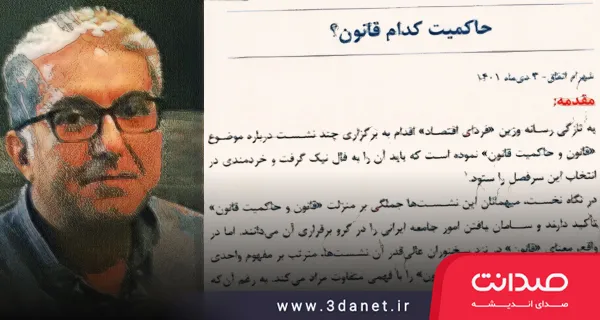
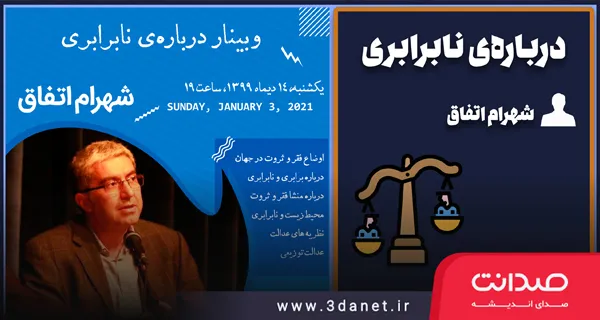
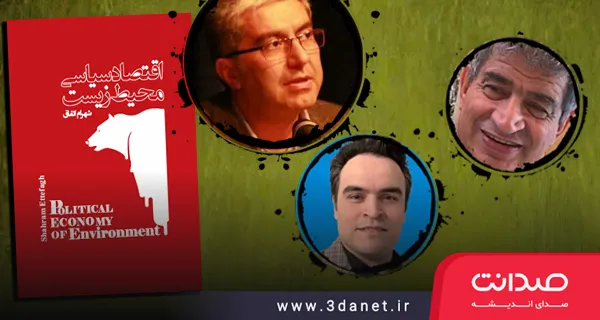
Shahram Etefagh Webinar: From Capitalism to Libertarianism
Marx saw the state as the guardian of capital, but experience shows states have swollen under both socialist and capitalist systems. The consequences of state intervention are blamed on capitalism; anarchism and shrinking the state.

Capitalism was the name Marx gave to the newly born post-feudal system. Marx believed that only the owners of capital benefited from this system, and the rest of the people, who would all become the working class, would grow poorer and more destitute day by day. So this was probably Marx's reason for this naming.
Marx had provided very precise definitions of capitalism and nowhere had he spoken of state intervention in the economy, because he believed he had discovered the mechanism of exploitation within the heart of production relations. Therefore, where Marx spoke of the rate of surplus value and the degree of exploitation, the declining rate of profit, and the industrial and financial capitalist, the state in Marx's views mainly played the role of protecting private property and guarding the capitalist system.
Marx and Engels emphasized that after the socialist revolution, the working-class state would abolish private property and would itself wither away.
But Marx had underestimated the role of political power and the state, both in the period of capitalism and in the eras of socialism and communism. As described by many experts, including Anthony Giddens, the experience of socialism and capitalism in the twentieth and twenty-first centuries showed that the use of the tools of domination and political power can lead to exploitation beyond Marx's imagination.
In socialist countries, when some people mounted the horse of political power and the state, they never dismounted, and in so-called capitalist countries, states grew increasingly bloated and interventionist.
Today, critics of the word capitalism are critics of things that really have nothing to do with capitalism, or the capitalist system, or the free market system, and are mainly the consequences of state intervention.
But apparently, the problems arising from the state are not an issue limited to the era of capitalism, and some thinkers and experts have always been trying to shrink the scope of the state's role or eliminate it altogether. So much so that it is said that Lao Tse or Lao Tzu, around the sixth century BC, is probably considered one of the pioneers of anarchism, who favored a minimal state.
The word anarkhia in ancient Greece was interpreted to roughly mean "without a ruler," which then, in conjunction with -ism, became anarchism. Since the state is the most important component discussed by anarchists, we will first address the definition of the state and then seek to differentiate and classify anarchists based on a set of fundamental concepts ...
.
.
Shahram Etefagh Webinar Titled "From Capitalism to Libertarianism"
Watch on YouTube
Watch on Aparat
Webinar Resources
.
.



Discussion0 comments
No comments yet; let yours be the first voice.