Philosophy
Shiism and Its Influence on Art: An Essay by Dr. Mehdi Hojjat
Dr. Mehdi Hojjat examines the influence of Shiism on art across the two domains of 'wisdom' and 'craft', stressing that before looking at the outward appearance of works, one must see the manifestation of Shiite beliefs in the heart of the artist. The compilation of hadiths and tilework inscribed with the names of the Imams are signs of the penetration of Shiite teachings.
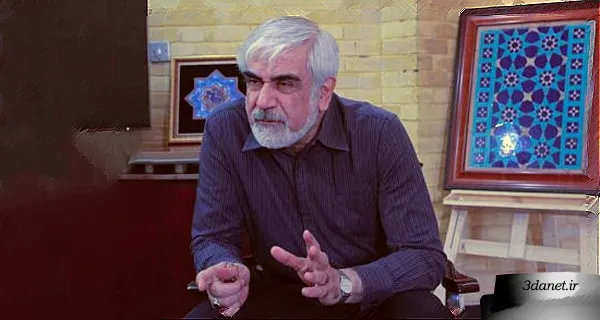
What follows is the text of a lecture by Dr. Mehdi Hojjat, professor at the Faculty of Architecture, University of Tehran, on "The Influence of Shiism on Art Forms," delivered at academic conferences on Shiite studies.
Introduction
In this esteemed gathering, I intend, rather than explaining how Shiism has influenced the arts of Iran throughout history, to raise the question of which channels we should enter and how we should look if we are to examine this mutual influence, in order to find more suitable branches for studying this interplay. To see which hand is extended from art and which from Shiism so that they may clasp one another, we must examine the constituent limbs of art on one side, and the limbs influencing it from the side of Shiism on the other. A brief point I must make is that whenever we speak of Shiism, Islam is prior to it. Therefore, in many places we may speak of a Shiite matter and someone might claim that this matter is intrinsically an Islamic one that has manifested in the form of Shiism; meaning that perhaps something similar, with varying strength and weakness, can be found in non-Shiite domains as well. Another point we must pay attention to is that "many a Hindu and Turk share the same tongue"; in many places, in studying the emergence of states related to Shiism, we may not see this matter exclusively in Iran or even in societies renowned for Shiism, but rather it may be a phenomenon that has emerged due to the inherent characteristics of all Islamic schools' attention to enlightenment and guiding hearts toward God Almighty, and even in other divine religions. A great figure once said: sometimes, in certain non-Shiite societies, the degree of their commitment and the manifestation of Shiism in their social existence is prominent; although these societies are not renowned for Shiism, in observing Islamic law, they are bound by constraints to which Shiism calls.
Wisdom and Craft: The Two Wings of the Artist's Flight If we wish to examine how art can be influenced by something like Shiism, we must note that there are two constituent elements in art: one is what is presented in the work of art; and the other is how it is presented. In other words, one is the meaning that is presented through an artistic activity; and the other is the external, objective form that brings that meaning to the fore. The general, universal interpretation in this regard is the interpretation of "wisdom" and "craft." I will not elaborate much on this, as I believe it requires another occasion and must be discussed elsewhere. However, the basis of my speech is that of the two wings of art, one being "wisdom" and the other "craft," one is the wing for observing mystical and heavenly truths that are placed at the disposal of the artist's thought and sense through inspirations. By the aid of this wing (wisdom), he receives, to the extent of his own capacity, what he can of the inner truths of the universe; and the other is a hand he has on earth, enabling him to make a change in the material world to manifest what has been inspired to him. So, the two wings of "wisdom" for reception and "craft" for execution are conceivable for examining what can be influenced from the side of art. I present this basis so that when examining the influences of Shiism, we pay attention to both parts of this matter; that is, to see what influence Shiism has had on the wisdom and the receptive capacity the artist possesses and on what is to be received; and secondly, what influence it has had on this craft and execution.
The Influence of Shiism on Art In examining the quality of Shiism's influence on art, what is often neglected is the first part; that is, the influences Shiism has on the artist, on his beliefs for his reception, his view of the universe, and the quality of the manifestation of these beliefs in his heart. This is usually given less attention. We often pay attention to the quality of influences that the external and outward elements (works of art) have received from Shiism, whereas the main issue is the influences that the artist's heart receives from attending to Shiite teachings:
An essence that has not received from the Bestower of Being,
How can it become a bestower of being?
Until the artist's heart is illuminated by Shiism, the possibility of its manifestation in an external matter does not arise. Therefore, both of these realms must be scrutinized. Thus, the domains from which art draws influence can be divided into two parts: one part "doctrinal" and one part "technical," and each of these has the capacity to be influenced by Shiism.
In the other part, which concerns the influences that Shiism exerts on what comes into being—that is, what must be studied as the artistic work—many of the matters we scrutinize are such that, at first glance, the quality of the influence of Shiite beliefs on that action is not clearly traceable; because in artistic judgments we have become accustomed to paying attention to appearances. Hence, it is not clear how and from where this objective influence is considered to emanate from Shiite thought. Regarding this part, I will explain further by mentioning a few examples to clarify the subject:
A. The Compilation of Quranic-Hadith Collections Perhaps in the conventional view, neither are Quranic software programs considered an artistic endeavor, nor is this work regarded as influenced by Shiite thought, whereas if you pay close attention to the collection of activities that our friends have undertaken in Iran in compiling Quranic collections, hadiths, reports, and the like, they have been admired not only by us but also by very strong international bodies, and we realize that both the hidden wisdom behind this action and the quality of its emergence are intensely Shiite matters. I consider this among the Shiite arts; because unless the essence of Shiism—that is, a sense of oppression, deprivation, and the resolve to restore rights—exists within a person, such a resolve to bring such a matter to the fore will not arise in them.
B. Graphic Collections The love for the Pure Imams and their descendants (peace be upon them) is well manifested in Shiism. When we encounter this truth, what comes to our mind is the quality of the manifestation of the attention that Shiites have developed towards the Pure Imams (peace be upon them) from this perspective. This manifestation, in the kind of love-play they have had, for example, with the name "Ali (peace be upon him)," has existed in graphic works since ancient times. One of the most beautiful graphic works, which is truly internationally acclaimed, is the six blessed names of Imam Ali (peace be upon him) that are integrated into each other in positive and negative forms and were used in the tiles of the wall bordering the Dome of Soltaniyeh during the time of Öljaitü. Anyone who looks at this collection understands how much fascination must have existed in the artist for them to reach such maturity. Numerous works like this have been created in the art of calligraphy. If you wish to scrutinize the love for the Pure Imams (peace be upon them), it is enough to look at the quality of the blessed shrines that have been created over centuries and what is within them, at their doors and walls. There is a very vast field of artistic study in such places, where all kinds of arts have emerged, and the quality of the buildings, the arts associated with the doors, windows, and shrines, how and with what degree of artistic capability they have been provided; whether they are wooden or metal, of gold or silver; all possess extraordinary artistic merit. Throughout history, on the tiles surrounding these shrines, calligraphic works have been done whose color harmony, architectural proportion, design quality, and overall, the type of atmosphere and life that must be realized there—when you look at all of these, especially when you delve into their details, it is astonishing how much love exists that has been able, in its very simplicity, to draw a pilgrimage site to such beauty. Of course, you might say that in other religions, too, such love exists for their saints. Yes, it exists there as well; we do not consider this an exclusive matter, but rather the point is that wherever such an attraction exists, such a matter manifests. So, as a main branch, we must study it. Of course, the study of the unique characteristics of each shrine and the common characteristics among them, which is a true display of the influence of Shiism on the arts, warrants much reflection and attention.
C. The Use of Gesture, Allusion, and Sign One of the characteristics of Shiism throughout history has been that it has been constrained in proclaiming and asserting its existence. The Shia have not been a free group able to openly express their beliefs. This same quality exists in the essence of artistic expression, where you do not state something explicitly in an artistic work; you use gesture, allusion, metaphor, and sign. This mode of expression in literature, theater, cinema, and each of the branches of art has its own detailed discussion. My main purpose is not to enter into these branches, but I want to suggest how we should pay attention to certain indicators and, in this way, find clues for entering into the discussion of how the limitation and constraint created for Shiism throughout history are reflected in art. This lays the groundwork for a type of expression that manifests in poetry in one way, in theater in another, and in other arts, each in its own manner. When affection and love were to be expressed, yet kept completely hidden—in such a way that they are both expressed and concealed, both soothing the speaker and not being an explicit statement that would reveal the matter and lead to persecution—recourse is made to these subtleties. If you look at the history of Shia art, you will find unparalleled grounds for each type of gesture, sign, allusion, metaphor, and various examples of these, whether in application, form, color, or the placement of each thing—each bearing a specific meaning.
Suppose, when the shrine of Imam Reza (AS) was located a short distance away in one of the corners of the holy shrine and the other side of it was open, what interpretations were made of this situation at that time? What interpretations would we ourselves use and what would we say? These are all beauties that are created as a result of constraints and, in truth, are a kind of transformation of limitation into possibility.
D. Ijtihad The issue of ijtihad and finding new paths is another characteristic of Shiism. We are not Wahhabis; we accept ijtihad. Ijtihad means: "looking and finding a new way." What could be more salutary than this? What stimulates creativity more than being told you are permitted, while preserving certain principles, to look anew, in a fresh way, every single day? This permission to look at something that has an inner meaning, and an inner meaning within that inner meaning—when someone has grown up with Shia beliefs and Shiism has settled in their soul and spirit, they have been nurtured in such a way that everything can find its own meaning in its own era, while the previous generation is respectable, yet the possibility of ijtihad also exists—see what an opening this creates in art! And what a beautiful interpretation it provides of the word "tradition"! How much it expands the rigid, conventional concept of "tradition"! And how much it differentiates it from repetition and regression! This duality, respect for tradition and reliance on ijtihad, while growing from its own deep roots, simultaneously brings forth a new flower every day. Apart from this license, what more could one want from art? Why, when we study the religious arts of other branches of faiths, do we not find this kind of flourishing, openness, and dynamism in them? When we speak of traditional architecture, for instance, it seems as though we want to live like people in the past, whereas if we consider "tradition" in its true sense, it becomes clear how much the role of belief in ijtihad in Shiism and our lives carries innovation! Today, at the beginning of the twenty-first century, we are moving and advancing with a flourishing revolution, which is nothing but the achievement of ijtihad. It is this very thing that allows us to say: we are Muslims and Shia, and we also want to live according to the latest modern achievements of the world. No one can condemn us by claiming that such a proposition is impossible. This subject, especially in art, has an influence whose discussion is extensive, and here only a brief reference to it is possible.
E. Imamate and Justice
Belief in guardianship (wilāya) and Imamate, the idea that the Shiite Imams form a continuous chain, and that this is a divine “gift” passed from hand to hand, has led, for example, us architects to say: the founder of our lineage was Abraham (peace be upon him), because he was the first architect in the world. This has caused a chain of affiliation to emerge in each of the arts and created the master–disciple tradition, so that unless one undergoes discipleship and receives that gift in secret from one’s mentor and guide, one does not obtain permission to intervene in the work. For this reason, we say that “the arts are matters of the heart” and that the arts proceed within the “master–disciple” framework. This is not only the case in teaching artistic craft; in the philosophy of art, too, this method is the principal means. It is not as though you can go to a school, sit down somewhere, read something, and become an artist; as the ancients put it, you must burn the midnight oil, you must be nurtured by a master. This master–disciple method, which exists in all our arts, owes its roots—not in form but in content—to religious thought, and especially to Shiite thought. For in this school, from childhood these ideas become fixed in a person’s mind and turn into heartfelt beliefs, and a person can accept within this domain that such a relationship exists.
Of course, it may be said that this master–disciple relationship exists in many other places as well, but first, if such a relationship exists in the Islamic world, it is based on all Islamic beliefs, of which Shiism is a loftier expression of the totality found in the Islamic outlook. Second, if we see such a relationship in other religious domains too, they also possess convictions and beliefs that are respectable in their own right and produce their own achievements. “Proving one thing does not negate what is other than it.” I do not mean that they are the same; no, I am saying: in this domain, these influences have been striking in the quality of the connections between artists and the lineages that have been established in artistic fields, and the relationships of guide and disciple, and these polar relationships that come into being—the fact that someone possesses seniority and precedence and is held in respect, and that unless one has undertaken an inner journey, one does not attain certain ranks and credentials, nor does one acquire the capacity to reach that desired point which grants one permission to express an opinion—all of this goes back to the beliefs we hold, and those beliefs provide the ground for such perceptions.
F. Justice
Another point is Shiism’s special attention to justice, which has found its own particular meaning in all the arts. If we consider that placing everything in its proper place is justice, and if we consider that our artists have striven to create a kind of order in their minds on the basis of which the quality of the relationship between the part and the whole, or the quality of the connection between multiplicity and unity, becomes the locus for the manifestation of justice, then all the valuable architectural works of our past are the locus for the manifestation of precisely this matter. In my view, the most prominent point that traditional architecture brings us is the question of justice. When we enter the world of art from this perspective, we see that an effort has been made to place everything in its proper place, so that no part imposes itself on the whole and no whole imposes itself on a part, and each part expresses a unit of the whole, and each whole is composed of all the parts that have been dissolved within it and brought it into being—in such a way that this leaves no room for doubt.
Does this not have a trace in the roots of Shiite religious belief? If you look at the design of a tile, or the placement of tiled inscriptions alongside others, and the spatial ensemble thus created, and that space alongside other spaces, and then, they within the fabric that creates a neighborhood, and the formation of neighborhoods that create a city, and all these scales—if we look at the matter in the right place—by the right place, I mean places where this subject has truly manifested itself; where designers have succeeded in bringing to manifestation what they intended—we see, architecturally, a complete unity in the entire city and its components; they are all like different instruments in a large orchestra, each playing a single melody, yet there is such connection and balance among all of them that this microcosm evokes the macrocosm, and all the discipline that one can see there is exemplified here, and human relationships, which are realized as the content of this container, are so justly and precisely arranged that they remind one of the depth of belief in justice.
G. Shiite Juridical Rulings The influence of the rulings to which Shiism adheres—which is, of course, not insignificant—deserves much study. (Each of these points I am mentioning are branches for vast studies to find the quality of Shiism's influence on art.) How have Shiite juridical rulings influenced art? Each of the specifications that our collections of narrations have expressed from the tongue of the Immaculate Imams (peace be upon them) are influential. Someone who has spent a lifetime reading these, hearing them from the pulpit, and living with them, when they want to paint, or design architecture, or compose music, all of these certainly influence their perception, and this influence exists latently in the matter that comes to manifestation, but "let no uninitiated ear be the place of Soroush's message." It is not such that any person without ablution who looks at these works can see the quality of this matter's manifestation there. It is not so simple that a cultural researcher can discern the inner states and perceptions that existed in a Shiite artist and arose from the depth of that Shiite person's mystical attention and have manifested in this matter. Such a thing is impossible. It is for this very reason that in the collection of studies that both Westerners and our Westernized compatriots conduct in all fields of our artistic works, they see nothing but a superficial crust and shell; because looking at the inner meanings that have manifested in them requires a person of insight and a person of heart to be able to receive that message of Soroush. Therefore, there must be those who have prepared this readiness for themselves to be able to observe these inspirations there, otherwise, merely looking at them solves no problem. If we are to—God forbid—in knowing Imam Ali (peace be upon him), pay attention to what the size of the Imam's shoe or the size of his waist was and suffice with that, this is the very danger that the formalistic gaze of Western art scholars entails; it is the same as relying only on what one understands.
God have mercy on the late Allameh Jafari, who used to say: If a cow enters a city from one side and exits from the other, and you ask it, 'Dear cow! What did you see?' it says, 'In such-and-such a corner of the city, there were a few fresh watermelon rinds; on another side, there was very good grass; over there...' But if a philosopher enters the city from one gate and exits from another, he says, 'There was a library over there, the tomb of such-and-such a master was there, two people were having a deep scholarly discussion...' There is both watermelon rind and a library; it depends on what one sees. 'Each became my friend from his own surmise.' So, a trained eye is needed to see the subtleties and intricacies.
It is a cause for shame that today some have emerged saying: We looked, we did not see; therefore, it does not exist. You did not look correctly, as one ought to, which is why you did not see. If a person of true vision looked, they would see, but you do not want to accept that you are not a person of true vision; you say, 'I am an architect, I am an artist, a painter'; no, you are not. The eye that is meant to look at these things and perceive those gnostic truths is not your eye, for you to look and then issue a definitive judgment that 'I looked, and since I did not see, therefore it does not exist.'
These are the very things that create the greatest problem for our art today. The severance of the connection between religion and art stems from these very words that are spun behind such arts. They say: "These are just words." They say: Because we went and investigated, there was nothing there. Did you possess the necessary "means" for understanding the meaning?
If we look at the realm of religious rulings and see the specific attention and influence of these rulings in the components of art, the influence of these rulings in the arts does exist; for example, in the realm of architecture, in the quality of strengthening the social interaction of the community and giving importance to the congregation. I will just point out: if a neighborhood is to be designed where people have a positive relationship with one another, how is this realized? In this neighborhood, a saqqakhaneh (public water fountain) is considered, there is a mosque, there is a place of business, there is a bathhouse, a gathering place is devised so that people interact more with each other, and this very interaction leads to solving one another's problems.
In the night prayer, it is not without reason that they say: mention forty believers by name and pray for them; so that you remember forty people and their circumstances are in your mind, so that the next day when you see them on the street, they are familiar to you; so you keep them in your memory. When it says you must look after up to forty neighbors on each side, what kind of urban planning does this create? When He decrees: "Yadullahi ma'al-jama'ah" (God's hand is with the congregation), then what meaning does an apartment have? Apartment literally means: "separation." You all live in apartments, but He decrees: "Yadullahi ma'al-jama'ah." This is very different from that. What kind of ethics does this create? You are next to your neighbor for thirty years and you do not even know their name, how they are doing, or what they do? All of these relate to that structure, that fabric, and that vessel. The reason these have been lost is that the rulings have been forgotten. In those times, lives were like that because attention was paid to those rulings; those rulings that—for example—everything in God's nature is a sign (ayah) and an indication of Him.
Therefore, signs must be brought before individuals so that they lead to remembrance (dhikr). In this way of thinking, you would see how the design of garden beds was in our old courtyards; they would even obstruct passage. That is, if a person believed in the matter of the "donkey," they would have cleared the way so people could move more easily in this courtyard, but the garden beds were placed in such a way as to block your path; because the designer wants to bring the flowers and plants before your eyes, to bring the water before your eyes, the play of light, and the fountain in the middle of the pool, which becomes the pivot point of the compass of that entire house's existence, and the marriage place of light and water to attract your attention. All of these are part of the gnostic teachings that Islam, and specifically Shiism, provide us so that we can see values in this type of outlook.
Patchwork, the use of various materials and elements, and the like, all have wisdom; or for example, you see they make a "sanduqeh" wall ("sanduqeh" means they build two walls parallel to each other, but the space between them is empty). If you ask a traditional architect why you make this wall as a sanduqeh, they say: we pour waste materials in the middle so they are not wasted. In the construction of the wall, a religious ruling manifests itself. I am only mentioning some instances as examples, and if we enter into these categories, they are endless. There are numerous cases that are researchable. I must point out that Shiite art has been oppressed and no one has paid attention to it, even though there is a very vast ground for work.
H. The Practical Conduct of the Imams (AS) We have attended the mourning gatherings of the Ahl al-Bayt (AS) since childhood and have heard much about their way of life. In the eight-year war imposed on our country, if it were not for the story of the sufferings and courage of Zaynab al-Kubra (SA), and if those stories had not been whispered in the ears of our youth, the "Chronicle of Victory" (Revayat-e Fath) would never have been made. What is the "Chronicle of Victory"? A group went to the front, fought, were oppressed, all the countries of the world gathered and helped their enemies to destroy them, and they were martyred in great oppression. Now, someone had to convey their voice to the world. So, we had to go and create the "Chronicle of Victory" so that the voice of their oppression could be broadcast through the media. This is the impact of the act of Zaynab al-Kubra (SA). This is how one must seek to examine the influence of Shiism on art; we must delve into the heart of the matter. Let us see where that great movement is that caused all this social force to be generated. The righteousness of our war was not well understood even by our own society. How influential the "Chronicle of Victory" was! It was doing exactly what happened after the event of Ashura. May God have mercy on Martyr Avini, in whose mind this plan took shape. This is the result of a Shiite upbringing, which instills in minds: we must rise and move. And when they moved, they stood firm to the end until they were torn to pieces. All have been raised in the mourning gatherings of Imam Hussein (AS) to act in this way. One must look at the issue like this. If we see it this way, then the scope of Shiism's influence on art is very vast; we can examine many things that cannot be contained in this brief occasion.
T. Supplications Let us look at the sayings and supplications and what remains from the Infallibles (AS); let us see what spirit is in them, what world is depicted by these supplications. Let us engage our minds a little and contemplate the Sha'baniyya Supplication, Kumayl, Nudba, and the like; let us see what atmosphere they create. A mind that has been nurtured for twenty, thirty years with these supplications and sayings, when it wants to begin working, draws inspiration from them; it raises its hand towards the sky, looks, and creates something. How is it that that dear painter depicts a slender cypress tree with a red sash on its shoulder? When we look at it, how much we admire him! Because he is somehow connected to the realm that these supplications construct, not only the supplications, but all the commemorations, the Ta'ziyeh passion plays, the recounting of tragedies, and all of these; that is, the religious literature pertaining to the domain of Shiism. This collection colors the minds of our artists with a hue through which they see this world, and they are nurtured with this mindset.
Imam Ali (AS) says in the Kumayl Supplication: O God, even if I can endure Your fire, how can I endure separation from You? A mind that has been nurtured in this way, would it ever depict its own carnal desires? Why does the other side of the world become as it is? Because the people there are not nurtured with this mentality. When someone constantly reads the Quran, reads supplications, and is raised with this mindset, their mind sees this world in the way the Imams (AS) have outlined. Therefore, they breathe in this realm. If they want to receive and give something, it all happens within this same realm. Understanding what this realm is and what influence each part of our supplications has had in each place is a world of subtle work that requires its own adept, requires a purified person to read the supplications and, when looking at these works, realize that what they see externally from these works is the result of their influence. When we say that a supplication has manifested in this work, what does it mean? If the supplication has truly affected the being of our artist, it will show itself in their painting, graphic design, and music.
I often tell my students in class: Do you think it is a coincidence that our music says, “Alas, woe, mercy,” while the music of those on the other side says, “Boom boom, boom boom”? This music is influenced by a cultural atmosphere, by a worldview. Under the influence of this worldview, these melodies come into being, these strains come into being. The music of this side, even where it is joyful, is still dignified, and where it is sorrowful, its sorrow is a proper, profound mystical grief; it never invites a person to absolute frivolity. Do not undervalue it! If we truly penetrate into the heart of these things, we see it is a wondrous world, a clear and beautiful mirror for expressing the truth of Shiism. How much injustice has been done to Shiite arts, not allowing them to take their rightful place and show how much they can be a clear mirror for expressing the beliefs of the Shiite community! This requires work, it requires precision, it requires study so that we can prepare and present them. Of course, this has a wide scope; for instance, the belief in esoteric interpretation (ta’wil) and delving into the inner meaning rather than the outer shell; just as the world has an inner meaning, the Quran has an inner meaning. We have ta’wil, and there is room for repeated and renewed understanding of the Quran and hadiths. I claim that it is this belief that makes our cinema so fertile that wherever it goes, people see it has something to say.
Why is it that if, among all the nations of the world, they were to study and find a country that is the cradle of mysticism, it would be Iran? Why should this be so? What is the relationship between Iran, Shiism, and mysticism? In its painting, cinema and music, architecture, in all its arts, if you look, you see that this depth of mysticism exists. Where else in the world are there so many mystic poets, all together, in all eras, and of such caliber? Rumi, Hafez, Saadi, Nizami, each one is a champion in their own right. Their counterparts exist in other arts as well; they have not been studied, their worth has not been appreciated. Do you think Reza Abbasi, in his own field, does not attain the stature of Rumi compared to other artists? If they properly understood why he painted like this, why he painted these subjects, why he fell into such disfavor, how this dear artist – in the true sense of the word – was so oppressed, how, like his own saints, he incurred the wrath of the ruling establishments, the reality becomes clear. Why is it that whenever we say “artist,” they say: poor, wretched? Why is this so? Why is this ground not prepared for artists? These points I am raising are open to question and answer. They need to be scrutinized so that the ambiguities are removed.
Summary of the Discussion So my point, in summary, is that firstly, in art, we should pay attention to both dimensions of “wisdom” and “craft,” and be aware that the artist’s heart must first be influenced by Shiism for this theme to manifest in their work, and until the artist’s heart is affected by something, their work is not art at all. If someone is copying a work and has nothing to do with feeling and intellect, merely looking at an image, then their hand moves while their mind is elsewhere; this is entirely invalid. This is not artistic work. Artistic work is that which rises from the heart and manifests outwardly. But whether the wellspring of this heart is Shiism or not, we must work and think a great deal about this. Some of the cases I mentioned are those that affect the heart so that it becomes a locus of manifestation. Others appear in form and craft; Shiism has an influence on each of these.
On the other hand, to measure the influences of Shiism on art, we must identify the major indicators that exist within it and trace where each of these indicators can be influential. When we delve in and investigate a little, we see it can create a vast world. So firstly, these indicators must be organized, systematized, and further completed. Secondly, for each indicator, we must study and advance those influences in the domain of art. But these indicators have no end; to the extent that a person can give greater depth to their thought, they can find more elements and more influences. Likewise, the quality of how these indicators influence art can also have a vast scope.
I imagine that if we could open the entry on “The Influence of Shiism on Art,” we would encounter an immense treasure, only a very small portion of which has been scrutinized to this day, yet an extraordinary grandeur lies behind the veil of our negligence and inattention. I invite all those interested in the fields of art and Shiism to incline more toward this direction and work in this area, for undoubtedly, very precious achievements may await us in this regard.
Discussion0 comments
No comments yet; let yours be the first voice.