Psychology
Steven Pinker: Is the world getting better or worse? Let’s look at the numbers
Drawing on genetics and neuroscience, Steven Pinker rejects the 'blank slate' theory that the mind is solely a product of environment. He argues that the innateness of the mind poses no threat to equality or perfectibility, and that political fears about accepting human nature are unfounded.
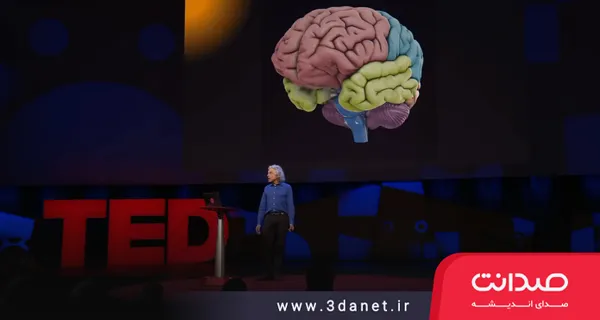
A year ago, I spoke about a book I was in the process of completing, which has since been published, and today I want to talk about the controversy this book caused. The title of my book is The Blank Slate, which rejects the well-known psychological theory that the infant mind is like a blank slate. The blank slate hypothesis attributes the entire structure of the mind to the influence of society, culture, parenting, and life experience. In the 19th century, the blank slate was an influential idea. Here are a few quotations that attest to the popularity of this theory: According to the historian Ortega y Gasset, “Man has no nature.” According to the anthropologist Ashley Montagu, “Man has no instincts.” According to the late scientist Stephen Jay Gould, man is capable of a vast range of behaviors and has no instinct for any of them.
There are reasons to doubt that the human mind is a blank slate. Some of the reasons stem from common sense. As many people have told me over the years, anyone who has more than one child knows that children are born with a certain set of innate talents and temperaments, and it is not all taken from the environment. And anyone who has both a child and a pet at home has certainly noticed that the child, when exposed to speech, acquires human language, whereas the pet does not, and this is probably due to some kind of innate difference between them. And anyone who has had a relationship with the opposite sex knows that the minds of men and women are different.
Furthermore, I think the growing body of scientific research on humans shows that we are not blank slates. One of the scientific topics in anthropology is finding human universals. But if you have ever taken an anthropology course, you know that anthropologists delight in showing how exotic cultures can be and that there are places where seemingly everything is the opposite of here. But if you instead look at what is common among the world's cultures, you find an extraordinarily rich set of behaviors, emotions, and ways of interpreting and understanding the world that are seen in all of the roughly 6,000 cultures of the world. The anthropologist Donald Brown has attempted to compile a list of all cultural commonalities, from aesthetics to affection and respect for elders to weaning, weapons, attempts to control the weather, the color white, and worldview.
Genetics and neuroscience also show that the brain has a complex structure. Recently, in a scientific study, the neuroscientist Paul Thompson and his colleagues used MRI to measure the distribution of gray matter in the brain—that is, the outer layer of the cerebral cortex—in a large sample of pairs of individuals. They marked the correlation of gray matter thickness in different parts of the brain of two people using a series of specific colors, where no difference is marked in purple, and any color other than purple shows a statistical correlation between the brains of the two people.
Well, when you pair two people randomly, two randomly selected people cannot have a correlation in the distribution of gray matter in their cerebral cortex. But as you can see, in people who share half of their DNA—in other words, fraternal twins—large parts of the brain are not purple, which indicates that if one of them has a thicker cortex in that part of the brain, the other fraternal twin does too. And if you compare two people whose DNA is entirely identical—that is, clones or identical twins—as you can see, there are large parts of the cerebral cortex where a massive correlation in the distribution of gray matter is observed.
These are not merely differences in anatomy, like the difference between two people's earlobes, but they have consequences for thought and behavior that are well illustrated in this famous cartoon by Charles Addams: “Separated at birth, the Mallifert twins meet accidentally.” As you can see, they are two inventors with two exactly identical inventions on their feet, meeting in a patent attorney's waiting room. Now, this cartoon is not so exaggerated, because scientific research on identical twins who were separated at birth and then tested in adulthood shows astonishing similarities between them. These similarities are seen in every pair of identical twins separated at birth that has been studied so far. But these similarities are far less common in fraternal twins. My favorite example is a pair of twins, one of whom was raised in a Nazi family in Germany as a Catholic, and the other was raised in a Jewish family in Trinidad. When they walked into a laboratory in Minnesota, both were wearing identical blue shirts with epaulets; both liked to dip their buttered toast in their coffee; both wore rubber bands around their wrists; both flushed the toilet before and after using it; and both enjoyed startling people by sneezing in crowded elevators to watch them jump. Now, the story may be unbelievable, but when you administer a large number of psychological tests, the results are consistent—that is, identical twins separated at birth show quite astonishing similarities to each other.
So, given that both common sense and scientific data challenge the Blank Slate theory, why is it considered an attractive theory? There are a number of political reasons why people find this theory appealing. Most importantly, if we are blank slates, then by definition, all humans are equal, because zero equals zero equals zero equals zero. But if something is written on the slate, then some people might have more of it than others, and this mindset justifies discrimination and inequality.
Another political fear of human nature is that if we are blank slates, we can perfect humanity; the ancient dream of human perfectibility through social engineering would come true. Whereas if we are born with certain instincts, perhaps some of those instincts might condemn us to selfishness, prejudice, and violence. Well, in this book, I argue that these are, in fact, false conclusions. To make a long story short: First, the concept of justice is not the same as the concept of sameness. And so, when Thomas Jefferson wrote in the Declaration of Independence, “We hold these truths to be self-evident, that all men are created equal,” it did not mean “We hold these truths to be self-evident, that all men are clones.” Rather, all humans are equal in terms of human rights, and each person should be treated as an individual, and no one should be prejudged based on the statistics of the particular groups to which that individual might belong. Second, even if we are born with certain base motives, those motives do not automatically lead to base behavior. Because the human mind is a complex system with different parts, and some of them can inhibit others. For example, there is very good reason to believe that virtually all humans are born with a moral sense; moral faculties allow us to benefit from the lessons of history. So even if individuals have a propensity toward selfishness or greed, that is not the only thing inside the skull, and other parts of the mind can neutralize them.
In the book, I review disagreements like this and a number of other politically controversial topics—nuclear catastrophes, danger zones, and so on—including art, cloning, crime, free will, education, evolution, God, sex differences, homosexuality, infanticide, inequality, Marxism, morality, Nazism, parenting, politics, race, religion, resource depletion, social engineering, technological risk, and war. Needless to say, tackling these subjects carries certain risks. When I wrote the first draft of this book, I circulated it among a number of colleagues for their feedback. Here are some of the reactions I got: “You’d better get a security camera for your house.” “Don’t expect any more awards, job offers, or positions in scholarly societies.” “Tell your publisher not to list your hometown in the author bio.” “Do you have tenure?” (Audience laughter)
Well, the book came out in October and nothing terrible has happened. I—I want to—there really was reason to worry. There were moments when I felt anxious because I know the history of what has happened to people who have held controversial views or unsettling findings in the behavioral sciences. There are many cases, some of which I discuss in my book, where they were smeared as Nazis, physically attacked, threatened with criminal prosecution because these researchers happened to discover or argue something about controversial topics. And you never know when you might fall into one of these traps. My favorite example is two psychologists who researched left-handed people and published some data showing that left-handers, on average, are more susceptible to illness, more prone to accidents, and have shorter lifespans. Incidentally, it has since remained unclear whether that generalization is correct, but at the time the data seemed to support it. Well, very soon those researchers were deluged with angry letters, death threats, and bans on the subject in a number of scientific journals from outraged left-handers and their advocates. And they were literally afraid to open their email because of the vitriol and abuse they had unwittingly provoked.
Well, it’s still early days, but the book has been out for half a year and nothing terrible has happened. None of the dire consequences for my career have materialized—I haven’t been banished from the city of Cambridge. But I wanted to talk about two of these controversial topics that provoked the strongest reaction in the roughly eighty critical articles written about The Blank Slate. I just want to show this list for a few seconds and see if you can guess which two they are. I estimate that probably two of these topics likely provoked 90 percent of the reaction in the various articles and radio interviews. It wasn’t violence and war. It wasn’t race. It wasn’t gender. It wasn’t Marxism and Nazism. They are: art and parenting. (Audience laughter) Let me tell you what claim provoked such angry reactions. I’ll let you decide whether those claims are really that infuriating.
Let me start with art. I said that among the long list of human universals I showed a few slides ago, one of them is art. No society has ever been discovered, even in the remotest corner of the world, that does not have something we would consider art. Visual arts—decorating surfaces and bodies—seems to exist for all of humanity. Storytelling, music, dance, poetry—exist in all cultures, and many of the motifs and themes that we find pleasing in art are seen in all human societies: a preference for symmetrical forms, the use of repetition and variation, in fact even specific things like the fact that poetry all over the world has lines that are close to three seconds long, separated by pauses. Now on the other hand, in the second half of the 20th century you often hear that art is in decline. And I have a collection, probably 10 or 15 headlines, from cultural magazines lamenting that in our time art is in decline. For example, let me read you a few quotes expressing this lament: "We can assert with confidence that our era is in decline, cultural standards are lower than 50 years ago, and evidence of this decline is visible in every sector of human activity." This quote is from T.S. Eliot, a little over 50 years ago. And a more recent quote: The likelihood of outstanding art continuing in our time is becoming more difficult. Decent bookstores are losing their exclusive franchises, non-profit theaters are largely staying afloat by commercializing their repertoire, symphony orchestras are diluting their programs, public television is increasingly dependent on reruns of British comedies, classical radio stations are dwindling, museums are resorting to screening blockbuster films, dance is dying. According to Robert Brustein, the famous theater critic and director, about five years ago in The New Republic
Well, in fact, art is not in decline. I don't think this point will surprise anyone in this hall because by any standard you can think of, art has never been more flourishing. Of course, these are entirely new arts and new media, many of which you have heard about over these past few days. By any economic standard, demand for all forms of art has skyrocketed, as can be seen from opera ticket prices, from the number of books sold, from the number of books published, from the number of music titles released, from the number of new albums, and so on. The only grain of truth in this complaint that art is in decline stems from three areas. The first area: elite art after the 1930s, for example, the kinds of works performed by major symphony orchestras are mostly from the pre-1930 musical repertoire, or the artworks shown in major galleries and prestigious museums. The second area: literary criticism and analysis. Probably 40 or 50 years ago, literary critics were a kind of cultural hero; now they are somewhat of a national laughingstock. The third area: university humanities and arts programs, which by many measures are indeed in decline. Students are dropping out of these kinds of courses in droves; universities are not investing in the arts and humanities.
So, what's the problem? They didn't ask me, but they themselves admit they need all the help they can get. And I want to point out that it is no coincidence that this supposed decline in elite art and literary criticism occurred at the very point in history when there was a widespread denial of human nature. A famous quote, which if you look on the web, you can find literally in a large number of major English syllabi, says: "On or about December 1910, human nature changed." Attributed to Virginia Woolf. It's debatable what she actually meant, of course. But looking at these syllabi, it's very clear that it is currently being used as a way of saying that all forms of artistic understanding that had their place for centuries, or millennia, were thrown out in the 20th century. Beauty and pleasure in art, which is probably a universal human trait, began in the 20th century to be considered vulgar or commercial. As Barnett Newman said, modern art has the urge to destroy beauty, which was considered bourgeois or kitsch. And this is just one example. I mean, this is probably a representative depiction of the female form in the 15th century; in comparison, this is a representative depiction of the female form in the 20th century, and as you can see, something has changed in the way elite art captivates human beings.
Indeed, in the modernist and postmodernist movements, visual art without beauty, literature without story and plot, poetry without rhyme and meter, architecture and urban planning without ornament, human scale, green space, and natural light, music without rhythm and melody, criticism without clarity and attention to beauty and insight into the human condition. (Audience laughter) Let me give an example that confirms this last point. One of the most famous literary scholars of our time is UC Berkeley professor Judith Butler. And here, as an example, is one of her analyses: "The move from a structuralist account in which capital is understood to structure social relations in relatively homologous ways to a view of hegemony in which power relations are subject to repetition, convergence, and rearticulation brought the question of temporality into the thinking of structure, and marked a shift from a form of Althusserian theory that takes structural totalities as theoretical objects to…" Well, you get my point. By the way, that is one sentence—you can practically diagram it. So, the argument of The Blank Slate was that elite art and criticism in the 20th century, though not art in general, disdained beauty, pleasure, clarity, insight, and style. People are staying away from elite art and literary criticism. What a mystery—I wonder why? Well, it turned out that this claim was probably the most controversial point in the book. Someone asked me if I put it in the book to deflect anger from the discussions on gender, Nazism, race, and so on. I have no comment. But it certainly provoked an energetic reaction from many university professors.
Well, another controversial topic is parenting. And the starting point for this discussion is the fact that we are all subjected to the advice of the complex parenting industry. Now, here is a quote from a besieged mother: "I am overwhelmed with parenting guidelines. I am supposed to do a lot of physical activity with my kids so I can gradually instill a habit of exercise and fitness in them, so they grow up healthy. And I am supposed to play all kinds of intellectual games with them so they grow up smart. There are all sorts of different games—play dough for finger dexterity, word games for reading success, large motor games, small motor games. I feel like I have to dedicate my life to figuring out what games to play with my kids." I think anyone who has recently become a parent can sympathize with this mother.
Well, let me share a few sobering facts about parenting. Most parenting research that forms the basis of these guidelines is useless. It’s useless because it doesn’t account for heritable traits. Some studies measure a correlation between parental behavior and children’s behavior and assume this correlation means that parenting shaped the child. And so, parents who talk a lot to their kids end up with kids who are well-spoken when they grow up, parents who spank their kids end up with kids who are aggressive when they grow up, and so on. And only a few studies control for the possibility that parents pass on to their children a gene that increases the chances of the child being well-spoken, aggressive, and so forth. Until research is conducted with adopted children, who provide only an environment, and not genes, for their children, there is no way of knowing whether the conclusions drawn are correct.
Genetically controlled studies have a number of sobering results. Remember the Millefort twins? They were separated at birth, then meet each other at the patent office. They had remarkable similarities. Well, what if the Millefort twins had grown up together? You might think, well, then they would be even more similar because they shared not only genes but also their environment. They would be extraordinarily similar, right? Wrong. Identical twins, or any siblings, who are separated at birth are no less similar than those who grew up together. Everything that happens in the home over all those years seems to leave no permanent mark on personality or intelligence. Complementary results from a completely different research method show that step-siblings raised together in the same environment—the opposite of identical twins raised apart. These children share parents, a home, and a neighborhood but share no genes—and they end up not being similar. So—two different studies with similar findings.
It shows that in the long run, children are not shaped by their parents but are shaped partly—only partly—by their genes, partly by culture—the culture of the country and the children’s own culture, meaning the culture of their peer group. As we heard from Jill Sobule today, what children care about, and more than most people are ready to accept, the chance events of random wiring in the brain in the womb, the random events of life, shape the child.
So let me conclude with a word and return to the theme of choice. I think that the sciences of human nature—behavioral genetics, evolutionary psychology, neuroscience, cognitive science—will, in the years to come, increasingly unsettle various dogmatic beliefs, different positions or professions, and political belief systems. And it presents us with this choice: the choice between knowing the facts about humans, or banning knowledge about these subjects. The choice between making topics taboo because nothing good comes from them, or honestly researching these subjects. My own answer to this question is taken from a great 19th-century artist, Anton Chekhov, who said: “Man will become better when you show him what he is like.” And I think this argument cannot be put more eloquently. Thank you very much. (Applause)
.
.
Steven Pinker: Is the world getting better or worse? Let’s look at the numbers
Watch the video on Aparat (enable Persian subtitles)
Download the video from Server 1 | Server 2
Download English subtitles from Server One | Server Two
Download Persian subtitles from Server One | Server Two
.
.






Discussion2 comments
عالییییییی بود، کیف کردمممم.
دفعه اول کوپرنیک به ما نشان داد که ما در وسط کائنات نیستیم و نخستین بار غرور بشر شکسته شد . دفع دوم داروین به ما نشان داد که پسر عموی میمون ها هستیم و از انسانی بهشتی به زمین فرود نیامده ایم و دومرتبه غرور بشر شکسته شد . دفع سوم فروید به ما نشان داد که ما خودمختار نیستیم و رفتار های ما از ناخداگاه ما که ریشه در تجربیات کودکی دارد شکل می گیرد و برای بار سوم غرور بشر شکسته شد . اینکه میراث فروید و داروین ترکیب شده و علمی به نام روانشناسی تکاملی رو ایجاد کرده و قرار است به ما نشون دهدحتی گرایشات سیاسی و مذهبی و .... ناشی از ژن ماست (محیط بی تاثیر)و افراد سایکوپاتیک چاره ای جزء هنجار شکنی نداشتند .چگونه این جبرگرایی باعث میشود ما فکر کنیم دنیا داره به جای بهتری تبدیل میشه ؟چه چیزی قابل کنترل هست ؟آیا باید جهان را به یک آزمایشگاه اصلاح ژن تبدیل کنیم ؟ اابته فروپاشی انگاری جزء خطاهای شناخته شده در روانشناسیست به نظر میاد باور به منجی در ادیان مختلف و گرایشات آخرالزمانی ناشی از همین خطای شناختی است.کم رنگ شدن ایمان در جهان و گرایش بیشتر به عقل که ثمره آن تکثر گراییست بایک اثر رفت و برگشتی باعث شدت گرفتن فروپاشی انگاری در روان باورمندان می شود . البته ۴۵ درصد افراد کره زمین اطلاعات دریافتی خودشون رو منوط به تجربیات گذشته می دونند یعنی زمین بازی آنها جایی شکل می گیرد که تجربه لحظه حال را قبلا تجربه کرده باشند و این طبیعیه که نسبت به تغییرات روی خوش نشان ندهند.