Sociology
The Authenticity of Culture and a Critique of Sociology, Mostafa Malekian
“The Sabbath was made for man, not man for the Sabbath”; Mostafa Malekian insists that no doctrine should obstruct human flourishing. The example of the Scandinavian countries shows that institutional arrangements are a necessary condition for flourishing, not a sufficient one.
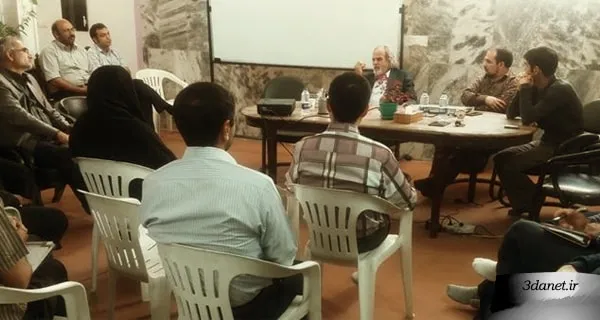
Introduction: At the beginning of the lecture A Critique of Sociology, several questions were raised as follows:
1- Since you have repeatedly expressed your interest in philosophical individualism in your lectures and interviews, we ask you to explain the ontological and methodological assumptions of this view, as well as those of rival views. Especially in response to the critique that some concepts in the social sciences are fundamentally irreducible to the individual and the individual's circumstances.
2- Considering the interview conducted with you by Dr. Ghaffari on the critique of the concept of development, please tell us what your view is on the nature and the manner of realizing development goals?
3- We ask you to explain your lived experience to us and tell us how you arrived at such a problem within the realm of the social sciences?
.
Mostafa Malekian: I greet all the ladies and gentlemen present.
The three questions that reached me in written form, the two SMS questions, Dr. Khadivi's question, and the manner of expression I heard from you (addressing the phrase related to lived experience in the third question asked in person) all indicated a single atmosphere. I will try to answer all the questions within this atmosphere. All the questions that reached me show almost a single atmosphere in which the friends would like me to speak. Since all six questions are within one atmosphere, I will enter that very atmosphere and try to answer the questions as well.
It is narrated in the Gospel that Jesus (PBUH) objected to the strictness with which the Jewish clergy treated the Jews. The Jewish clergy said that God had asked us in the Book of Genesis not to work on the Sabbath, and the superficial, literalist Jewish clergy obliged the Jews not to work on the Sabbath. Many of the Jews were so poor that if they did not work for a day, they had nothing to eat, and however much they appealed to the Pharisees, or the Jewish jurists, it was futile; they said that God had said you must not work on the Sabbath, and this is not an excuse that is accepted. Jesus said a sentence in reproach of the Jewish clergy: God made the Sabbath for man, not man for the Sabbath. That is, God wanted the Sabbath holiday to be a help to man, not for man to be a help to the Sabbath. If the Sabbath holiday does not help man and even harms him, abandon that ruling. In my opinion, this was a very great lesson that I always pondered in my adolescence: anything that becomes an obstacle to human well-being must be removed. Whatever it may be. I say this as explicitly as possible. Religion, creed, faith, rite, school of thought, ideology—anything that becomes an obstacle to human well-being, whatever its name and title may be; sacred, non-sacred, worldly, otherworldly, material, spiritual—must be swept aside. Because there is no school of thought except that it must be for the sake of man. Man is not for the school of thought, man is not for religion, man is not for creed; faiths, rites, schools of thought, doctrines, paths, and the ideologies of the -isms—these must be for the sake of man. The further we advanced in our intellectual experience, our studies, and our imaginative experiences, the more we saw that this warning that Jesus (PBUH), according to the Gospels, gave has often been neglected. Now I will give an example, especially as I know many of the friends here are sociologists or work in the social sciences, and I say this with a frank tone. Suppose I tell you now that the Scandinavian countries, in terms of what you call social institutions, are the healthiest countries in the world. That is, in terms of the arrangements and establishments, regulations, rulings, and laws they have enacted and implemented to preserve the institution of the family in the best possible way, to preserve the institution of politics, the institution of economics, the institution of education, and the institution of law. That is, when you go to a Scandinavian country, or even a step down to a country like Germany or France, you see that all those things whose absence and lack you and I lament exist there. Human rights are observed, behavioral ethics are observed, there are laws so that a spouse does not oppress their partner, parents do not oppress their children, the wealthy do not ride roughshod over the poor, workers' rights, spouses' rights, free insurance, free healthcare, good education and upbringing—in short, everything you do not have here exists there. Yet the suicide rate is higher. For years, Sweden has ranked first in the world for suicide. What do you understand from this?
One can understand that you might be able to organize social institutions (social institutions: family, politics, education, science and technology, law, art, religion, creed) and all social institutions, but for whom did we want to organize all of this? We were not in love with the institutions. We wanted to organize institutions in which human beings would feel satisfaction and contentment, feel peace, be hopeful, feel joy. But now, those human beings you have created are not like this. They do not lack trade unions; they have free insurance, free healthcare, and education and upbringing; they have recreational facilities, they have parks, swimming pools, and their nature is beautiful; they have everything. They have everything that you and I sigh for, yet they commit suicide, yet they have many mental patients and consume pills, yet they cannot sleep at night. When I see this reality, I say all these social institutions are not worth a penny. Not that we should be grateful that we do not have them—no, I wish we had those things too. But the point is that institutional arrangement cannot bring humanity what humanity wants. Institutional arrangement means making institutions better with laws, rulings, regulations, and arrangements; this is the most that can be said about it. At most, the necessary condition for human well-being is provided, but it is not the sufficient condition; if it is anything, it is at most the necessary condition.
Yogananda Mahananza, the renowned mystic and missionary of Hinduism, when he arrived in America in 1221, was almost the first person to officially come from the East to the West to propagate spirituality and established organizations and institutions. He has a famous lecture, a piece of which appears in the final pages of his autobiography. There, addressing the American people in one of his earliest lectures, he says: Many of you ask us Indians, how do you live so much with flies, lice, and hot, humid weather? Well, change the situation a bit, do something about these problems: get some devices for air ventilation, for reducing humidity, for dealing with flies, for dealing with lice. He says this objection is valid to a certain extent. But I ask you, why is it that you, who have none of these, cannot sleep at night? We, amidst lice and flies, sleep very peacefully; why are you not like this and take pills to sleep? That is, Yogananda Mahananza accepts that civilization and hygiene and so on are good, but he says do not think that if these are achieved, humanity is well-off. He says we sleep seven to eight hours under the buzzing of flies, and our snores rise to the heavens. You, in ventilated and cool rooms with all sanitary facilities, cannot sleep at night.
I say this sociological way of looking at matters is erroneous somewhere. We suppose that we must reform social institutions and think that when we reform social institutions, humanity becomes well-off. Not at all, absolutely not. Why? For at least three reasons:
First, there is no such thing as a social institution; these are names. Names without a referent. Social institutions simply do not exist.
There is no such thing as politics and economics. I say explicitly, there is no such thing as the family, there is no such thing as education. In the human world, only people exist. Individual, one-by-one people exist. Any other name we put on them, we fall prey to illusion. If you call all of us a Philosophy of Social Sciences class, it is an error. It is fine as an abbreviation, a shorthand symbol. I have said many times, if you want to create a concept for the ease of linguistic exchange, there is no problem. That is, 40 people enrolled in this class, but 30 of them showed up. Instead of naming the 40 and naming the 10 and saying these were absent, you say the whole class was present, except these 10. Instead of 30 names, we say the whole class. This is called Shorthand, a type of abbreviation. We have come this far that a person speaks this way. If, instead of naming all my brothers and sisters and saying Morteza needs protein, Mojtaba needs protein, if I say all my brothers and sisters need protein, this is an abbreviation and there is no problem.
But if you think that when we were all called the Philosophy of Social Sciences class, something also came into existence in the world called the Philosophy of Social Sciences class, this is an error. Apart from you individuals, no one exists. Apart from 75 million people, there is no such thing as the Iranian nation. There is no such thing as the country of Iran or the Muslim Ummah. We have one and a half billion human beings. If, instead of naming one and a half billion, you want to say the Muslims of the world or the Islamic Ummah, there is no problem, say it. But do not ever think that the universe and the world are waiting for you to create an abstract concept, and it will necessarily create a corresponding referent for it in the external world. Say, I created a concept called Ummah, so I will also create something in the external world to be the instance of that concept. The world has absolutely not waited for you and me to create concepts and for it to create instances for our concepts. Family is a word; I exist, and my wife, and my two daughters. If, instead of saying Mostafa and Simin and Hoda and Mahdieh, you say the family, there is no problem. But do not ever think that besides the four of us, there is another thing called the family unit, as if we have something besides us called the family unit, as if we are five entities: me, my wife, my two daughters, and the family unit. In that case, you are mistaken. Worse is to say the family unit is getting warm, getting cold, has become lukewarm. We have no such thing. This is a joke. My first point is that these abstract concepts do not exist; that is one point.
The second point is that we assume there is such a thing as the institution of politics, economics, education, and so on. You must not think that if we reform these institutions, we human beings will flourish. That is, you think that if the outside of human beings becomes good, the inside of the human being will necessarily become good as well. This is the error of all sociologists, who think that if the outside—that is, from my body outward—everything becomes good, then from my body inward everything will also become good. This is absolutely not the case. If you see that the world's greatest billionaire, a certain Nobel laureate, a certain great mathematician, a certain president commits suicide, what conclusion do you draw? When the world's greatest billionaire commits suicide, we should not conclude that if the outside of life becomes good, the inside of life is necessarily good, because this person has everything we do not even see in our dreams, in their waking life. Everything that does not even cross our imagination, they possess in reality, yet they commit suicide. So its meaning is that if all social institutions are restored and repaired, it is not the case that humanity will flourish. Therefore, we should not say that this country is developed because its gross national income is such-and-such. Gross national income is an abstract concept. It is a number obtained from multiplying and dividing a series of numbers. We say this country is advanced because its gross national income has increased or its gross national income is higher than that of another country. But then we say, yet these people are sadder than those of that country, more unhappy, more anxious, their sense of peace is less. They say, thank God, the gross national income has gone up. After all, this means a number has gone up. Should the number be sacrificed for the people, or the people for the number?! Look at the world's economists; they multiply a few numbers together, add and subtract natural and human resources, and say that China's gross national income has become three times that of England. We say, very well, let us assume it is all correct. But if we see, hypothetically, that the people of England are much happier, have more peace, are more hopeful, and feel secure, while the people of China do not feel secure and are not certain that if they leave home on their own two feet in the morning, they will return home on their own two feet at night. No. Then we say, well, they are like this! They say, it doesn't matter, their gross national income has gone up.
Gross national income is a myth, a story. This is the second point. Now let me give you a simple example so you can see that this story is just a story. You see, some people think that I am one of those individuals who wants to promote my own job and profession in some way, and because my field is philosophy and I am interested in psychology, I want to belittle other fields so that my market becomes hot. My market does not become hot this way. No, the realities are saying that this is not the case.
Now, I will mention one of these examples, and its story is very detailed and has a very delightful and fascinating narrative. But, well, I don't want to take up your time. I will just tell you one thing, which I am incidentally quoting from the very book you mentioned, Happiness. You see, in 1972, in the country of Bhutan, which is a very, very small country between Nepal on one side and India on the other—a country called Bhutan, which perhaps even if you listen to the news for three years, you might not hear the name of Bhutan in the news once; I don't think you would. In the country of Bhutan, which was an imperial country, meaning a monarchy, it had a royal regime. In 1972, a gentleman became king; just as a son takes his father's place, he too took his father's place and became the king of Bhutan. Before this son became the king of Bhutan, no one really talked about how much study, research, and reflection he had done before coming to power. It wasn't a matter of concern either. He was living in his father's palaces or wherever. But when he came to power—I have noted down his name, Mr. Jigme Singye Wangchuck—he came to power in 1972. When he came to power and became king, the king of his country, on the very first day, in his first speech, he declared: 'People of Bhutan, I have come to the conclusion that the measure of a country's progress is not its Gross National Product; it is a mistake to take Gross National Product as the measure of a country's progress. From today, I want to take Gross National Happiness as the criterion for the country's progress, instead of Gross National Product, Gross National Happiness. I want to make this the criterion. I will take this as the measure of progress. And my reflection has led me to believe that Gross National Happiness depends on four factors,' and he called them the four pillars of human happiness. These four. Now, I really do not want to prolong the discussion at all, absolutely not. And he came and said, 'We will come and make these four pillars the foundation, and we will govern our country based on these four pillars.' Do you see? The story is very long. I will just state these four pillars:
The first pillar, he said, was a democratic and free government, and then he specified precisely that being democratic—exactly what I said in that interview (the interview “A Reflection on the Concept of Development”)—must be translatable into the states of human beings, and the freedom of the government must also be translatable into the states of human beings; it is not an abstract concept. Whether a government is democratic or not must be asked of the people, do you see? Not some thing, some place, where they say you are unaware; our country is galloping ahead at full speed with power, glory, majesty, and wisdom, yet I tell you that you are withering away day by day. No. This is the first pillar. The government must be democratic in the selection of the government; and it must be free in the execution of governance. That is the first factor. The second factor, he said, is that we want to bring progress to our country’s economy, but a progress that has two characteristics: first, it must be based solely on equity (1- equitable progress). Second, it must be steady progress. Not going up one year and coming down for two. That destroys human beings. Humanity must have steady progress, even if slow, but steady and forward-moving. Third, we must keep our environment healthy, and therefore in my country of Bhutan, this country permits no program that destroys more than 60% of the forests. Whatever industry you might name, whatever you say, 60% of our country must remain forest. We can only do whatever we want on 40% of our country’s land. The 60% must preserve its dense forest state. Fourth, we have a Buddhist culture into which some undesirable elements have crept. But it has 25 positive elements. We want to cultivate these 25 elements in every single one of our children. We are not in love with Buddhist culture. We are in love with these 25 good elements of it. So there are superstitions, such and such. There are 25 components in Buddhist ethics that we want to cultivate in the children. We want to do this. Now, for each of these he had some proposals that I will not go into. The first thing he did was to say that in order to achieve these four pillars, I must cede every piece of my power as king to an institution. So he went and created a parliament and gave it all legislative power. He said, I will no longer participate in legislation. He created a legislative assembly, a legislative parliament, and other things. It is interesting to tell you that for nearly 8 months there were demonstrations in this country where the people were saying the king has no right to cede his right to others, and he was saying I must do it. 11 people were killed during these 8 months who were saying, Sir, you are our king. Throughout all these 8 months, his entire argument was always that an individual always has the potential for corruption, but institutions have very little susceptibility to corruption. That was his argument. Well, now pay attention to all of this. He ceded his power. One part to this, one part to that, one part to that, one part to that, and based on this program they began what we call, I submit, Gross National Happiness. In 1984, that is, 21 years later, since he had grown old, he stepped down in favor of his son and went into pursuits he himself loved. And his son came and continued this method of his father. Now see, in 2001, that is, 23 years after this father and son came to power, the United Nations conducted an evaluation of Bhutan’s success. This evaluation was absolutely not an evaluation by the government of Bhutan or the nation of Bhutan. A group of international experts was commissioned by the United Nations to see what Bhutan had done. Do you see? The result: their gross national income per capita—even though the aim was gross national happiness per capita—but even their gross national income per capita surpassed that of India. Mind you, it surpassed that of India. Life expectancy rose from 43 to 66. Child mortality dropped from 163 per 100,000 to 40 per 100,000. Literacy rose from 10% of the people being literate in 1972 to 60% of the people becoming literate. Schools and clinics became so abundant that many schools and clinics, while their staff are not allowed to leave their workplace, have no students and no patients. Do you see? That is, when you start from within, the outside gets set right. But when you start from the outside, the inside does not get set right. Do you see?
Now, look, that same Gross National Product that you all used to talk about (when I say "you all," I'm not referring to you personally), those economic sociologists used to talk about—that was also successful, but then again, it wasn't successful either; that number wasn't important. The important number is that in Bhutan, between 7 and 8 suicides occur per year. Per year! Are you paying attention? The consumption of nerve pills in this country is lower than anywhere else in the world. This is because they made contentment, an inner matter, the criterion, rather than multiplying four numbers together and saying, "This is it." We ask, "What is this?" and they say, "This is your Gross National Product. Per capita income." No, we don't even understand per capita income; we only understand that we feel bad. That's it. We understand that we don't feel good. We have no motivation, we are depressed; if we are not sick, we are at least ailing. Are you paying attention? We don't talk to anyone. We have withdrawn into ourselves and feel everyone owes us something. And we feel we owe ourselves more than anyone. We constantly curse and damn ourselves. But what has happened to our Gross National Product? What kind of number is this?! And then they tell us, "Sir, the system is advancing with glory, grandeur, power, and wisdom," but we ourselves are just left bewildered. I say this means you are disregarding the human being, you are creating abstract concepts. This was one example I'm giving you, and you can follow the story further yourselves—how this movement that occurred in Bhutan made the United Nations ponder, and made the White House in America ponder, and what committees were formed. The story is very long; I don't want to take up your time now.
So the second point was that even if we don't say institutions don't exist (though I believe they don't), their well-being does not necessarily lead to the well-being of individual human beings. I'm not saying we should destroy institutions so that people can flourish; no. I'm saying the flourishing of institutions does not necessarily mean the flourishing of individual human beings. If I can say anything on this matter, I would say it is a necessary condition, but it is absolutely not a sufficient condition.
But the third point, which I said has three aspects. Well, now, how are institutions reformed? For example, this institution of politics in Iran needs to be reformed. Right? The institution of economics needs to be reformed. Have you ever asked yourselves when an institution changes and is reformed? For instance, when do you say that the institution of economics in Iran has changed? If you pay attention, they say an institution has changed when the laws governing the relations of that institution change. Whether it's the institution of economics or the institution of politics; that's what we say, right? When you say the institution of marriage or the institution of the family has changed in Iran, you mean the laws governing divorce, marriage, child custody, husband-wife relations, parent-child relations—you mean these laws have changed. Institutional change means changing social regulations. It means changing social rules. Well, now, suppose an institution is handed over to us sitting here, and they say, "Sir, we want you to change the institution of politics," meaning you must re-regulate the laws governing political relations in a different way, write a different political law. Well, now, we want to write this political law. Right? I, who am still narcissistic, how will I write the law? So that it benefits me, benefits my group, benefits my religion and creed. Right? I want to write the law, after all. Who writes the law? Jinns don't write laws, angels don't write laws; they hand it to us and say, "Sir, you fix the regulations of the institution of politics." We want to write the law. Well, now, a bunch of narcissistic people want to write the law, a bunch of fanatical people want to write it, a bunch of dogmatic and rigid people want to write it, a bunch of intolerant people, a bunch of monopolistic people—are you paying attention? A bunch of superstitious people want to write it; well, will the law they write make the state of that institution better or worse? Worse, of course. Right?
So, if you want that law to be a proper law, so that your institution becomes a proper institution, the law must be written with complete fairness. Well, if the law is to be written with complete fairness, the lawmakers must completely forget their own interests and harms, forget their own profit and loss, so they can write the law impartially. Well, now, which one of us can forget?
If we are students, we want to write the law in favor of students. If we are university professors, we want to write it in favor of university professors. If we are villagers, we want to twist the law to benefit villagers. If we are city dwellers, to benefit city dwellers. If we are from deprived regions, we want to write the law in a way that benefits deprived regions; if we are from affluent regions... So if you want an institution to be established properly, the laws governing that institution must be properly made, and laws are written by human beings—no one else writes the law, human beings write it. Right? Human beings write it, after all. If human beings still have egoism, still have selfishness, are still narcissistic, fanatical, dogmatic, still narrow-minded, still harbor grudges against their rivals, are still ruthless and hard-hearted, still devoid of human emotions—well, they will write the law.
They write laws and then change them. The law was not only meant to be changed; it was meant to be changed for the better. Well, who can write a law that changes for the better? Someone who can, in Rawls's terms, cast a veil of ignorance over themselves. You see. The veil of ignorance. Who can cast the veil of ignorance over themselves? Who can? Rawls said (though he was speaking in a different context; not in my context), Rawls said if you want the members of parliament to pass a law, and for this law to be just, you must inject them (each representative) with a serum so that, in those three minutes when they are to rise and deliberate, they forget everything about themselves. Forget whether I am a man or a woman. Right? So, if I write a law that turns out to favor men, once the serum wears off, I might well have been a woman. If I want to write a law favoring women, it might later turn out I am a man. Forget whether one is a worker or an employer. Then say, we must write a law such that if I turn out to be an employer, it is not to the detriment of employers, and if I turn out to be a worker, it is not to the detriment of workers. Forget whether one is urban or rural. Forget whether one is a university professor or a student. Forget whether one is poor or rich, a worker or a farmer. Forget whether one works in industry or services. If you could inject me with a serum so that when I am to rise and deliberate, to pass a law or not, I forget everything concerning myself, he called this the veil of ignorance falling over a person. When the veil of ignorance falls over a person, since I do not know whether I am a woman or a man, rich or poor, an employer or a worker, a farmer or working in the industrial sector, in a village or a city; I must write the law in such a way that after its passage, whatever I turn out to be, I do not lose out. Well, then how can one write a law so that, whatever happens, one does not lose out? It must be written with the utmost fairness. I have always used this example. I say, if your two little daughters are fighting over dividing a cake, the solution is to tell one of them to take the knife and cut the cake in half, and the other one (the one who did not cut the cake) gets to choose first. Right? Now, your daughter holding the knife thinks, it would be very good to cut the cake a little off-center, a bit more to this side, so one piece is smaller and the other larger. But if I do that, well, my sister gets to choose first, she will take the larger piece, and I will lose out. Because the one who wields the knife cannot be the first to take a piece of cake; she is ignorant of her own fate. A person who is ignorant of their own fate cuts the cake so precisely down the middle that not a molecule is out of place, and whichever piece her sister takes, she does not lose out. Why does she cut it down the middle? Because she does not know her own situation. If she knew the cake on the right would be hers, she would move the knife that way, and if she knew the cake on the left, she would move the knife that way. Therefore, she must draw the knife straight and true; because the veil of ignorance has fallen over your child. She does not understand which piece will be her lot, so she must measure in such a way that she does not lose out in any case. Rawls said the veil of ignorance must fall upon the shoulders of all legislators. Now I say, that serum has not been invented to make us forget whether we are men or women; right? So, if we want our law to be fair, we must be people in whom selfishness has died, in whom egoism has died, who have no narcissism, who do not only consider our own profit and loss, who do not see the world solely from the perspective of our own profit and loss. Well, institutions do not create this kind of human being; it is this already-cultivated human being who can write a fair law, and then it is this same human being, without egoism, who also properly implements the correctly written law. And that is when they say the institution of politics has changed, the institution of economics has changed and improved. Do you see any other way? Is there another way such that if we change the laws governing the institution of the family, it turns out better than before? No. Those who write family law, some of them are women and some are men. If the women are to think only of women and the men only of men, the law will turn out even worse than before. So, the veil of ignorance must fall over them, but we have not yet invented anything that makes you forget all your personal circumstances for three seconds. Therefore, we must first cultivate human beings whose inner selves have been transformed; we must create these individuals. Otherwise, a thousand times regimes may come and go, and new laws will be written again, but the new laws will be written for the benefit of the new winners. Do you see? You see in the law, if in the constitution, Shiite Muslims write the law, it will be written into the law that Shiism is the official religion.
If in another country Sunni Muslims write, they say Sunnism is the official religion. Because they have egoism, because they are not yet the people they ought to be. Now, you can change the regime a hundred times, change the constitution and economic and political laws a hundred times—when this person must write the law, we have no other being to write the law. This is the correct teaching common to all religions and denominations: "Indeed, Allah will not change the condition of a people until they change what is in themselves." If you want a desirable objective change to occur in you, a desirable subjective change must first occur. Objective changes are not good at all unless they are preceded by good subjective changes. Can anyone say that laws are not written by human beings? Can you say that? Can anyone say that the egoism of human beings has no effect on their good and evil? Well, you see. Look at your family law. I have said many times that a political regime should not be judged solely by its prisons, by how many political prisoners it has. Because, first, the majority of people have nothing to do with political matters; only a few deal with political matters and end up in prison. Second, the one who deals with political matters knows that if he wants to engage in politics in the Third World, he wants to enter the lion's mouth, so he prepares himself. If you want to see the corruption of a government, go into its courts and see what is happening there. Go into the family courts, and then you will understand the corruption of our system, the clear and obvious injustice done to women—this is injustice. Why is this injustice done? Because the law was written by a man. Yes, a man can write a law, and that is when a man forgets himself, when he says I must write a law such that if I were a man, it would not be to my detriment, and if I were a woman, it would not be to my detriment either. But a person cannot forget his own manhood or womanhood, so he must forget his egoism, not see everything revolving around himself. And in the same way, a labor law written by employers is not just, and a labor law written by workers is not just either. It makes no difference. Do not think that if workers write the law, it will turn out just—absolutely not. The worker thinks the worker's thoughts, not the employer's thoughts. The employer thinks the employer's thoughts, not the worker's thoughts. A medical system law written by doctors serves their own interests, in my opinion. A medical system law that patients would want to write would also serve their own interests. Yes, doctors can write the medical system law themselves if they have no egoism; otherwise, the doctor only thinks the doctor's thoughts, not the patient's thoughts. The patient, of course, also thinks the patient's thoughts, not the doctor's thoughts. So I say it is useless for you to change institutions; people must change. When people change, both laws are written fairly and the laws
What is written fairly is implemented fairly, that is the first point.
So I have mentioned three points, by means of which I want to say:
Firstly, institutions do not exist at all; they are abstract concepts. Secondly, I want to say that even if institutions do exist, we should not think that if institutions are reformed, people's condition will necessarily become good and pleasant; it is absolutely not so. Because suicide exists in Switzerland too. Depression exists in Switzerland too. Thirdly, I want to say that even if we want to reform institutions, if institutions are to be reformed, doesn't that mean their laws must change? Who is going to change them? Human beings must change them. A human being who has egoism cannot write a fair law; if he is a cleric, he writes in favor of clerics. If he is an academic, he writes in favor of academics. It makes no difference; if she is a woman, she writes in favor of women, and if he is a man, he writes in favor of men. Unless that man, that woman, that cleric, student, academic, university professor—their egoism must disappear. If their egoism is to disappear, changes must occur in their beliefs, changes must occur in their feelings, emotions, and sentiments, changes must occur in their desires. I call these three changes cultural change. A person's culture means their beliefs, their feelings, emotions, and sentiments, and their desires...
.
.
Text of the Lecture: The Authenticity of Culture and a Critique of Sociology
Download from Server 1 | Download from Server 2
.
.
Audio of the Lecture: The Authenticity of Culture and a Critique of Sociology
Download from Server 1 | Download from Server 2
.
.
The Authenticity of Culture and a Critique of Sociology
Mostafa Malekian | Mashhad | July 2015
Fardaye Pars Educational and Research Institute
.
.


Discussion8 comments
سوال؟ همان باورهایی را که جناب ملکیان گفته چگونه ایجاد می شود؟ انسان را مگر می شود از جامعه جدا کرد؟ اگر بشود فقط روی کاغذ است اما روی زمین قطعا نهادهای اجتماعی در همان درونیات فرد تاثیر دارند
سلام جناب مصطفی ملکیان تو سخنرانی های دیگه شون به اصلاح اجتماعی همراه با اصلاح فردی اشاره کردند اما اینکه میگید باورها ...جامعه مجموعه ای از انسان هاست و باورهای انسان که میشه فرهنگ جامعه اینکه باور ها از کجا اومده که منه انسان عقاید و ارزش و باورهامو خودم انتخاب میکنم که بر فلان چیز باور دارم حالا جامعه مخالف یا موافق درسته نهاد ها تاثیر داره اما نهاد ها را چه کسانی ایجاد کردند و متشکل از چیه همون انسان ایجاد کرده البته کاش می شد از خودشون سوال کرد تا کامل توضیح بدن
نهاد ها رو هم همون انسان ها ایجاد میکنن دیگه
سخنان آقای ملکیان در این بحث، حاصل تجربه های عملی و نظری ایشان است؛ نگاه وی در این جا، نگاهی مشرف به خیلی از نقدهایی است که به سنخ نظرات ایشان وارد می شود. نقدهایی تازه را به خووبی پاسخ گفته اند که دوباره گوش کردن اش لازم است.
در مورد آمار خودکشی در سوئد و بوتان صحبت شده. سال هاست که در افواه، سوئد و کشورهای بلوک شرق به سرزمین های خودکشی شهرت دارند، اما در سطح افواهی. انگار که آمار چیز دیگری می گوید. آماری که الان در دست داریم، با اطلاعات جناب آقای ملکیان نمی خوونه و به شدت تکان دهنده و متفاوت باانتظارات ماست. لطفا به بالاترین ها در هر دو جدول دقت بیشتری شود: https://en.wikipedia.org/wiki/List_of_countries_by_suicide_rate
آیا تصور می کنید پروپاگاندا، رسانه و تحصیلات که ابزار کنترل اذاهن , administration حکومت ها و مردم دنیاست به شما می گوید آمار خودکشی در کشور های خودی زیاد است؟ تکنولوژی ارتباطات ، آمار ، و حتی تحصیلات وسیله مهندسی اجتماعی است.
باسلام اینجانب اذربهرام دریک مقاله ای درحوزه مباحث حقوق بامقدمه های حاوی نکات بسیارمهم ونیز بمناسبت ۲۵اذرماه سالروز تولد استاد ارجمند جناب اقای دکتر عبدالکریم سروش ازایشان بعنوان فیلسوف معاصر یاد نمودم که البته واقفم عبارت مناسبی نیست اما بعنوان شخصی که د ردانشگاه وبعنوان یک دانشجو دوره ارشدعلوم اجتماعی ور ودی سال ۹۱ بدلیل مشکلات وسنگ اندازیها وموانع بسیار که سیاسیون دوست ودشمن ایجاد نمودند هنوزدرسم اتمام نیافته است .واینکه باقشروسیعی از دانشجویان ارتباط دارم باید هشداربدهم دانشجویان مطلقا دکتر سروش رانمی شناسند و ازسردرد وبرای هشدار نوشتم فیلسوف معاصر.لازم بذکراست این مقاله رااذرماه ۹۴ به یک روزنامه مثلا اصلاح طلب جهت ڃاپ ارائه دادم که ڃاپ نگردید.
بحثی به شدت پر مغالطه. متاسفانه مجری نگذاشته است نقدهای جدی مطرح شود و ملکیان همراهی کرده. ملکیان مدعیات خود را بیان نموده اما اجازه نقد نداده است. بعد از مدتی معلمی می دانم که بدترین معلم ها کسانی هستند که فقط اجازه سوال می دهند، نقدها را هم تبدیل به سوال می کنند و سوالات خوب را می پیچانند. گمانم ملکیان زمانی معلمی خوب بود اما مدتی است به روشنکری مرید پرور تبدیل شده.