Philosophy
“In Defence of Malekian’s ‘Authenticity of Culture’” by Hossein Hosseini
A defence of Malekian's 'primacy of culture': reforming society begins with the individual, and flesh-and-blood human beings must not be sacrificed to political and economic structures. The priority is cultural growth, not mere economic development.
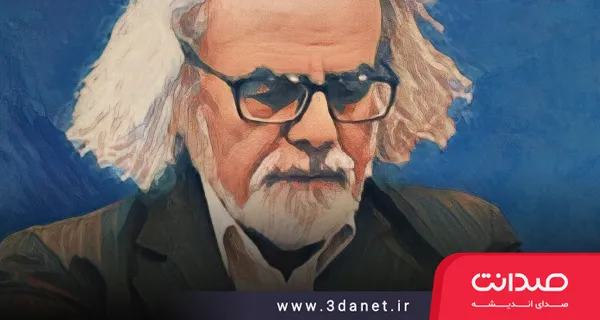
In Defence of Malekian’s “Authenticity of Culture”
By Hossein Hosseini
Like any other thinker, Professor Malekian is open to criticism, and consequently, one cannot accept all of his views wholesale or reject them outright. He himself has shown that he is an advocate of critique and criticism, and we see such an approach in his works.
In this short piece, I will explain Professor Malekian’s theory of the “authenticity of culture” and defend it. In subsequent writings, I hope to also present criticisms that I find applicable to his views. For instance, I disagree with his determinism, and in my view, this determinism is in serious contradiction with his entire intellectual project, such as the authenticity of culture, rationality and spirituality, or his concern for individual and social reform.
First, it must be said that Malekian by no means considers political or economic work unimportant. How could one possibly underestimate politics and economics and continue with one’s life? It is politics that organizes the internal and external relations pertaining to power, and its impact on our daily lives is undeniable.
Economics, too, whether in its individual aspect or its social dimension, is a vital matter. Without money, food, clothing, and a roof over our heads, one perhaps cannot live even a single day, and certainly Professor Malekian has not been, is not, and cannot be oblivious to these vital matters. He is, in fact, a critic of the “primacy” of politics or the “primacy” of economics; that is, the mistaken notion that by changing political or economic regimes, everything will be set right.
But historical experiences have repeatedly shown that purely political actions have always been costly and yielded little result. For example, many leftist guerrillas who knew they would not survive more than a few days on the path of their communist ideals, paved no path and achieved nothing other than losing their own lives or taking the lives of their fellow human beings.
Professor Malekian defends the authenticity of the individual, culture, and meaning in the human realm (the space of reasons, in McDowell’s terms). He is by no means opposed to political or economic reform, and we have especially witnessed his political engagements many times. He merely grants authenticity to the individual, culture, and meaning. In Malekian’s view, it is the individual who possesses reality or authenticity.
This term “authenticity” is a concept with a long history and deep roots in philosophy. For example, in Islamic philosophy, there is a detailed debate over whether quiddity has authenticity or existence. Mulla Sadra believes that only existence has reality, and quiddity does not exist externally but is abstracted from existence. More or less with this same meaning of authenticity, we can say that for Malekian, it is individual human beings who are authentic, and overarching political and economic structures and institutions are abstracted from them. In reality, the coming into being and persistence of those overarching institutions and structures depend on individuals.
As it happens, Professor Malekian is very sensitive and deeply concerned about the reform of politics and society. But he sees the path to this reform not in violence, suppression, or coercion, but above all in dialogue, persuasion, and cultural reform. In his view, the path to reforming society passes through the individual; in other words, each and every one of us matters, and this means reviving the flesh-and-blood human being and rescuing them from the grip of overarching and abstract structures. In fact, Malekian wants to show a way to reform society that is humane, lasting, effective, and “authentic”; not that hundreds of political regimes or economic orders are changed at exorbitant financial and human cost, only for us to end up back at square one, or even regress.
Malekian opposes reducing the inner, rational, psychological, and cultural dimensions of human beings to external and impersonal political and economic structures. This is a reductionism that, in particular, some Marxists practiced, considering all of a person's beliefs, feelings, and inner dimensions to be products of external social structures such as economic institutions. They regarded religion, culture, and morality as superstructure and mere playthings of external economic and political currents. It is clear that such a view signifies the death of the human being as a conscious and decision-making agent. With such a view, the human being is considered merely a secondary entity and a fading shadow of totalitarian political and economic systems that seek to achieve their goals through general concepts like "the hands of history," "the displacement of social classes," and the like. Here, Malekian stands against the dissolution of the human being within the framework of overarching political and economic systems and revives the role and value of the individual. He considers the center of gravity for any reform to be individual human beings, not general and abstract systems.
The contemporary philosopher and psychologist Luce Irigaray has a book called Democracy Begins Between Two.
In this book, she refers to the relations between men and women and believes that as long as the dignity of individuals and their differences are not considered in personal relationships, speaking of general concepts like democracy is meaningless.
In fact, important concepts in the political sphere, such as democracy or respect for diversity of opinions, arise from, are sustained by, or are destroyed by individual human beings themselves and their mode of interaction with one another. The kind of democracy that is imposed from the outside and relies solely on institutions and structures will be eliminated and destroyed by those same institutions and structures; as the experience of Germany showed, Hitler came to power through this very democratic system but acted against it. In reality, it is human beings who build, maintain, lose, or act against these institutions and structures.
Malekian is concerned precisely with these flesh-and-blood human beings and stands against sacrificing flesh-and-blood human beings at the altar of general and abstract matters such as class wars (Marxism), greater profit in the market (Capitalism), and other ideologies. It is flesh-and-blood human beings who build these institutions, but unfortunately, they themselves sometimes become victims of their own constructions and fabrications. The task of a social reformer is to tear down hollow structures and show that their hands are empty and their tongues are long, that they stand on the shoulders of flesh-and-blood human beings, and that they must not betray their own origin and root, which is individual human beings.
This discussion by Professor Malekian is a reminder for us to reconsider the path of modernity and social development we are traversing. Many economic and political activists and managers in our society seem to have a developmental model and ideal in the back of their minds of reaching a place like the Emirates. In fact, economic development is their priority and central focus, while cultural development, human rights, and even respect for the environment hold little place for them. But this mode of development and modernization (like the development the Shah envisioned) will most likely reach a dead end and, in the long term, yield nothing but the destruction of nature and the discontent of subordinates. Malekian's views, with their emphasis on individual and cultural growth, can stand against that rigid and mechanical view of development. By emphasizing individual growth and cultural development, Malekian draws our attention to realities that are forgotten in the clamor of wars, disputes, uproars, and political labels. He has identified the blight of politicization in our society. In a society where all pains and all cures are sought in politics, and everyone is somehow entangled in and captive to largely fruitless discussions or violent political conflicts, Malekian shows us that there are other matters that are more important, more authentic, and more real.
Malekian seeks the authenticity and weight of life in other matters (such as philosophy, ethics, psychological well-being, dialogue and rationality, and the like). He draws our attention to ourselves, our ethics, our emotions, our degree of rationality, and our culture, and reminds us of the importance of these matters that we had forgotten in the tumult of politics. Even to care about our economic situation, livelihood, and matters like our bodily health, we need a degree of intellectual, cultural, ethical, and psychological clarity. For example, someone for whom their own health and that of others is important (moral development) strives to have a healthy and strong body. In other words, even in the simplest material and economic affairs, we see the footprint of culture and ethics. In this sense, it is culture that possesses "authenticity."


Discussion0 comments
No comments yet; let yours be the first voice.