Philosophy
The Church and the Kingdom, Giorgio Agamben
Agamben accuses the Church of having chosen political power over its original mission, thereby stripping Christianity of its messianic dimension. The distinction between the “time of the end” and the “end of time” forms the basis of his critique of the Church’s institutionalization.
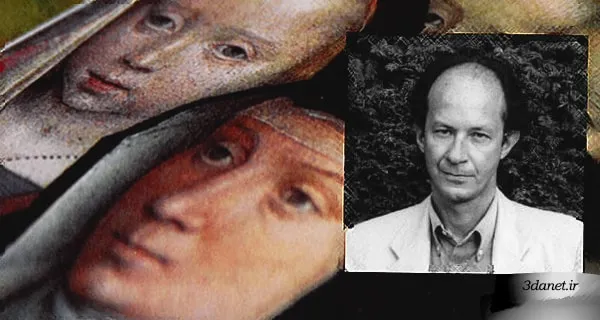
Translator’s Introduction:
“The Church and the Kingdom” is originally the transcript of a lecture (or, in one sense, a “sermon”) by Giorgio Agamben delivered at the Cathedral of Notre-Dame in Paris in the presence of the Archbishop of Paris and several other high-ranking church officials. Agamben gave this lecture as part of the Conférences de Carême on March 8, 2009, together with Father Éric Morin (a French scholar in the field of biblical studies), in French, and the text was later translated and published in book form in Italian and subsequently in English.
This lecture is very brief and condensed, and in it Agamben accuses the Church of choosing political power over the pursuit of its original mission (which was to lead the way to the Kingdom of God). Within the framework of messianism, Agamben argues that the Church has stripped Christianity of the messianic dimension, and drawing on arguments he had previously elaborated in detail in the book The Time That Remains: A Commentary on the Letter to the Romans (this book is forthcoming in Tehran, translated by the present translator and published by Bidgol Publishing), he claims that the Church has preferred the eschatological time of this world to the “messianic time” characteristic of the Kingdom of God. He emphasizes the distinction between the “prophet” and the “apostle,” and between the “end of time” and the “time of the end,” and through a meticulous and rigorous interpretation of passages from one of the oldest texts of the Christian tradition, The Letter of Clement to the Corinthians, and other biblical texts, especially the letters of the Apostle Paul, he pursues his critique of the Church from a messianic perspective.
For the translation of the text of this lecture, both the Italian and English editions were used, and the translated text was ultimately compared and collated with the original French speech by Agamben on the video recording of the lecture session (titled “Jesus, Messiah of Israel?”). The addresses of these three sources are as follows:
Giorgio Agamben, La Chiesa e il Regno, Roma: Nottetempo srl, 2010.
Giorgio Agamben, The Church and the Kingdom, Translated by Leland De Durantaye with photographs by Alice Attie, London: Seagull Books, 2012.
Giorgio Agamben, Jésus, Messie d’Israël?
The English edition of “The Church and the Kingdom” is accompanied by an illuminating essay by Agamben’s translator and interpreter, Leland de la Durantaye, titled “On Method, the Messiah, Anarchy, and Theocracy,” which elucidates some of the difficult passages and Agamben’s references to other theological works. This edition also includes photographs by Alice Attie of classical Christian iconographic paintings, which appear fragmented, folded, and cropped, interspersed throughout Agamben’s text. (A note on this appears at the end of the article.)
The Church and the Kingdom
One of the oldest texts in the Church tradition, the Letter of Clement to the Corinthians, begins thus: “The Church of God that sojourns in Rome to the Church of God that sojourns in Corinth.” In Greek, paroikousa, which I translate as “sojourns,” is a word with a very precise meaning. It refers to the temporary dwelling of an exile, a colonist, and a stranger, in contrast to the fully legal residence of a citizen of a city, state, kingdom, or empire, which in Greek is expressed by the verb katoikein. This is the formula I have chosen to begin my address to the Church of God, in sojourn or exile, here in Paris.
Why this formula? The answer is that I have come to speak of the Messiah. Paroikein, to sojourn as a stranger, is the word that indicates how a Christian must dwell in this world and, by the same token, expresses that person’s experience of time—and more precisely, of messianic time. That this is a technical term, or something close to it, in the ecclesiastical tradition is clear from the fact that, to choose a single example, the First Letter of Peter (1 Peter 1:17) defines the experience of time proper to the church as ho chronos tēs paroikias, which can be translated as “parochial time,” provided we remember that the word parish originally meant “the shelter of a stranger.”
It is important to bear in mind that the word “sojourning” here does not refer to a fixed and determinate period of time: the term does not express a chronological duration. The church’s sojourn on earth can last not only centuries but millennia without altering its messianic experience of time—and in fact it has done so. This point requires special emphasis insofar as it stands in contrast to what is often called a “delay of the parousia.” According to this position—which has always seemed to me blasphemous—the early Christian community, as it awaited the imminent arrival of the Messiah and thus the end of time, found itself confronted with an inexplicable delay. In reaction to this delay, a reorientation was underway to stabilize the institutional and juridical order of the early church. The consequence of this position is that the Christian community ceased to paroikein, or sojourn as a stranger, in order to begin to katoikein, or dwell as a citizen, and thus to function like any other worldly institution.
If this were truly the case, the church would have lost the messianic experience of time that defines it and with which it is one. Messianic time cannot denote a chronological period or duration but must instead represent nothing less than a qualitative transformation in how time is experienced. For this reason, it is inconceivable to speak of a chronological delay in this context as if one were speaking of a delayed train. Because there is no place in messianic time for a fixed and final abode, there is no time for delay. It is with this in mind that Paul reminds the Thessalonians, “Concerning the times and the seasons, brothers, you have no need to be written to, for you yourselves know well that the day of the Lord comes like a thief in the night” (1 Thessalonians 5:1-2).[1] In this passage, “comes [erchetai]” is in the present tense, just as in the Gospels the Messiah is called ho erchomenos, “he who comes”—that is, he who never stops coming. Walter Benjamin, who had fully understood Paul’s lesson, once wrote that, “Every day, every instant, is the little door through which the Messiah enters.”
I wish, therefore, to speak with you about the structure of this time—that is, the structure of the time that Paul describes in his letters. In this regard, one must be careful to avoid confusion between messianic time and apocalyptic time. The apocalyptic thinker is situated on the last day, the day of judgment. He sees the end of time and describes what is seen. If I were to sum up the difference between messianic time and apocalyptic time in a single phrase, I would say that messianic time is not the end of time but the time of the end. What is messianic is not the end of time but the relation of every instant, every kairos, to the end of time and to eternity. Consequently, what captures Paul’s attention is not the last day, the instant in which time ends, but the time that contracts and begins to end. Or, one might say, the time that remains between time and its end.
In the Hebrew and Jewish tradition there is a distinction between two times and two worlds: olam hazzeh, the time that stretches from the creation of the world to its end, and olam habba, the time that begins after the end of time. Both terms, in their Greek translations, are present in the letters of Paul. Messianic time, however—the time in which the apostle lives and the only time that interests him—is neither the time of olam hazzeh nor the time of olam habba. It is, instead, the time between the two times, when time is divided by the messianic event (which for Paul is the resurrection).
How can we conceive of this time? At first glance, if we represent this time geometrically as a segment taken from a line, the definition I have just proposed—the time that remains between the resurrection and the end of time—does not seem to pose any problem. But everything changes if we try to conceive of this time more fully. It is quite clear that living in "the time that remains," experiencing the "time of the end," can only mean a radical transformation of our experience of time. What is at issue here is neither the homogeneous and infinite line of chronological time (whose spatial representation is easy but devoid of any experience) nor the punctual and unimaginable instant in which it comes to an end. Nor, for the same reason, can we even conceive of it as a segment of chronological time that extends from the resurrection to the end of time. Instead, the matter in question is a time that pulsates and stirs within chronological time, that transforms chronological time from within. On the one hand, it is the time that time takes to come to an end. But on the other hand, it is the time that remains, the time we need to bring time to an end, to confront our conventional image of time and rid ourselves of it. In one case, the time we believe we live in separates us from what we are and turns us into powerless spectators of our own lives. In the other case, however, the time of the Messiah is the time that we ourselves are, a dynamic time in which, for the first time, we seize time, seize the time that is ours, realizing that we are nothing other than that time. This time is not some other time situated in an improbable present or future. On the contrary, it is the only real time, the only time we will ever have. Experiencing this time implies a complete transformation of ourselves and our ways of living.
This is what Paul affirms in an extraordinary passage, which perhaps provides the most beautiful definition of messianic time (1 Corinthians 7:29-31): "But this I say, brethren, the time is contracted and compressed [ho kairos synestalmenos esti—the Greek verb systellein refers both to the furling of a ship's sails and to an animal gathering its strength before a charge];[2] for the time that remains, let those who have wives be as though they had none, those who mourn as though they were not [hōs mē] mourning, those who rejoice as though they were not rejoicing, those who buy as though they had no possessions, and those who use the world as though they did not make full use of it."
A few lines earlier Paul had written of the messianic vocation (klēsis): "Let everyone remain in the condition in which he was called. Were you called as a slave? Do not be concerned about it. But if you can gain your freedom, make use of it" (1 Corinthians 7:20-22). Hōs mē, "as not," means that the ultimate meaning of the messianic vocation is the revocation of every vocation. Just as messianic time transforms chronological time from within, rather than destroying it, the messianic vocation, by virtue of the hōs mē, "as not," revokes every vocation, at once hollowing out and transforming every vocation and every condition so as to free them for a new use ("make use of it").
The importance of this question stems from the fact that it makes possible a proper consideration of the relationship between the ultimate and the penultimate, between the last things and the things that are next-to-last, which define the messianic situation. Can a Christian live only with the ultimate and final things? Dietrich Bonhoeffer condemned the false opposition between radicalism and compromise because both options consist in rigidly separating the ultimate realities from the penultimate ones that make up our everyday human and social situation. Just as messianic time is not another kind of time but, instead, a complete transformation of chronological time, an experience of the ultimate (an experience of the last things) will entail, first and foremost, experiencing the penultimate things in a different manner. In this context, eschatology is nothing other than a transformation of the experience of the penultimate. Given that ultimate realities first occur within penultimate realities, the latter—contrary to any radicalism—cannot be freely negated. And yet—and for this very reason—the things that are next-to-last can in no way be enlisted against the last things. This is why Paul expresses the messianic relationship between the last things and the penultimate ones with the verb katargein, which does not mean “to destroy” but, instead, “to render inoperative.” The ultimate reality deactivates, suspends, and transforms the penultimate realities—and yet, precisely, and above all, it is within these very penultimate realities that an ultimate reality bears witness and is put to the test.
What has come before allows us to understand Paul’s idea of the kingdom. Contrary to contemporary eschatological interpretation, it must not be forgotten that messianic time cannot, for Paul, be a future time. The term he uses to refer to this time is always ho nyn kairos, “the time of the now.” As he writes in the Second Letter to the Corinthians, “Idou nyn, behold, now is the time of gathering, now is the day of salvation” (2 Corinthians 6:2). Paroikia and parousia, the alien’s sojourning and the presence of the Messiah, have an identical structure, which in Greek is expressed by means of the preposition pará: a presence that stretches time, an already that is also a not yet, a delay that does not postpone until later but, instead, a rupture within the present moment that allows us to seize and grasp time.
Living in this time, experiencing this time, is therefore not something the Church can choose to do, or choose not to do. It is only in this time that a Church is at issue at all.
Where do we find such an experience of time in the Church today? This is the question I have come, here and now, to pose to the Church of Christ taking refuge in Paris. An invocation of the final things, the last things, has completely disappeared from the Church’s declarations, such that it has been said, not without irony, that the Church of Rome has closed its eschatological window. And this is accompanied by an even more bitter irony, noted by a French theologian, that “Christ heralded the coming of the kingdom, and what arrived was the Church.” This is a disquieting but thought-provoking statement.
Given what I have said about the structure of messianic time, it is clear that the issue at hand cannot be to reproach the Church in the name of radicalism for its worldly compromises, just as it cannot be to portray the Church of Rome—as the greatest Orthodox theologian of the nineteenth century, Fyodor Dostoevsky, did—as a Grand Inquisitor.
The problem under discussion is, rather, the Church’s capacity to interpret what Matthew called “the signs of the times,” ta semeia tōn kairōn (Matthew 16:3). What are these signs that the apostle contrasted with the frustrated desire to recognize the transient shapes across the sky? If history’s relation to the Kingdom is penultimate, nevertheless the Kingdom must be found first and foremost within that history. For this reason, living in messianic time means interpreting the signs of his presence in history, recognizing the “signature of the economy of salvation [la segnatura dell’economia della salvezza]” in the course of history.[3] In the eyes of the Church Fathers—and also those philosophers who have reflected on the philosophy of history, which (even in Marx) is, and remains, an intrinsically Christian doctrine—history presents itself as a field traversed by two opposing forces. The first of these forces—which Paul, in a passage from the Second Letter to the Thessalonians that is as famous as it is enigmatic, calls to catechon—holds back the end along the straight and homogeneous line of chronological time and incessantly defers it. By placing the beginning and the end in contact with one another, this force endlessly accomplishes and finishes time. Let us call this force Law or State, which, as it is, is dedicated to the realm of economy, that is, as it is, devoted to the indeterminate—and indeed infinite—governance and administration of the world. But the second force, let us call it the Messiah, or the Church; its economy is the economy of salvation, and by this very sign is essentially fulfilled. The only way a community can take shape and endure is if these poles are present and a dialectical tension prevails between them.
It is precisely this tension that seems to have disappeared today. When a sensory perception of the economy of salvation in historical time weakens or vanishes, this economy extends its blind and derisory domination over every aspect of social life. Today we witness how the eschatological urgency that the Church has abandoned returns in a secularized and parodic form, in occult sciences that have rediscovered the obsolete postures of the prophet and proclaim every sort of irreversible catastrophe. The crises—perpetual states of exception and emergency—that the world’s governments successively declare are in reality a secularized parody of the Church’s continual deferral of the Day of Judgment. With the eclipse of the messianic experience of the fulfillment of the law and time, an unprecedented hypertrophy of law emerges—which, under the mask of regulating everything, reveals its lawlessness through a bureaucratic surplus. I utter this sentence with carefully weighed words: today, nowhere on earth is a legitimate power to be found; even the powerful are assured of their own illegitimacy. The complete juridification and commodification of human relations—the confusions between what we perhaps believe, hope, and love and what we are obliged to do or not do, to say or not say—are signs not only of the crises of law and the State but also, and above all, of the crises of the Church. The reason for this is that the Church can be a living institution only on the condition that it maintains an immediate relationship with its end. And—a point we try very hard not to forget—according to Christian theology, there is only one legal institution that knows neither pause nor end: hell. The model of contemporary politics—which feigns an infinite economy of the world—is thus truly infernal. And if the Church suppresses its originary relationship with paroikia, it has no choice over time but to lose itself.
For this reason, the question I have come here to ask you today, with no authority other than a stubborn habit of interpreting the signs of the time, is this: Will the Church finally seize the historical moment and recover its messianic mission? If this does not happen, the danger is clear enough: the Church will be swept aside by the catastrophe that threatens every government and every institution on earth.
Postscript: On Method, the Messiah, Anarchy, and Theocracy
Leland de la Durantaye
In the preceding discourse, Giorgio Agamben accuses the Catholic Church of having forgotten its mission. He does not do this by delivering impassioned speeches to crowds in front of Notre-Dame or by nailing theses to its doors – nor, in this vein, through newspaper editorials, internet manifestos, Facebook posts, or Twitter tweets. Instead, Agamben presents his observations calmly and with dignity to the Church in the Church. Despite this quiet dignity and courtesy, the accusation he levels could hardly be more severe. It is nothing less than that the Catholic Church – over the course of millennia – has opted for worldly dominion over its foundational ideas and ideals, that this institution has preferred the consolidation of temporal power over a fundamental experience of time; he accuses it of having lost its "mission."
The discussion Agamben presents here concerning the social and spiritual position of the early Church, the evolution of the Church as an institution, and the operative conceptual understandings of history and time in the founding documents of the Church is both lucid and sufficiently brief that there is no need to summarize it here. What we do indeed recall, however, are two related issues. The first concerns Agamben's idea of method; and the second concerns his idea of theology.
Agamben has written about twenty books on a wide range of subjects, from aesthetics to politics, poetics to ontology. This thematic diversity is accompanied by a unity of method – albeit one in development. This method is what we might perhaps call "philological." As the eminent and unconventional art historian Aby Warburg liked to point out, and Agamben has liked to repeat, "The dear God dwells in the details."[4] Warburg used this expression as a personal motto and quoted it to his colleagues and assistants at the institute he founded, where, many years after his death, Agamben was to study. What Warburg sought to emphasize with this phrase was the need for vigilance towards even the smallest details of a work, an idea, or an expression in the search for the most fundamental questions. Warburg's simultaneously playful and serious saying recalls the approach of one of his great admirers – Walter Benjamin – who for his part wrote that arriving at the "truth-content" of a work requires "the most precise immersion into the individual details of a given subject matter."[5] Years later, yet another of the thinkers who most shaped Agamben's philological and philosophical approach, Martin Heidegger, wrote in his Letter on Humanism that given the "current destitution of the world," we need "less philosophy and more vigilant thought; less literature and more care for the letter."[6] Such care for the letter characterizes Agamben's approach, and throughout his works he displays the erudition and acumen of a philologist, as well as the guiding sense that without examining such details, genuine philosophical speculation is impossible.
A clearer example of this is seen in the first explicitly theological work among Agamben's books. The Time That Remains (2000) takes the precise form of a patient, sharp-witted, and uniquely insightful reading and commentary on the first 10 words of Paul's Letter to the Romans. Through a study of that section – the incipit of Paul's letter – Agamben presents not only the entire letter, and not only the entirety of Pauline thought, but also the issues that most capture his attention in The Church and the Kingdom: Paul's theories of messianic time and messianic mission. We might perhaps say of Agamben what the dedicatee of The Time That Remains, Jacob Taubes, said of himself in his own work on Paul: "You all know how little interest I have in grand themes that cannot first be drawn through the eye of the philological needle."[7]
Like his philosophical masters and in keeping with his earlier work on Paul and more recent works such as The Kingdom and the Glory (2007), Altissima povertà (2011), and Opus Dei (2012), in The Church and the Kingdom Agamben draws the most fundamental religious questions and themes through the eye of the philological needle. What he discovers, for instance, through seemingly obvious words like “parish” and “refuge” (and their common Greek root) is a lost vocation, the loss of a sensible perception of the idea of time that animated early Christian thought and in which the messianic element of that thought was most alive. There is much more that could be said about Agamben’s method. For the subject at hand here, however, it suffices to emphasize the scope with which Agamben moves from paradigmatic figures and words toward addressing the largest and most pressing problems of our time.
When viewing Agamben’s thought as a whole, few aspects of it are as difficult to grasp as the role of theology, and few have raised such issues for his readers. In response to the question of why he so persistently returns to recurring religious or theological motifs in his work, Agamben once answered, “I think that it is only through metaphysical, religious, and theological paradigms that one can truly address the contemporary—and political—situation.” Agamben’s interviewer then asked, “And how close does one thereby come to the doctrine of a divinity?” to which Agamben replied:
My books [. . .] are confrontations with theology. Walter Benjamin once wrote: my relation to theology is like that of blotting paper to ink. The paper absorbs the ink, but if it were up to the blotting paper, not a single drop would remain. This is precisely my stance toward theology. I am completely steeped in theology, and so then there is nothing more to it; all the ink has disappeared.[8]
In a characteristic manner, Agamben presents the role of theology in his thought through an enigmatic figure borrowed from Benjamin. The saying Agamben refers to is taken from Benjamin’s Arcades Project and reads: “My thinking is to theology as the blotting pad is to ink. The latter is completely absorbed into the former. But if it were up to the blotting pad, nothing written would remain.”[9] In this singular simile, Benjamin identifies the blotting pad with his thinking and theology with ink. If it were up to his thinking (the blotting pad), no theology (ink) would remain. Following the logic of the metaphor, his thinking completely absorbs theology, and nothing of it remains visible on the page. Yet this leaves us with an important question: what are we to make of what does remain on the page?
This too is a far-reaching question (and I have attempted to answer it elsewhere).[10] The relevant point for The Church and the Kingdom is that no such problem arises in its case. As Marco Pacioni presciently noted upon its initial publication, The Church and the Kingdom represents a departure from Agamben’s earlier writing insofar as in it “philosophy once again becomes the handmaid of theology,” though it does so not merely to provide the logical foundations and bases upon which theology can erect itself but, instead, “calls back into question the subject of faith and the institutional earthly meaning that underpins it.”[11]
So we might well ask, what is the nature of this question, and how legible is it in The Church and the Kingdom? In another early reaction, the collective Ouvroir de Théologie Potentielle [“Workshop for Potential Theology”] perceived that Agamben had enacted “a strange combination” of “anarchic radicalism” and “political Augustinianism.”[12] There is no indication that Agamben thinks the Church can or should assume the temporal power of the kind Augustine envisioned. And while Agamben’s assessment is sweeping and final, he advocates neither anarchy nor some amalgam of anarchy and theocracy. With this in mind, the reaction of the Ouvroir de Théologie Potentielle is not so surprising, given how radical Agamben’s summons is. He characterizes the nature of our times by “perpetual states of exception and emergency,” and that “nowhere on earth today can a legitimate power be found.” He diagnoses what he himself calls “an unprecedented hypertrophy of law” but specifies no antidote or even a course of treatment. And most sweepingly and searingly of all, he finds the paradigm of our age in a single religious figure and sign: “Hell.”
The best context for addressing the questions of anarchy and theocracy, as well as the questions of hope and despair, is the idea with which I will conclude this afterword – what Agamben calls “messianic time.” The more closely Agamben looks at the word paroikousa, the more clearly he sees the reflection of messianic time in it. But what is this messianic time – and what are the “messianic experience of time” and the “messianic vocation” with which he finds it consonant? Moreover, how can we understand these ideas in continuity with the thinkers whose thought Agamben is extending here? For Benjamin, the notion of transience and the messianic together mean seizing “the present as the ‘time of the now’ [. . .] shot through with splinters of the messianic [Splitter der messianischen].”[13] When Benjamin wrote of messianic time, and when he, as here, employed Pauline terms to do so, he did not mean a time during which one awaits the coming of a messiah but, instead, a way of experiencing and acting on the basis of what is already present. What is truly messianic in Benjamin’s conception of messianic time, as in Paul before him and Agamben after him, is not what is to come but what is already here. Messianic time rejects a historical dialectic of progress and its logic of deferral; it rejects the positing of the completion of a historical mission in an indeterminate future. For many, “messianic time” suggests waiting for the coming of the Messiah, the redemption of humankind, and the completion of human history. Depending on one’s perspective, this might strike anarchic or theocratic chords. For Agamben, however, as for Benjamin, messianic time is precisely the opposite of such waiting, and for this reason he focuses his attention not on the last things but on the penultimate or next-to-last things. In The Church and the Kingdom he thus speaks of “a transformation of the experience of the penultimate things,” and elsewhere he notes that, “given that messianic time is not another kind of chronological time, to live the last things, the final things, means above all to live the penultimate things.”[14]
Messianic time, as Agamben emphasizes in the middle portion of his discourse, is not the time of the apocalypse but the time of immediacy. On this point he is entirely explicit, recalling that not only “can the time of the messiah, for Paul, not be a future time” but also “the only possibility we have of truly seizing the present is to conceive of it as the end. This was Benjamin’s idea, and his messianism must above all be understood in this context.”[15] For Agamben, Benjamin’s messianism, like his own, is an attempt to seize the possibilities of our present situation. He will thus say that “the model and paradigm for understanding the now is messianic time.”[16] And it is for this reason that Agamben writes that the messianic time he envisions is a time to be sought not in the millennium but “now.”
.
.
Notes
[۱] For the translation of biblical quotations, we have often drawn on two sources: The New Millennium Bible (Elam Publications, 2009), and The New Testament: Based on the Jerusalem Bible (translated by Pirouz Sayar, Ney Publishing, first edition, Tehran 1387 [2008]). In some cases, these passages have been modified and emended for closer correspondence with Giorgio Agamben’s translations from the Greek. [Persian translator]
[۲] It is useful in this context that the English translations have employed various terms to render this difficult phrase, all of which seem to reflect an extraordinarily and exceptionally short chronological period. The King James Bible uses the expression, “But this I say, brethren, the time is short,” and the Revised Version changes it to “the time is shortened,” while the New English Bible amends it to “the time we live in will not last long.” See The Holy Bible, Containing the Old and New Testaments (London and Oxford: Oxford University Press, 1885) and The Holy Bible: Revised Version (Cambridge and London: Cambridge University Press, 1903).
[Persian translations have often followed the same course. For example: “the time is shortened” (New Millennium), “time is tight” (New Testament, Pirouz Sayar); however, Pirouz Sayar, in a footnote to this verse, noting the intended meaning in seafaring, also provides its literal translation as “time has furled its sails,” which seems noteworthy. – Persian translator]
[۳] The somewhat artificial and somewhat obscure form of this expression is due to the fact that it refers to—or, more precisely, is a brilliant summary of—the central ideas elaborated in two of Agamben’s most recent works: The Signature of All Things (English translation by Luca D’Isanto and Kevin Attell, Cambridge, MIT Press, 2009) and The Kingdom and the Glory: For a Theological Genealogy of Economy and Government (English translation by Lorenzo Chiesa, Stanford, Stanford University Press, 2011).
[۴] However, Aby Warburg never used this in his own writing. This sentence first appeared in print from the pen of Warburg’s friend and colleague, E. R. Curtius, in the published text of the eulogy he delivered at Warburg’s funeral in 1929. The expression gained wide currency nearly twenty years later through two references by Curtius in his book European Literature and the Latin Middle Ages. Cf.:
- R. Curtius, Europäische Literatur und Lateinisches Mittelalter (European Literature and the Latin Middle Ages), 11th edn. (Tübingen and Basel: Francke Verlag, 1993), pp. 45 and 386.
[۵] Walter Benjamin, Gesammelte Schriften (Rolf Tiedemann and Herman Schweppenhäuser eds.) (Frankfurt: Suhrkamp, 1974-89), VOL. 1, p. 208.
[۶] Martin Heidegger, Holzwege (Frankfurt: Klostermann, 1950). p. 54. Available in English asOff the Beaten Track (Julian Young and Kenneth Haynes eds. and trans.) (Cambridge: Cambridge University Press, 2002).
[۷] Jakob Taubes, Die politische Theologie des Paulus (Munich: Wilhelm Fink Verlag, 1993), p. 123.
[۸] ‘Der Papst ist ein weldicher Priester’ (The Pope is a Worldy Priest), interview with Abu Bakr Rieger,Literaturen (June 2005): 21-5.
[۹] [Mein Denken verhält sich zur Theologie wie das Löschblatt zur Tinte. Es ist ganz von ihr vollgesogen. Ginge es aber nach dem Löschblatt, so würde nichts was geschrieben ist, übrig bleiben].
Benjamin, Gesammelte Schriften, VOL. 5, p. 588 (translation modified).
[۱۰] See Chapter 10 of Leland de la Durantaye, Giorgio Agamben: A Critical Introduction(Stanford, CA: Stanford University Press, 2009), pp. 366-82.
[۱۱] Marco Pacioni, ‘Agamben: Appello escatologico alla Chiesa’ (An Eschatological Appeal to the Church), Alias, 11 September 2010: 23.
[۱۲] OuThéoPo, ‘La Chiesa e il Regno: Una domanda di Giorgio Agamben a una Chiesa persa nel Tempo’ (The Church and the Kingdom: Giorgio Agamben’s Question to the Church Lost in Time) (2011). Available at: www.outheopo.net/chiesa-regno.
[۱۳] Benjamin, Gesammelte Schriften, VOL. 1, p. 704.
[۱۴] Giorgio Agamben, ‘Contro i profeti della catastrofe’ (Against the Prophets of Catastrophe), Avvenire, 12 May 2000: 21.
[۱۵] Ibid.; ‘Das unheilige Leben: Ein Gespraeh mit dem italienischen Philosophen Giorgio Agamben’ (The Unholy Life: A Discussion with the Italian Philosopher Giorgio Agamben), interview with Hannah Leitgeb and Cornelia Vismann, Literaturen 2(1) (2011): 16-21.
[۱۶] Agamben, ‘Contro i profeti della catastrofe’.
.
.
The Church and the Kingdom | Written by Giorgio Agamben | Translated by Mojtaba Golmohammadi
.
.




.webp)
.webp)
Discussion0 comments
No comments yet; let yours be the first voice.