Sociology
The Development Discourse: The Mainstream View and the Gandhian View
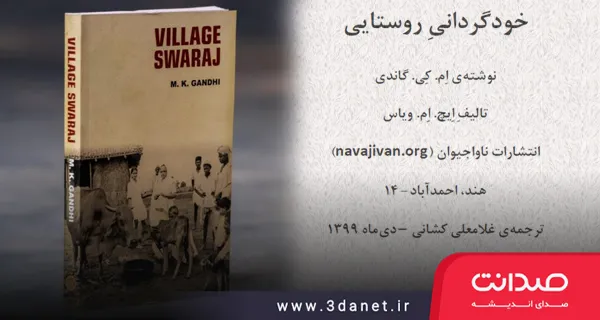
Mainstream approaches to the development crisis have failed, drawing renewed attention to Gandhi's view of development as an integral part of modern industrial civilization. His proposed model rests on sustainable, durable, self-sufficient, and decentralized village republics.

The Development Discourse: The Mainstream View and the Gandhian View
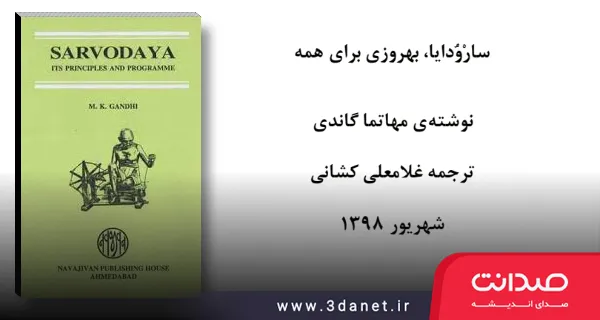
Written by: Sibi K. Joseph
Translator: Gholamali Keshani, March 2021
In recent times, development (flourishing)[1] has emerged as a central theme in social science discourses. Beginning with the Truman and Rostowian conceptions of economic growth, this subject entered multiple phases in the post-war era, adopting various intellectual forms, and has recently taken on shapes such as sustainable development and inclusive growth. The central thesis of this article is that all these efforts have failed to significantly impact the crisis confronting mainstream development.[2] It is within this context that Gandhi's conception of development has managed to attract the attention of scholars and activists worldwide. This article attempts to examine Gandhi's critique of development as an inseparable part of modern industrial civilization, and also to demonstrate the facets of his proposed model of economic development, which can be sustainable and enduring.
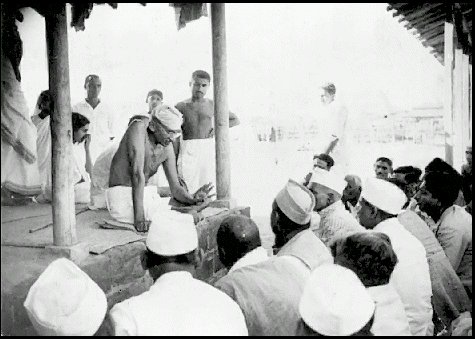
Gandhi's image of the India of his dreams was an archipelago of independent, decentralized, council-based village republics with voluntary labor and management, which could push aside the "eternal domination of the centralized state" over the villages and, conversely, serve as a model for flourishing (development) in the cities.
.
.
[1] development: The word 'tose'eh' (development) is not an accurate translation of this term. "Flourishing" can better convey its very broad concept in the humanities. (Tr.)
[2] Mainstream: The main current, the prevalent current, aligned with the wave and the dominant current. This expression refers to the prevailing current of a thought among both the elite and the general public. (Tr.)
.
.
PDF file of the full text of this translation
.
.

Discussion1 comments
If Gondi was anything it was not democratic. for sure. If he was , then it was the illusioned part , submerged in his misguided English education. Something he probably did not have the insight to discover.