Religion
The Essay “Up to the Gate of Spirituality” by Mehdi Ghafourian
By virtue of his existential constitution, the human being needs spirituality—a need ignited by realities such as vulnerability and loneliness. Elucidating these realities brings us to the gate of spirituality, without claiming to enter that territory.

It seems that the existential structure of us humans is such that we need spirituality, and all spiritual traditions have placed their finger on this needy existence, speaking to us and advancing their work on that basis. This essay, regardless of the truth or falsity or the degree of reasonableness of spirituality, is an attempt to show our need for spirituality and to briefly explain it (a conception of spirituality is offered at the end). This identification of need has been carried out, at the very least, by referring to six existential facts of the human being, meaning that these are facts traceable and trackable in all of us, and no one lacks them. Hence, the title of the essay is “Up to the Gate of Spirituality”; paying attention to these six existential facts draws our attention to spirituality and kindles the flame of a need within our soul that takes us up to the gate of spirituality. Of course, whether one passes through the gate or not, and whether one enters the land of spirituality or not, is another discussion and is not addressed in the present piece.
These six existential facts appear unrelated to one another, but with a little attention, we see that, on the one hand, they are all about my life and yours, and we have some understanding of them, and on the other hand, considering them as a whole causes us to turn our face toward spirituality.
1
Vulnerability
Life has a quantity and a quality. By the quantity of life, I mean our very existence; at every moment, for a thousand and one reasons, our death may arrive, and our seeing, hearing, walking, thinking, loving, and other activities may come to an end. Countless causes and pretexts can be imagined that might occur at any moment, such as a doctor’s error in diagnosing an illness and wrongly prescribing medication, a car accident, a heart attack, an incident at an amusement park. Thus, it is a condition of our life that one cannot find a single moment in it where the possibility of death becomes impossible and its shadow is not cast over our life.
But it is not only death that always stands in the background, targeting the quantity of our life; the quality of our life is also, in another way, constantly exposed to change and transformation. By the quality of life, I mean the circumstances in which each of us finds ourselves; physical and psychological characteristics, and professional, economic, and cultural conditions are among them. Let us consider these examples: a surgeon who, after years of study and skill acquisition, loses the ability to move his hands due to an accident; we prepare ourselves for the day of the university entrance exam by spending a great deal of time and energy and forgoing many pleasures, but during the exam, anxiety suddenly overwhelms us and we completely lose our concentration; a financial partner whose honesty, loyalty, sincerity, and goodwill we had counted on for many years deceives us and flees; and in general, failure and frustration in achieving our goals, the sorrow, despair, and regret that visit us from time to time, and cases of this kind that we have experienced and will experience! Therefore, life is moment by moment pregnant with the occurrence of events that can alter the quality and nature of our life.
In other words, the totality of our life is such that what we want to happen, does not happen, and what we do not want to happen, does happen: “Loving is in the nature and disposition of us humans; but those we love intensely die. It is in our nature and disposition to desire health and long life; but we ourselves and those we love become afflicted with debilitating illnesses. Similarly, we desire to live in a safe place; yet the surface of the planet on which we live can often be harsh, unstable, and insecure.”[1]
When we consider the events and occurrences that can endanger the quantity and quality of our lives, we realize that we hold a precarious and vulnerable position in the world, and that weakness and frailty are part of our being; no matter how healthy and strong our body, how powerful our mind, how calm and resilient our psyche, and how robust our social and interpersonal relationships, the shadow of lack and loss still hangs over every single part of our lives. This vulnerability "means suffering, losing, fearing, and ultimately perishing; it is not merely the result of psychological or developmental problems, but is part of our human nature and essence."[2] It is as if, just as we consider heat to be part of fire's identity, fragility and vulnerability are also an inseparable part of us, woven into the very fabric of our lives, and are not simply caused by a lack of necessary knowledge and awareness, a lack of skills, or having psychological problems.
2
Loneliness
Suppose we are in line at a gas station, waiting for our turn, and the cars ahead are moving slowly. In the midst of this, a car suddenly cuts in front of us. Both of us have a similar objective experience and even a similar psychological state, namely anger. Nevertheless, each of us has a different subjective experience and feeling of our anger[3]—meaning the feeling of anger I have here is different from the feeling of anger you have. In other words, even when our description of the anger we felt in this situation is identical—for instance, we both say that driver was inconsiderate or their behavior was insulting and it made me angry—our subjective experience and feeling of their inconsiderateness and insult are still not the same, and we have different feelings about each of them. Or sometimes an event or occurrence is terrifying and devastating for us, but another person is surprised by the intensity of the feeling and emotion we have (note that in these examples, the focus is not on the appropriateness or reasonableness of the feelings, but solely on the qualitative aspect of our feeling).
It is from here that each of us, as an individual, has an emotional experience of the contents of our consciousness that is unique to us, and another has no way to understand that very same emotional experience. What we can do is show our inner feeling through our speech and actions, and it is through this that we inform each other of our experiences, but what my feeling and state is towards X and what experience I am undergoing is not transferable to you. This is the place where each of us is completely alone; that is, we experience things alone and find a feeling from them: "One of the signs of a person's profound loneliness is that what is 'existential' and 'unique' to them is, in the eyes of others, just 'something' among many things. You fall in love, you are liberated, you lose a loved one—each of these is a singular, unique existential event for you, and in the eyes of others, an incident like thousands of similar incidents. What you experience in the most central core of your being and in a subjective way, others... experience outside of their own being." [4]
So, you and I do not have access to a part of each other's world, and in this sense, we cannot understand each other. From this perspective, each of us is profoundly alone; alone in our emotional experience, and consequently, a loneliness that arises from not being fully understood by one another.
Zorba's words in the novel Zorba the Greek are not unrelated to this type of loneliness: "...Zorba... is the only person at my disposal, the only one I know. All the rest are ghosts. I see with Zorba's eyes, I hear with his ears, and I digest with his intestines. The rest, I told you, are all ghosts. When I die, they will all die..." [5]
3
The Thirst for Perfectionism
We humans are beings who not only perceive and describe realities (for example, "my neighbor returned my deposit") but also possess the capacity to make value judgments about those realities, that is, to inquire into their worth and value (my neighbor is trustworthy, and this is an admirable trait of his). In other words, we are such that we understand the distinction between "what is" and "what ought to be" and recognize the gap between them. In addition to perceiving realities and evaluating them, we also engage in weighing and balancing values among our own value judgments. To put it another way, within the field of value judgments, we also make comparisons and establish priorities and hierarchies among them, meaning we speak of good, excellent, unparalleled, magnificent, and splendid, or of good, better, best, more beautiful, and more glorious.
But on this path, no matter how far we advance, we never reach an end, and the file of value judgments we have made among our evaluations remains open, as if we are never meant to call anything absolutely perfect. By paying close attention to this point, we realize that anything we consider perfect, when subjected to value comparisons, still falls short of perfection, and from some angle, a flaw or defect is found and seen in it. For instance, when we consider a wristwatch or a car perfect in terms of the function we attribute to it, we can still imagine it being better, as if there is no ceiling to the progress we see daily in achievements concerning a single thing like a wristwatch or a car. Or, for example, a teacher whose teaching is extraordinary; we can still imagine them being more perfect than their current state, just as they themselves cannot consider their teaching ability and skill to be finished and be indifferent to its cultivation.
In other words, with a little attention to the affairs of our lives, we understand that everything has an inherent limitation and deficiency, meaning one thing cannot be everything and satisfy us—who perceive perfection—so completely that we no longer desire it to be better and more perfect; possessing an extraordinarily vast fortune or being heartened by a kind and sincere companion cannot fully satisfy us in the sense that we would want nothing else and seek nothing further to make our lives fuller and richer, or even, in its conventional and ordinary sense, to set it right—for example, that we would no longer concern ourselves with our health or watering the flowers in our pots. For this reason, it is as if our very life possesses limitations within itself that make quenching the thirst for perfection impossible and accompany us with a kind of restlessness. In the poet's poetic expression: "Which bridge, in which part of the world, is broken that no one ever reaches home?!" [6]
Our existential situation in the world is such that "no being, no time, and no place quenches the ultimate thirst [for perfection]. For all beings suffer from one sickness, namely the sickness of existence... How can one achieve one's intent and purpose by making things bigger, or longer, wider, or thicker, or by making them more this or more that? For these matters will still remain [in the grip of] this or that. And it is precisely this being-this-or-that which is the sickness of things... Everything that exists or can exist is afflicted by the blight of being this or being that."[7]
4
Limited Reason
The totality of issues we know or wish to know—from recognizing a friend's face and finding a hotel address to treating illnesses and answering the question of life's value and meaning—is accomplished through our perceptual faculties, that is, the tools and powers at our disposal to know things and add to our knowledge about them. Without entering into a discussion of the nature of cognition and our perceptual and cognitive faculties, we can call these tools and powers reason, which grants us the ability to understand, experience, reason, and think. Yet this very immense and precious asset we call reason, with which all the minor and major cognitions of our lives are carried out, constantly acquaints us with the territory of ignorance and nescience. The further we advance and the more our knowledge in various fields increases dazzlingly, the more, astonishingly, the volume of our unknowing grows; we may consider ourselves more knowledgeable and learned compared to our predecessors, but in relation to the future that begins from the moment of knowing, moment by moment, unknowns and unanswered questions come to greet us. It suffices to glance into the realm of sciences such as medicine, engineering, basic sciences, psychology, philosophy, and so on, so that while honoring our scientific and intellectual achievements that have untied knots in our lives, the vastness of the land of unknowing and its daily growth becomes evident and manifest to us. When we look at our own (humans') affairs from a higher perspective, perhaps the constant search and question-and-answer regarding fundamental questions such as the value and meaning of life and related issues is most apparent to us, and our thirst and restlessness in this regard come into view.
5
Appearance and Reality
It has sometimes happened to us that we have wanted something, striven to obtain it, and finally attained it, but in word and deed we have said, "I wish I had not wanted or possessed this thing." For instance, we were distressed by our excess weight and had an intense desire to reduce it, and after months we succeeded in reaching that desired weight and suitable physique we had dreamed of, but after achieving our goal, we found that illnesses had come upon us that made us bitterly regret the weight loss.
Reason and experience tell us that merely wanting something, desiring it, and deeming it good does not alone indicate that it is truly good and worthy of being wanted. This is one of the important regions of our ignorance and nescience, which we have a strong motivation to transform into knowledge and awareness—that is, to recognize our correct and incorrect desires or our real and false wants. Thus, we must inevitably distinguish in our lives between real goods (things that are truly good even if we do not know it) and apparent goods (things that appear good and our judgment deems them good, but in reality, they are not), and know that our desires and wants may pertain to apparent goods. The correct, real, and authentic desire and want is what we call a need. Therefore, let us distinguish between want and need; a need is always appropriate, suitable, correct, and reasonable, while a want is sometimes so and sometimes not.[8] Consequently, living according to our wants, desires, and pleasures does not necessarily lead to a good life, felicity, and happiness. Undoubtedly, discerning whether our wants correspond to our needs, and whether our wishes are based on real or apparent goods, is a fundamental step on this path.
6
The Possibility of Becoming
On the one hand, each of us possesses specific physical characteristics and particular mental and psychological traits, and we also have our own unique relationships with individuals and objects, and we live in specific external and material conditions. On the other hand, we can also imagine circumstances that are other than and better than our current circumstances (whether or not all of them are practically attainable). In other words, "what we are" is one side of the story, and "what we can be" is the other. It is our capacity to think about this story that creates in us a passion and desire for change.
"At every moment of my life as a human being, I find myself already in a given 'situation,' a situation not of my own making. The historical era I inhabit, my mother tongue, my nationality, my social class, my sexual orientation, my biological abilities and inabilities (for example, that I can run a hundred meters in thirty seconds instead of ten)—all of these are facts about me that have been given to me entirely independently of any desire or choice on my part."[9] Even my past choices and actions pertain to what I am, that is, "the totality of facts about me that depend on my past, whether such a past involves the choices of my own past self, or factors entirely beyond my control."[10] In contrast, what I can be pertains to what I am not, because "as long as one is alive and conscious, one can always perceive that one could be something other than what one is, and can desire to be otherwise... Thus the mental power of negation encompasses both freedom of mind (to imagine new possibilities) and freedom of action (to strive for their realization)."[11]
Conclusion
Let us review the path we have traveled together.
Our lives are intricately woven with weakness, instability, and vacillation, and our existential solitude in the feelings we have toward the events of our lives has deepened and intensified this vulnerability.
It seems we cannot resolve these by resorting to and clinging to things we consider good and valuable; as if no slice of the world's cake is so satisfying and entirely delicious as to meet our needs, allow us to rest easy with it, and deter us from seeking out the other slices.
Our speculations, experiences, understandings, and discernments have limitations and constraints, and apparently we are not meant to obtain the final answer to all our questions and find peace and repose on the shore of the sea of questions, especially regarding the most fundamental issues of life.
Throughout our lives, amidst choices, judgments, and decision-making, we have repeatedly encountered the fact that not all goods are good, and not all our desires are well-placed; we must distinguish apparent goods from real ones, and wants from needs. Our burden does not reach its destination merely by fulfilling the wishes and aspirations we cherish, and simply setting out sincerely in pursuit of the song of our desires and wants from life is not all that it should be. Perhaps our true interests and benefits lie elsewhere.
Yet each of us desires to transcend the existing state of affairs and improve our condition, and by contemplating a better and different state from the present one, to tell ourselves to "set about a task so that sorrow may end"; a passion that fixes our gaze beyond our current self.
Now it is time to reflect on the relationship of these realities with spirituality. But before that, we must have a conception of spirituality; a conception that can be considered the common denominator of various types of spirituality. By referring to the current literature of the discussion in this field, this conception can be articulated as follows.
What is Meant by Spirituality
According to the literature of the ongoing discussion on spirituality,[12] spirituality refers to a non-material realm beyond the self, for which various terms have been used, such as Higher Power, Ultimate Reality, the Transcendent, the Holy, God. The common core of various types of spirituality is that the universe is vaster and more expansive than it appears. For this reason, the spiritual person "believes in something 'more'—that is, what is 'seen' is not all that exists."[13]
In the light of this focal point, spirituality manifests itself throughout the individual's life, and from the perspective of their conception and experience of the
[3] The content of our consciousness has both an epistemological aspect and a qualitative aspect. For an explanation of this distinction, see: Searle, John, A Short Introduction to the Mind, translated by Mohammad Yousefi, Nashr-e Ney, 1392, chapters three and five
[4] Sedigh Ghotbi on the Blue Reason website
[5] Kazantzakis, Nikos, Zorba the Greek, translated by Mohammad Ghazi, third edition, Kharazmi Publications, 1389, p. 89
[6] Gross Abdolmalekian
[7] Stace, Walter Terence, Time and Eternity (An Essay in the Philosophy of Religion), translated by Ahmadreza Jalili, University of Religions and Denominations Press, 1388, pp. 23-24
[8] For further explanation on this, see: Adler, Mortimer J., Great Ideas (An Examination of Six Fundamental Ideas in the History of Thought), translated by Homayoun Kakasoltani, Gam-e No Publications, 1397, chapter eleven
[9] Young, Julian, The Meaning of Life and Continental Philosophy, translated by Behnam Khodapanah, Hekmat Publications, 1396, p. 301
[10] Young, Julian, The Meaning of Life and Continental Philosophy, translated by Behnam Khodapanah, Hekmat Publications, 1396, p. 301
[11] Stevenson, Leslie et al., Twelve Theories of Human Nature, translated by Meysam Mohammadamini, Nashr-e No, second edition 1396, p. 414
[12] For a review of the literature surrounding this topic, see:
-McCarroll, Pam…, Assessing plurality in spirituality definitions in Meier, Augustine…(Ed), Spirituality health: Multidisciplinary explorations, Wilfrid Laurier university press, 2005, p43-48
-McIntosh, Mark A, spirituality in McFarland…(Ed), The Cambridge dictionary of Christian theology, Cambridge university press, 2011
-MUELLER S. PAUL and…, Religious involvement, spirituality, and medicine: Implications for clinical practice, Mayo Clin Proc, December 2001, Vol 76, pp 1225-1235
Abbasi, Mahmoud et al., Conceptual Definition and Operationalization of Spiritual Health: A Methodological Study, Medical Ethics Quarterly, Year Six, Issue Twenty, Summer 1391, pp. 11-37
[13] Elkins, David. N (1988) …, Toward a humanistic-phenomenological spirituality: definition, description, and measurement, journal of humanistic psychology, 28: p10
[14] Canda, Edward.R, “Spiritual Well-Being” in The Encyclopedia of Positive Psychology, Shane J. Lopez(Ed), Wiley-Blackwell, 2009
[15] Cottingham, john(2003), On the Meaning of Life, Cambridge, p83, 95, 76
.
.
Up to the Gate of Spirituality
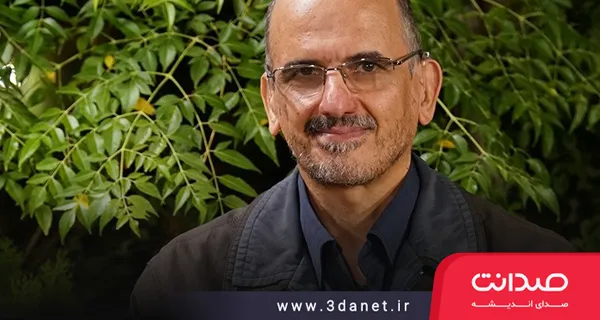
Mehdi Ghafourian (PhD Graduate in Philosophy)
Mghafourian65@gmail.com
.
.


Discussion3 comments
درنتیجه: انسان موجودی آسیب پذیر و در سرسویدای خودش تنهاست,همچنین انسان موجودی حریص به وجود خودش و عالم به جهل خودش است.همین انسان با نور معنویت,آسیب پذیریش را می پذیرد و بر تنهایی خود غلبه می کند. همه اینها با اتصال به یک امرمتعالی (خدا)امکان پذیر است. درنتیجه می پذیرد که مالک اوست و حتی امکان شدن و صیرورت را خود او پدید می آورد,نه خودش به تنهایی. انسان می خواهد که بشود,اما راه شدن را او به انسان نشان می دهد. او می خنداند(هو اضحک) او می گریاند(هو ابکی) همه اوست. هُو..
سه و شش یکی نیستند؟
3/(عطش کامل خواهی)تمایز میان "آنچه هست"و"آنچه باید باشد". 6/(امکان شُدن)یک طرف"آنچه هستیم"و"آنچه می توانیم باشیم". به نظرمن بین (3 و6 )می توان اینگونه رابطه برقرار کرد. ما آنچه می بینیم "هست"یاآنچه "هست" را می بینیم ؟ امرمتعالی (خدا)آنچه را می بیند"هست"ولی ماانسانها آنچه "هست"را می بینیم. اینجا چگونگی رابطه بین (بایدها و هست ها )مطرح می شود.از طریق "امکان شُدن" می توان این رابطه را برقرار کرد. هر انسانی می داند که" هست" ولی نمی پرسد که چه "باید" باشد. تمام زندگی انسان در فاصله تولد تا مرگ,, جدال بین "هست و باید"است. انسان هم "هست"و هم برای بودن نیاز به "باید"دارد. مانند رابطه جنین و مادر,,جنین وجود دارد و هست و برای بودن به مادر نیاز دارد.تا به کودک تبدیل شود و متولد شود,یعنی کودک بشود. جنین باید هم "بایدهای" خودش را رعایت کند و هم "بایدهای "مادرش را. در نتیجه چنانچه "بایدهای" جنین در راستای" بایدهای "مادر قرار نگیرد ,ممکن است جنین یا مادر و یا هر دو بمیرند. تولد جنین همان شُدن است ,,یعنی کودک..