Foreign thinker
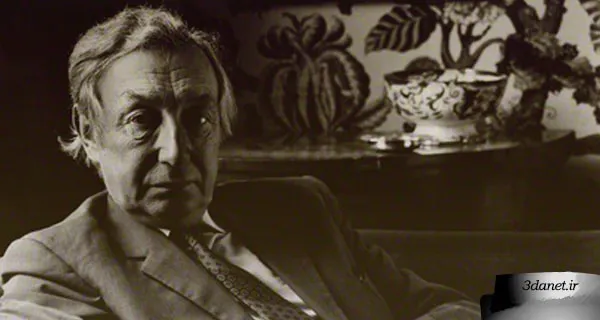
A. J. Ayer
A. J. AyerAnalytic Philosophy and Logical PositivismBritish1910–1989
No moral system can rest solely on authority.


Life and Thought
Alfred Jules Ayer (1910–1989) was a British philosopher and one of the most prominent representatives of logical positivism in the English-speaking world. With his influential book Language, Truth and Logic (1936), he introduced the verification principle and deemed metaphysical and theological claims meaningless. Ayer also produced important works in epistemology, ethics, and the philosophy of language, and is considered one of the most influential figures of twentieth-century analytic philosophy.
Sir Alfred Jules Ayer, known as A. J. Ayer or Freddie Ayer, was born on 29 October 1910 in London. His father, Jules Louis Cyprien Ayer, was a Swiss-born banker from a Calvinist background, and his mother, Reine Citroën, came from the Dutch-Jewish family that founded the Citroën automobile company. Ayer began his education at Ascham St Vincent's School and then Eton College, and went on to Christ Church, Oxford, with a classical scholarship. At Oxford he came under the influence of Gilbert Ryle, and after graduating in 1932, at Ryle's suggestion, he went to Vienna, where he associated with Moritz Schlick and other logical positivists in the Vienna Circle.
In 1936, at the age of only twenty-six, he published Language, Truth and Logic, the first comprehensive and influential introduction of logical positivism in English. In this work, Ayer put forward the verification principle: a statement is meaningful only if it is either analytic (tautological) or verifiable or falsifiable through sensory experience. On this basis, he deemed metaphysical, theological, and many ethical statements to lack genuine meaning, reducing them to expressions of emotion or moral commands (emotivism). The book provoked widespread debate and made Ayer one of the most controversial figures in British philosophy.
During the Second World War he served in the Welsh Guards and subsequently in the Special Operations Executive (SOE) and MI6. After the war, from 1946 to 1959, he was Grote Professor of the Philosophy of Mind and Logic at University College London, and then held the Wykeham Chair of Logic at New College, Oxford, until his retirement in 1977/1978. He was knighted in 1970. His later works, including The Foundations of Empirical Knowledge (1940), The Problem of Knowledge (1956), and writings on Hume, Russell, and Wittgenstein, show a gradual moderation of his early positions and a move towards a more nuanced empiricism, though he remained committed to the denial of metaphysics.
Ayer was also a socially active humanist: president of the British Humanist Association (1965–1970), a supporter of reforming laws on homosexuality, and an opponent of the Vietnam War. He married several times and was a sociable, witty personality who enjoyed public debate. In 1988 he had a near-death experience that temporarily affected his view of an afterlife, though he still considered himself an atheist. Ayer died in London on 27 June 1989. His legacy in analytic philosophy, particularly concerning the meaningfulness of language and the relationship between philosophy and science, continues to be studied and critiqued.