Life and Thought
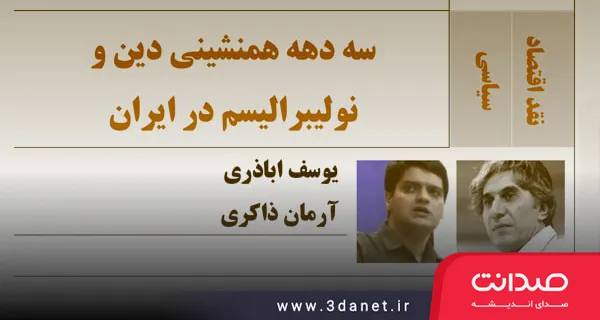
Arman Zakeri is an Iranian sociologist and researcher working in the fields of sociological theory, Iran's social issues, and the social thought of Muslim thinkers. He is among the figures of the new generation of Iranian social sciences, and his works primarily focus on the relationship between religion, society, social solidarity, inequality, and the possibility of a sociological understanding of the Iranian experience.
Arman Zakeri, an Iranian sociologist, began his academic studies on an interdisciplinary path; he initially studied mechanical engineering before turning to sociology. He completed his master's degree in sociology at the University of Tehran and subsequently engaged in research and teaching in the fields of sociology and social theory.
The main areas of Zakeri's work are sociological theories, the sociology of religion, Iran's social issues, and social thought within the Islamic tradition. In his writings and lectures, questions of social solidarity, the relationship between religion and society, poverty, inequality, the possibility of social sciences in Iran, and a social reading of the Muslim intellectual tradition hold a central place.
Among his published works are the books "An Introduction to Encountering the Social Sciences," "Social Solidarity and Its Enemies," and "Shi'ism, Solidarity, and the Risk of Identity-Orientedness." These works demonstrate that Zakeri, rather than engaging with theory in a purely abstract manner, strives to connect sociological concepts with the concrete issues of Iranian society and its cultural history.
The significance of his work for Sedanet's audience lies precisely in this link between social thought, religious studies, and contemporary cultural questions; that is, an effort to understand society not merely through statistics and day-to-day politics, but through concepts such as solidarity, justice, tradition, religion, and collective life.