Sociology
The 1401 Protests: Nature, Whatness and Why — Session on “Religion and the Protests”
The 'Religion and Protests' session, featuring Zakeri and Mohsen-Hesam Mazaheri, examined the relationship between religion and the 2022 protests. Zakeri spoke of 'formal religion' and its affinity with the movement, while Mazaheri described the situation as an 'eclipse of religion' that has driven society toward 'fear' and 'doubt'.
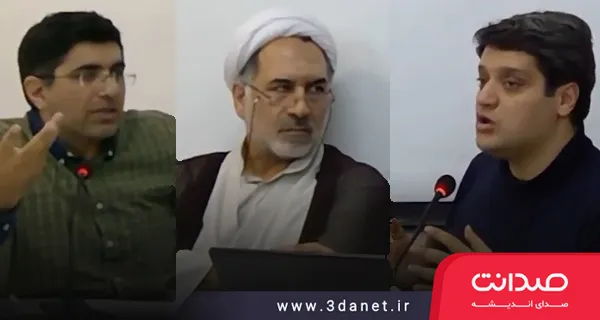
The seventh session of the series of meetings on “The 1401 Protests: Nature, Whatness and Why,” organized by the Iranian Sociological Association and titled “Religion and the Protests,” was held on Wednesday, December 28, 2022, with the participation of Mehrab Sadeghnia, Mohammad Reza Kolahi, Arman Zakeri, and Mohsen Hesam Mazaheri.
.
.
Religion and the Protests
Session Secretary: Somayeh Tohidlou
Video of Dr. Mehrab Sadeghnia’s Lecture
Watch on YouTube | Watch on Aparat: Part One, Part Two
Video of Dr. Arman Zakeri’s Lecture
Watch on YouTube | Watch on Aparat
Video of Mohsen Hesam Mazaheri’s Lecture
Watch on YouTube | Watch on Aparat
Video of the Session’s Concluding Discussion
.
.
Arman Zakeri
Religion in Society and in the Protests
A Sociological Inquiry into the Position of Religion in the 1401 Protests
What has been the place of religion in the recent protests? What is the relationship between the “Woman, Life, Freedom” movement and religion?
In response to the above questions, the main claims of this paper are as follows:
1- The socio-cultural changes of recent decades have turned “life” and the “self” into a central value in Iranian society. 2- In a significant part of Iranian society, religion has been recreated in connection with the valorization of “life” and the “self,” acquiring a pluralistic, selective, and “feminine” character. The main feature of feminine religion is religious selectivity in the service of life. 3- The “Woman, Life, Freedom” movement is not religious and has no religious demands or language, but it is not anti-religion either; it has a preferential affinity with “feminine religion” and finds it alongside itself. Following the Twitter disputes of recent months, we have called this religion “pink religion.” What follows is an attempt to explain these three claims in three separate sections. To achieve this goal, I will take the following path: First, a description of the basic characteristics of the segment of society in which the protests have unfolded. In this section, I will mainly rely on demographic data from the Statistical Center of Iran and research conducted in the field of Iranian values and attitudes.
.
.
Mohsen Hesam Mazaheri
The Eclipse of Religion: Fear and Doubt
The Recent Protests and the Trends of Religiosity Transformation in Iran
The recent protests, as the most extensive and widespread protests in the last thirty years, are an absolutely non-religious phenomenon. Neither did the protesters construct a religious narrative of it, nor did their opponents (supporters of the regime) succeed in producing a religious counter-narrative of it.
In a society where the institution of religion has a deep-rooted historical background and a profound social life, and has played a role in many contemporary social movements and uprisings, the absence of religion in such a widespread and pervasive event is significant and thought-provoking. This is a situation I call the “eclipse of religion.”
The recent protests have had an accelerating effect on the trends of religiosity transformation, and as a powerful catalyst, have sped up the major trends of change. With the conditions that arose in the wake of the protests and the resulting social pressure, it is as if Iranian society was propelled several years forward.
This situation, within the religious body of society, has set the stage for the release and concentration of two forces: one is “fear” and the second is “doubt.”
The force of doubt pertains to the part of society that had a tendency toward secularization. The vanguard of this type is the religious youth of the urban middle class. A type whose encounter with religious precepts is not under the discourse of “jurisprudence” but under the discourse of “lifestyle.” In this model of religiosity, unlike traditional religiosity, the three categories of pleasure, the body, and display are relevant. This type shows greater tolerance in encountering “others” and more empathy and flexibility regarding socio-cultural changes, and its encounter with the recent protests is, on the whole, positive. One of the examples of this alignment is the changes in the model of hijab, which was most evident in the discarding of the chador by some religious women.
The force of fear mainly pertains to the traditional and orthodox religious body, which, despite its differences and disagreements with political Shiism (the official religion), has benefited from the advantages and privileges of the religious state, including in the expansion of rituals. In these protests, this fear was reinforced in them that the consequences of transformation in the existing political structure would also affect them and endanger their (religious, social, economic, etc.) interests. It is likely that this very fear will push this current toward consolidating its relations with the ruling power. A policy I call the “alliance of fear.” The silence of the traditional body of the clergy and the sources of emulation is an example of this fear. This current’s encounter with the recent protests is, on the whole, negative.
[A significant part of] the transformations of religiosity and the configuration of religion in Iran’s future will be determined by the weighing of this force (fear and doubt) and the degree of success of the two types: the “frightened” and the “doubtful.”
.
.

Discussion1 comments
تغییر و تحول در اشکال دینورزی به موازات و گاه در راستای فرایندهای اقتصادی و سیاسی روی داده است و پرداختن به آن ، بازبینی یکی از وجوه فرعی و تبعی کشاکش های محوری و بنیادی جامعه است .