Foreign thinker
Charles Taylor
Charles TaylorPolitical Philosophy and Moral PhilosophyCanadian
Our identity is not formed only in solitude, but is always defined in dialogue and struggle with others.
Life and Thought
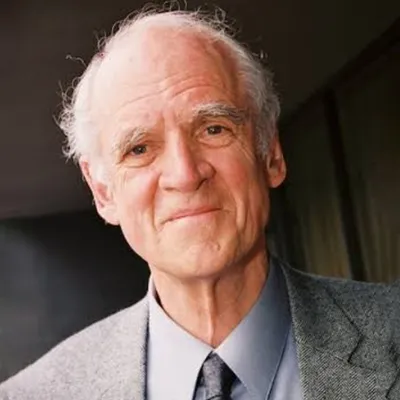
Charles Taylor (born 1931) is a prominent Canadian philosopher and Professor Emeritus at McGill University, renowned worldwide for his research in political philosophy, moral philosophy, and the philosophy of social sciences. He is considered a leading figure in the communitarian movement, and his structural critiques of atomistic liberalism and his reinterpretation of the concepts of identity and modernity have had a profound influence on contemporary thought. His major works, including Sources of the Self and A Secular Age, are among the most important texts in political and social philosophy of recent decades.
Charles Margrave Taylor was born in 1931 in Montreal, Canada. He began his studies at McGill University and then received a Rhodes Scholarship to continue his education at the University of Oxford, where he earned his doctorate under the supervision of philosophers such as Isaiah Berlin and Elizabeth Anscombe. After returning to Canada and teaching for many years at Oxford, McGill, and Northwestern Universities, Taylor became one of the most important thinkers in the philosophy of the humanities and political thought.
The central focus of Taylor's thought is a critique of the subjectivism and abstract individualism of the Enlightenment and modern liberalism. Contrary to liberals who view the human being as a completely independent entity detached from the social context, he emphasizes the role of 'horizons of meaning,' culture, tradition, and social interactions in the formation of human identity. His key book, Sources of the Self: The Making of the Modern Identity (1989), is a historical-philosophical attempt to trace the contemporary human understanding of the self and how identity is linked to moral values and the historical unconscious.
His other enduring work, A Secular Age (2007), examines the transformation of the phenomenon of secularism in the tumult of Western societies. In this work, Taylor demonstrates that secularism does not merely mean the decline of religion or the exit of religious beliefs from the public sphere, but rather a change in the conditions of belief; that is, a situation where belief in God is only one possible option among multiple existential and semantic options. Taylor's research on 'Multiculturalism' and the 'Politics of Recognition' are also primary references in discussions concerning cultural diversity and group rights in democratic societies.
Bibliography
Writings and transcribed lectures1 title
Sedanet articles about Charles Taylor