Foreign thinker
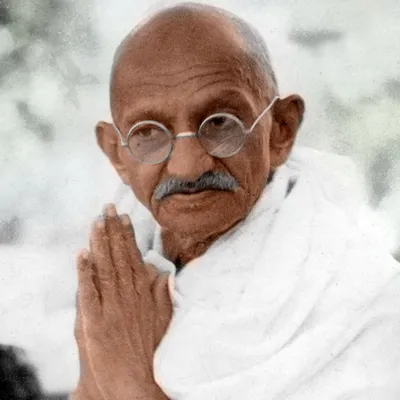
Mahatma Gandhi
Mahatma GandhiNonviolent Resistance, Political Philosophy, and Practical EthicsIndian1869–1948
Truth is God.


Life and Thought
Mahatma Gandhi was an Indian lawyer and political and spiritual leader, as well as one of the foremost theorists and practitioners of nonviolent resistance. Through his formulation and practice of satyagraha, he led the Indian independence movement and profoundly influenced civil and social justice movements throughout the world.
Mohandas Karamchand Gandhi (1869–1948), widely known as “Mahatma,” meaning “Great Soul,” was an Indian lawyer, political activist, and spiritual leader. He studied law in London and began his civil activism in South Africa, protesting racial discrimination against Indian immigrants.
After returning to India, Gandhi became one of the principal leaders of the country’s independence movement. The two foundational concepts of his thought and practice were satyagraha, or steadfast adherence to truth, and ahimsa, or nonviolence. He maintained that resistance to oppression must not reproduce hatred and violence, and that moral resistance is legitimate only when its means are consistent with its ends.
Gandhi employed civil disobedience, economic boycotts, strikes, marches, and fasting in the struggle against British colonial rule. The Salt March and the boycott of British goods are among the best-known examples of his campaigns. He also advocated economic self-sufficiency, manual labor, simple living, tolerance, and interreligious coexistence.
In works such as The Story of My Experiments with Truth and Hind Swaraj, Gandhi recounted his moral and spiritual experiments and criticized modern civilization, colonialism, violence, and consumerism. His thought and practice inspired numerous movements for freedom, civil rights, and resistance to discrimination around the world. Gandhi was assassinated by a Hindu extremist on 30 January 1948.