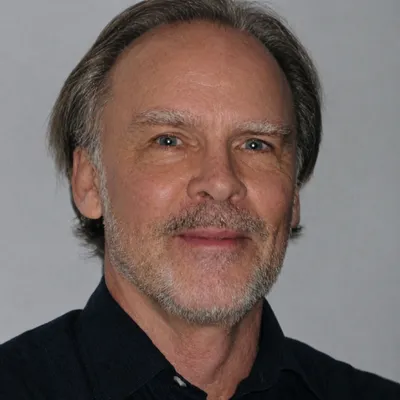
Foreign thinker
David Kennedy
David KennedyPhilosophy of education, philosophy of childhood, and Philosophy for ChildrenAmerican
Life and Thought
David Kennedy, born in 1943, is an American philosopher of education and a recognized scholar in the philosophy of childhood and Philosophy for Children. He taught at Montclair State University from 1996 until his retirement in 2024 while also serving as a Faculty Fellow of the Institute for the Advancement of Philosophy for Children. His research focuses on the philosophy of childhood, the community of inquiry, philosophical dialogue between adults and children, and democratic education.
David Kennedy was born in 1943; this year of birth is recorded in the bibliographic data for The Well of Being and in library catalogues associated with the book. He studied Social and Philosophical Studies in Education at the University of Kentucky and received his Ed.D. in 1986. His dissertation, Young Children's Thinking: An Interpretation from Phenomenology, examined young children's lived experience and modes of knowing and considered their implications for the philosophy of childhood and education.
Kennedy was Professor of Educational Foundations at Montclair State University from 1996 until his retirement in 2024 and also served for a period as department chair. He was a Faculty Fellow of the Institute for the Advancement of Philosophy for Children, taught graduate courses in Philosophy for Children, and supervised doctoral research in the field. From 1998 to 2010 he edited Thinking: The Journal of Philosophy for Children and was a founder and co-editor of Childhood & Philosophy.
One of the central themes of Kennedy's work is the philosophy of childhood. He investigates how culture and history have shaped adult conceptions of the “child” and “childhood” and how those conceptions influence education and adult-child relations. In this account, the child is not merely an incomplete being to be shaped according to an adult model; children's experience, perception, and voice can provide a distinctive perspective from which to understand human beings, culture, and adulthood itself. The Well of Being: Childhood, Subjectivity, and Education and Changing Conceptions of the Child from the Renaissance to Post-Modernity: A Philosophy of Childhood are among his major contributions to this line of inquiry.
Another major focus of his work is the community of inquiry and philosophical dialogue with children. Kennedy treats this model as more than a method for teaching reasoning: it is an educational relationship in which the child is taken seriously as an interlocutor and the classroom becomes a space for questioning, shared reasoning, listening to other perspectives, and revising one's judgments. In his work, this approach is connected to dialogical and democratic education, in which democracy is not merely an academic subject but a way of living and making decisions together in school.
His other major works include Philosophical Dialogue with Children: Essays on Theory and Practice, a collection of theoretical and practical essays on philosophical dialogue, children's thinking, and the community of inquiry. He has also written on the history of the concept of childhood, the relationship between childhood and adulthood, subjectivity, schooling, and the reconstruction of schools around dialogue and participation. The appearance of recent publications and the deposit of his academic curriculum vitae in Montclair's archive in 2025 indicate that his intellectual activity has continued after retirement.