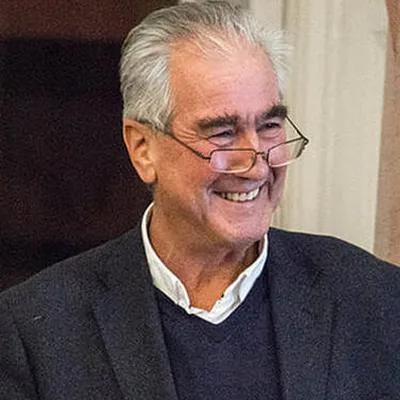
Foreign thinker
David Papineau
David Papineauphilosophy of mind and philosophy of scienceBritish
Life and Thought
David Papineau is a contemporary British philosopher best known for his work in philosophy of mind, philosophy of science, metaphysics, and epistemology. He has been Professor of Philosophy at King’s College London and has also held an academic affiliation with the City University of New York. Papineau is regarded as a prominent defender of naturalism and physicalism in contemporary philosophy.
David Papineau, born in 1947, is a contemporary British philosopher whose work has been influential in philosophy of mind, philosophy of science, metaphysics, and epistemology. He writes within the analytic tradition, and a major part of his work is devoted to defending naturalism, physicalism, and a scientific understanding of mind and consciousness.
Papineau has taught and researched at several universities and is especially associated with King’s College London, where he served as Professor of Philosophy. He has also held an academic position at the City University of New York and is a well-known figure in English-language philosophy in debates on mind, causation, consciousness, and the relation between science and philosophy.
His major works include Theory and Meaning, Philosophical Naturalism, Thinking about Consciousness, and The Roots of Reason. In these works, Papineau argues that mind and consciousness should be understood within a natural and scientific picture of the world, without appeal to dualism or supernatural explanations.
Papineau’s thought is important for its defense of philosophical naturalism. He holds that philosophy should not place itself outside the scientific image of the world, but should engage with the natural sciences, psychology, and cognitive theories. For this reason, his work is especially valuable for readers interested in philosophy of mind, philosophy of science, and contemporary debates on consciousness and physicalism.