Foreign thinker
Paul Bloom
Paul BloomCognitive Psychology and Philosophy of MindCanadian-American
If you want to build a better world, empathy is a poor guide; we need wisdom, rationality, and compassion, not literally feeling the pain of others.
Life and Thought
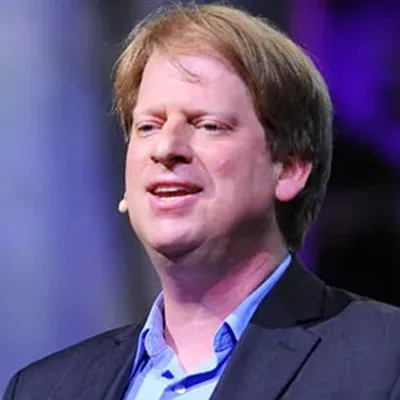
Paul Bloom is a prominent psychologist and distinguished professor at the University of Toronto, and a former professor at Yale University, who researches developmental psychology, morality, pleasure, and the philosophy of mind. He has gained international renown for his challenging critique of the concept of 'empathy' and his examination of the evolutionary and cognitive roots of morality in children. His bestselling books, such as 'Against Empathy' and 'Just Babies,' have had a significant impact on both academic and public discussions of moral psychology.
Paul Bloom is a renowned Canadian-American psychologist and author. After years of teaching and research as a professor of psychology and cognitive science at Yale University, he joined the University of Toronto. Bloom is best known for his innovative and deconstructive research that bridges the boundaries between cognitive psychology, developmental psychology, and the philosophy of mind.
One of Bloom's most central research areas is human moral development and how concepts of good, evil, justice, and fairness form in the minds of infants and children. In his book 'Just Babies,' through numerous experiments, he demonstrates that humans are born with a basic, innate moral sense, but this initial sense is limited to one's own group, and achieving a more universal morality requires rationality and culture.
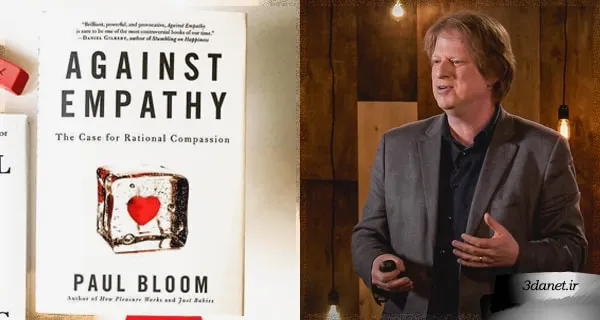
Bloom's most famous and controversial theory is presented in his book 'Against Empathy.' In this work, he argues that empathy (understanding and feeling the pain of others) is a subject-focused, blind, and bias-prone moral guide that often leads to incorrect political and social decisions. Instead, he advocates for 'Rational Compassion,' which is based on logic, reasoning, and the evaluation of consequences.
In addition to morality, Bloom has authored valuable works on pleasure, art, and cognitive essentialism; including the book 'How Pleasure Works,' in which he argues that human pleasure goes beyond simple sensory stimulation and is deeply tied to our beliefs about the history and essence of objects and experiences.