Psychology
A Review of Paul Bloom's Against Empathy: The Case for Rational Compassion
Paul Bloom sees empathy as a poor moral guide—biased and likely to fuel violence. In his book Against Empathy, he proposes a blend of kindness and cost-benefit analysis under the banner of rational compassion instead.
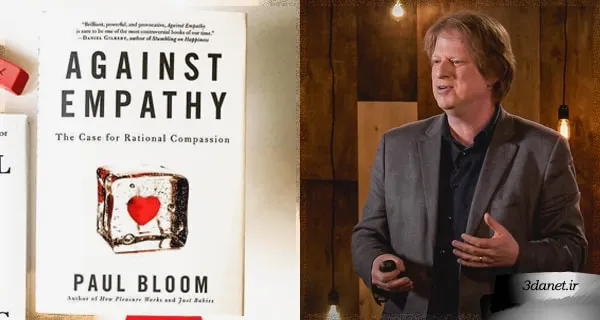
According to Paul Bloom, a professor of psychology at Yale University, empathy is one of the sacred cows of our culture that should be gently led to the slaughter. He notes that more than 1,500 books are listed on Amazon with "empathy" in their main title or subtitle. Yet, in many cases, empathy can distract us from the main issue, cause us to sacrifice the many for the one, or unfairly favor our loved ones over others.
The New York Times — Paul Bloom's new book, Against Empathy: The Case for Rational Compassion, is so eruditely written that, except for certain sections, it cannot be used as a manual for self-help or for parents. The scope of this book is too broad to be considered a simple guide to altruism, though parts of it could be. And its numerous flaws prevent the book from being a smooth text, which is unfortunate, as more careful editing could have prevented this.
We overlook the occasional circular reasoning and intellectual nudges of this book. Against Empathy is an often entertaining, timely, and invigorating reassessment of empathy as one of the sacred and ubiquitous cows of our culture that, in Mr. Bloom's view, should be gently led to the slaughter. He notes that more than 1,500 books are listed on Amazon with "empathy" in their title or subtitle. In politics, there is practically no value held higher than empathy: think of Bill Clinton's cunningly lip-biting remark, "I feel your pain." Empathy is what both sides appeal to in conflicts between the police and Black Americans. (Imagine what it feels like to live in a world where persistent, systematic oppression targets you; imagine what it feels like to work in a job that constantly exposes you to harm.)
Mr. Bloom, a professor of psychology at Yale, disagrees with all of this. He argues that, in almost every realm of life, empathy is "a poor moral guide," whether that realm is public policy, private charity, or interpersonal relationships. He
affect people.
Empathy is one of the sacred and ubiquitous cows of our culture that should be gently led to the slaughter
He writes: “Empathy is biased, pushing us towards narrow-mindedness and racism.” Are you deeply offended? He is just getting warmed up. He continues: “Empathy knows nothing of mathematics. It prefers the one over the many. It can ignite the flame of violence; empathy for those close to us is a powerful force for waging war and committing atrocities against others.”
Ultimately, it turns out that Mr. Bloom’s view is far more nuanced and measured than the statements above. (When he fortifies his arguments with numerous conditions and considerations, they are rarely offensive.) He is certainly not arguing in favor of callousness. Rather, in his view, empathy is not tempered by reason and originates from the murkiness of human viscera. He prefers a kind of rational compassion—a combination of kindness and impartial, dispassionate cost-benefit analysis. His book is a systematic attempt 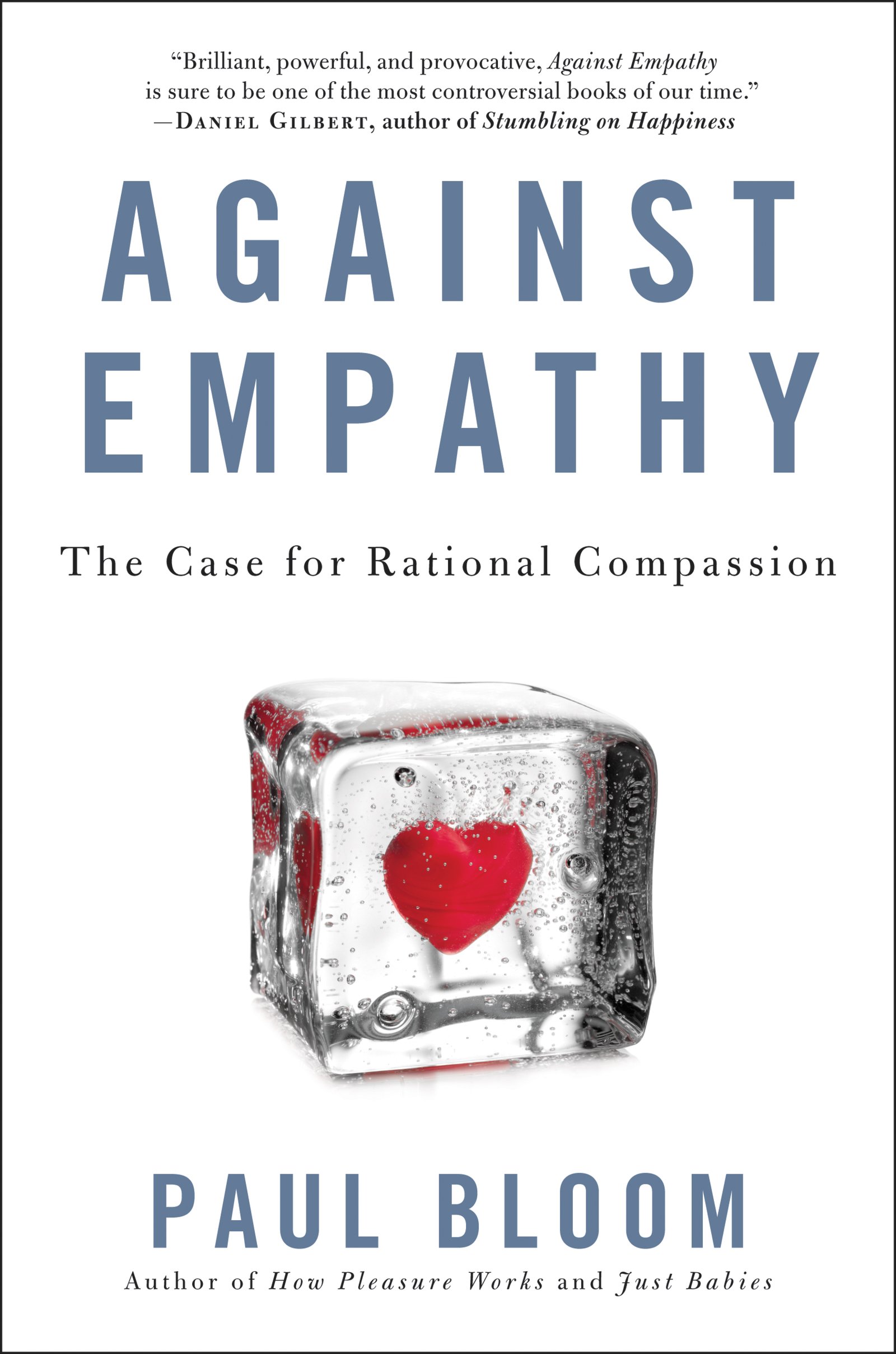 to explain why this is his preference.
His response to those who say empathy is essential for morality is that morality has many sources. “Many wrongdoings,” such as littering in public spaces or cheating on taxes, “do not have a specific victim with whom to empathize.” Nor does it seem that the most compassionate people behave the most morally. He writes: “There are hundreds of studies on children and adults, and the results generally show no relationship.”
Mr. Bloom’s argument here is not with those who say empathy motivates altruism. He himself, who has personally been providing financial support to a child, and later to his family, in Indonesia for years, is not immune to this. Rather, he says that empathy is generally a poor tool for allocating resources. We have little capacity to feel the suffering of others and tend to identify with those who remind us of ourselves. He explains that “this misguided and unruly moral mathematics is part of the answer to why governments and people are more concerned about a little girl stuck in a well than about events affecting millions
Bloom's response to those who say empathy is essential for morality is that morality has many sources
Against Empathy encompasses a host of specific and sensitive domains, from neuroscience to political science, from Jesus Christ to Adolf Hitler. But the most exciting part for me was the chapter dealing with empathy in private relationships.
Consider parenting. Almost all mothers and fathers find it hard to bear their children's suffering and distress. Yet forbearance in such moments is often necessary. If parents let their child's pain overwhelm them, how can they make their child go to the dentist, do their algebra homework, or spend the first night away from home? Bloom writes: "Being a good parent involves coping with your child's short-term suffering, and indeed sometimes causing short-term suffering for your child."
If you live with others in a state of hyper-empathy, you risk emotional depletion or, as a psychologist might say, "empathic distress." In the face of troubles, this is useless. It is better to react with a kind of compassion that does not entirely engulf the individual.
In any case, it was in this same chapter that I found myself most confused, perhaps because this is where Mr. Bloom indulges in the most digression with the least restraint, and perhaps because this is where he shows the most appreciation for the charms of empathy. It is as if he knows why those who have suffered the mistakes of others demand an empathetic apology. And, confirming Adam Smith's observation, he writes that we usually must hide our own happiness from others because, rather than a shared joy, it is likely to provoke our friends' envy. But that is an empathetic reaction, isn't it? Isn't anticipating friends' envy empathy? So perhaps empathy still has a place that rejects this feeling...? I wish he had said that.
Perhaps one day he will. More than any book I have read this year, Against Empathy is a candid and enjoyable conversation with its readers. Mr. Bloom notes in the introduction that parts of Against Empathy were initially published as articles in various periodicals, but have since been subjected to criticism
What Bloom has in mind is a kind of rational compassion, that is, a combination of kindness and impartial, independent cost-benefit analysis
and revision, partly due to reader reactions. (Some of these reactions were more constructive. Probably one of the first comments tweeted was: "The stupidest thing I've ever read.") He later concedes that he is no longer sure he believes the evidence for empathy in infants that he cited in his 2013 book Just Babies.
On this basis, you become eager for a comments section to be included after the notes. Bloom has a good talent for the messiness of moral thought.
I would have especially liked to hear Mr. Bloom's opinion on the presidential election. He has great faith in reason. But the Oxford Dictionary named "post-truth" as the international word of the year for 2016; and an aide to Donald Trump, our president-elect, recently declared on National Public Radio: "There's no such thing as facts, unfortunately, anymore." (Or grammar, apparently.)
Toward the end of Against Empathy, Mr. Bloom acknowledges that "it often seems there is a deficit of rationality in political domains." His theory for the cause of this situation is that people treat politics like sports: their views are based on team loyalty, not objective merit. He writes: "Political views share an interesting feature with views about sports teams, they don't actually matter," then elaborates: "My beliefs have no effect on the world, unless I am a member of a very small, powerful group."
But surely political beliefs do matter. Every four years, they matter a great deal. They mattered especially this year. If you believe the worst has come to pass, our next four years will be at a low level in both respects, that is, empathy and rational compassion. If that is the case, our world will not just be post-truth. It will become post-moral.
.
.
Bibliographic Information: Bloom, Paul. Against Empathy, Bodley Head Limited, 2017
Bloom, Paul. Against empathy. Bodley Head Limited, 2017
..






Discussion2 comments
اصل مطلب مورد علاقه ام بود ولی متاسفانه نرجمه مهم وغیر قابل درک بود مثلافرق بین خشم ونفرت به درستی آشکار نبود ظاهرا مترجم خود یکبار ترجمه خودرا نخوانده بود حیف شد ای کاش یکبار دیگر باز نگری شود وبه صورت درستی به علاقه مندان عرضه شود باتشکر ودر انتظار.
با سلام متاسفانه ترجمه بسیار نارسا و مبهم بود، بعلاوه جابجایی جمله ها و غلط های دستوری در متن نیز باعث دشواری در برداشت کلی از کتاب می شد.