Foreign thinker
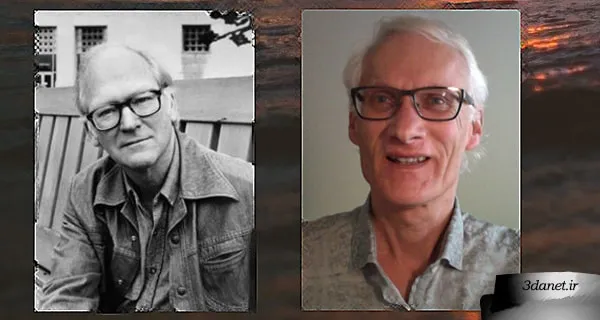
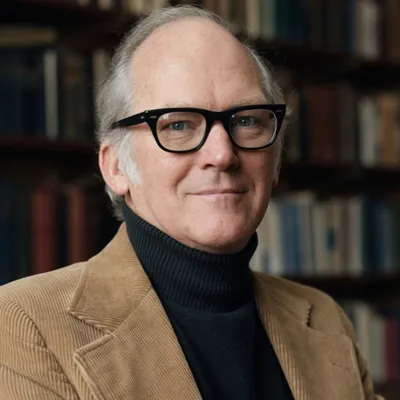
Donald Davidson
Donald DavidsonPhilosophy of Language and MindAmerican
Nothing in the world, no object or event, would be true or false if there were not thinking creatures.
Life and Thought
Donald Herbert Davidson (1917–2003) was an American philosopher and one of the most influential figures in analytic philosophy in the second half of the twentieth century. With theories such as radical interpretation, anomalous monism, and triangulation, he made fundamental contributions to the philosophy of language, philosophy of mind, and action theory. His works remain a central reference point in discussions concerning meaning, content, and the relationship between mind and world.
Donald Herbert Davidson was born on March 6, 1917, in Springfield, Massachusetts. After studying at Harvard (where he became acquainted with Whitehead and Quine) and serving in World War II, he received his doctorate from Harvard in 1949. He taught at various universities, including Stanford, Princeton, Rockefeller, and notably the University of California, Berkeley, where he remained a professor of philosophy until the end of his life.
Davidson is best known for his collected essays rather than systematic books. His most important works include "Actions, Reasons, and Causes" (1963), "Truth and Meaning" (1967), "Radical Interpretation" (1973), "Mental Events" (1970), which introduced the theory of anomalous monism, and the essays on triangulation from the 1980s and 1990s.
In the philosophy of language, inspired by Tarski, he built a theory of meaning based on truth conditions and argued that understanding language requires the principle of charity. In the philosophy of mind, his anomalous monism claims that mental events are identical with physical events, but there are no strict psychophysical laws. His concept of triangulation was also employed to solve the problem of mental content and the objectivity of the world: content is formed only in the three-way interaction between two subjects and a shared world.
Davidson died on August 30, 2003. His legacy remains alive in contemporary philosophy of language, mind, and metaphysics.