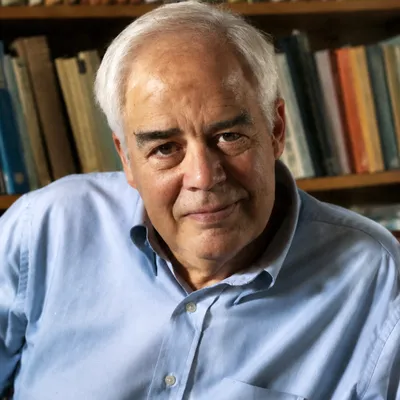
Foreign thinker
Richard Rorty
Richard RortyPragmatist philosophy, analytic philosophy, philosophy of languageAmerican1931–2007
“The world does not speak. Only we do.”


Life and Thought
Richard Rorty was an American philosopher and one of the most important figures in contemporary pragmatism. He became known for criticizing epistemological foundationalism and defending a neopragmatist approach. His influential book Philosophy and the Mirror of Nature played an important role in the transformation of analytic philosophy and the emergence of post-analytic philosophy.
Richard Rorty was born in New York in 1931. He studied at the University of Chicago and Yale University and later taught philosophy at institutions including Princeton University and the University of Virginia. Initially trained in the tradition of analytic philosophy, he gradually moved toward American pragmatism, especially the thought of William James and John Dewey.
His most important work, Philosophy and the Mirror of Nature (1979), offered a broad critique of the traditional view of philosophy as a search for certain foundations of knowledge. Rorty argued that philosophy should not be understood as a mirror-like representation of the world, but rather as a form of cultural conversation and a tool for addressing human problems.
In later works such as Consequences of Pragmatism and Liberal Utopia, Rorty defended neopragmatism, pluralism, liberal democracy, and the role of language in shaping human experience. He emphasized the concept of “final vocabularies” and argued that truth should not be separated from human practices of description and language use.
Rorty’s ideas generated wide-ranging debates and criticism from philosophers with different orientations. Nevertheless, he remains one of the most influential philosophers of the second half of the twentieth century in connecting pragmatism, philosophy of language, and social theory.