Philosophy
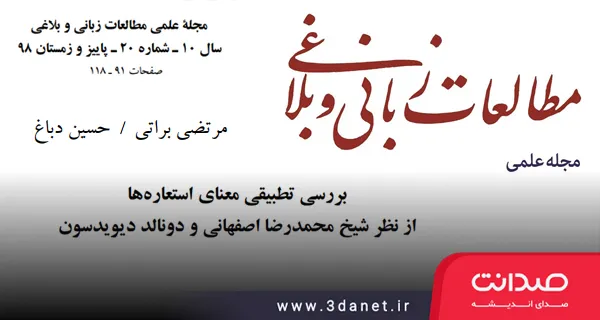
A Comparative Study of the Meaning of Metaphors: Mohammad Reza Esfahani and Donald Davidson
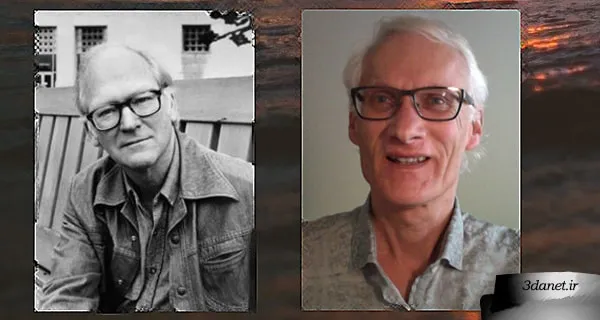
Contrary to the prevailing view, both Donald Davidson and Mohammad-Reza Esfahani argue that metaphor carries no figurative meaning, locating its significance instead in its use and effect within a specific context. This essay highlights the affinities between Sheikh Esfahani's theory and Davidson's.

Hossein Dabbagh
AuthorA Comparative Study of the Meaning of Metaphors: Mohammad Reza Esfahani and Donald Davidson
Hossein Dabbagh and Morteza Barati
Metaphor in the West is among the subjects that have been examined from numerous perspectives, and various theories about it have been proposed. In the Islamic rhetorical tradition, metaphor has a more limited domain in terms of definition and application. All theorists of metaphor, both in the West and in Islamic rhetoric, believe that metaphor, in addition to its literal and true meaning, possesses a secondary and figurative meaning; however, there are two unconventional views in this regard. Donald Davidson and Mohammad Reza Esfahani do not accept this premise. In their belief, metaphor has no meaning other than its literal meaning, and the discussion of metaphors pertains to the domain of their use and the effect that this use creates in a specific context and setting. Many articles and treatises have been written on Davidson's theory, while Sheikh Esfahani's theory, despite predating Davidson's view, has remained unknown even among Iranian rhetoricians. This article, while examining Esfahani's view in detail, will discuss the similarities of Davidson's theory with it.
1_ Introduction
The study of metaphor has held extraordinary fascination for researchers from ancient times to the present day. A great diversity of views on metaphor has emerged, which are largely divided into two schools: the traditional metaphor school and the new metaphor school, the former interpreting metaphor in the domain of rhetoric and the latter interpreting metaphor in the domain of cognition (Low, Cameron & Todd, 2010). Until the present century, theoretical reflection on the nature and role of metaphor generally followed a line of thought according to which metaphor is essentially a rhetorical device. Metaphor, as a literary ornament, adds more embellishment and appeal to verbal and written statements. Nevertheless, new theorists such as Max Black[1] (1977), Lakoff and Johnson[2] (1980), relegate this ornamental role of metaphor to the margins and believe that metaphors are powerful cognitive tools that cannot be restated in plain, literal language without losing meaning. According to this theory, "Metaphor, contrary to the traditional definition, is no longer specific to poetry, literature, and literary imagination. The place of metaphor is in the human conceptual system, and it is a cognitive process that occurs in the minds of all humans." (Barati, 1395: 56)
The definition of metaphor in Persian rhetoric has differences from its definition in Western theories of metaphor. Metaphor in the West also includes various types of metonymy. In the West, there are different theories about metaphor, whereas in Islamic rhetoric, we encounter a single rhetorical tradition. Donald Davidson[3], in his article "What Metaphors Mean"[4] (1978), attempts to show that most philosophical discussions about the nature of metaphor have largely erred in assuming a different, expansive, or "metaphorical" meaning for metaphors. Among Islamic rhetoricians, Sheikh Mohammad Reza Esfahani holds a specific view differing from the well-known theory of metaphor. Donald Davidson's theory has affinities with Esfahani's view.
Mohammad Reza Najafi, known as Sheikh Mohammad Reza Masjed Shahi or Esfahani (1362 – 1278 AH), is the son of Sheikh Mohammad Hossein Najafi. He excelled in jurisprudence, principles of jurisprudence, philosophy, logic, theology, poetry, mathematics, and religions at the seminary of Isfahan.
In addition to his mastery of the principles and branches of various sciences, especially jurisprudence and its principles, Sheikh Esfahani was also interested in poetry and literature. Esfahani composed poetry in both Persian and Arabic, and most of his poems are in Arabic. Among his literary works, one can mention al-Rawd al-Arid fi ma Qala aw Qil fih min al-Qarid (a poetry collection), Ghaliyat al-Itr fi Hukm al-Shi'r, al-Sayf al-Sani' 'ala Riqab Munkiri 'Ilm al-Badi', and glosses on the commentary of Al-Mutanabbi's Diwan.
Sheikh Esfahani has no specific book on rhetoric and raises the topic of figurative language (majāz) and metaphor in his work *Wiqāyat al-Adhhān*. *Wiqāyat al-Adhhān* is a book in Arabic on the science of the principles of jurisprudence (*uṣūl al-fiqh*), in which the author attempts to introduce students of this science to it in a new way. About 50 pages of this book (101–149) are devoted to examining literal truth (*ḥaqīqa*) and figurative language (*majāz*).
Research Problem
In Persian rhetoric, few are familiar with Esfahani's prominent view on metaphor. No work has yet been published in academic journals introducing or critiquing this theory. In Esfahani's view, not only metaphor, but all types of figurative language (*majāz*) and allusion (*kināya*) are "usage in that for which it was coined" (Esfahani, 1413 AH: 105); hence, it aligns more closely with the general definition of metaphor in the West, which includes various types of figurative language. In all theories presented, metaphor is assumed to have a figurative, non-literal meaning, whereas in the view of Donald Davidson and the theory of Mohammad Reza Esfahani, the assumption of a figurative meaning for metaphor is rejected. The problem of this research is to examine and compare these two views.
Research Background
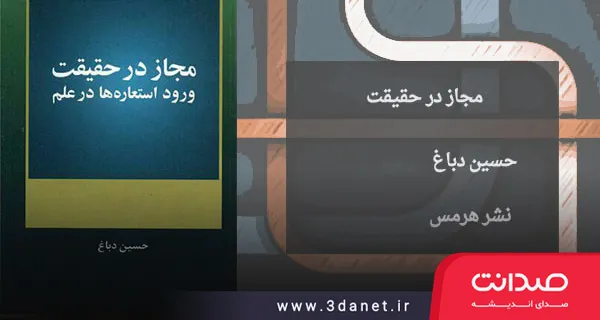
As previously stated, no work has specifically examined Sheikh Esfahani's view. Morteza Barati and others (1395 AH) referred to this theory in their article entitled "A Comparative Conceptual Study of Metaphor in the West and Islamic Rhetoric." Although works exist in Persian on Davidson's philosophical views, regarding his specific theory on the meaning of metaphors, Hossein Dabbagh (1393 AH) has presented material in the book *Majāz dar Ḥaqīqat; Vorūd-e Este'āre-hā dar 'Elm* (The Figurative in the Literal: The Entry of Metaphors into Science).
2_ Davidson's Claims Against Semantic Theories of Metaphor
In the first few pages of Davidson's article, at least three distinct but related claims can be identified (perhaps some claims share the same root) that Davidson makes against semantic theories of metaphor:
(1) Metaphors or metaphorical expressions say nothing beyond the literal meanings of their words, and the makers of metaphors also say nothing beyond the literal meanings of the words they use.
(2) Metaphors do not have a "specific" "secondary" or figurative meaning.
(3) Metaphors do not "convey concepts and ideas" or have "cognitive content" (beyond what is expressed by the literal meanings of the words used). (Davidson, 1978: 43).
It should be noted that Davidson's arguments are negative. He primarily discusses and argues about how metaphors do not work and how they do not mean. He discusses far less a positive, affirmative examination of how metaphor is created. Nevertheless, the positive statements he makes clearly have a pragmatic[5] character: "A metaphor makes us attend to, and leads us to 'go along with', some likeness between two things" or, alternately, "metaphor makes us see one thing as another" (Davidson, 1979:37). In such an approach, metaphor clearly has much in common with comparison and simile; but Davidson rejects both the pragmatic and comparative views of metaphor. He rejects the view that metaphor is an elliptical simile (which suggests that the literal meaning of a metaphor is identical to the literal meaning of a simile); because of his prior assumption that metaphor is the creative use of expressions that are, on their literal interpretation, odd or patently false (ibid.).
The negative arguments are against claims that posit the existence of metaphorical meanings:
Metaphorical meaning explains nothing (we need to understand what a metaphor is in order to grasp what metaphorical meaning is). It might be said that metaphor is the statement of similarities, but similarities are vague and unlimited—and indeed, everything is like everything else in some respects (ibid.).
For example, “Tolstoy was a moral infant.” If this phrase were merely an expression to show that there are some similarities between Tolstoy and a child, what are these similarities? Was Tolstoy simple-hearted? Was Tolstoy stubborn? Was Tolstoy self-centered? Davidson believes that there is no definite list here. It might be said that metaphor has a broad meaning, but this seems to be only a description of the literal meaning. In determining meaning, it is never clear where metaphor ends and literal meaning takes over, thus making it impossible to draw any line between the two types of meaning.
According to Davidson, it might be said that metaphors are elliptical similes; but “the corresponding simile will be different. Sometimes we have meanings from a metaphor that are certainly not similes, such as suggestive meanings. All similes are true, but not all metaphors are true” (ibid., 38).
Davidson’s theory, in expressing its negative points, yields three insights:
Metaphor is somewhat like a simile in that the hearer is drawn to notice similarities.
Metaphor is somewhat like conversational implicatures in that the hearer, using their imagination and real-world knowledge, and partly based on the meaninglessness and absurdity of the literal meaning of the utterance, notices this, and not based on the meanings of additional phrases.
But metaphor also differs from simile and conversational implicatures. Because, like dreams and paintings, what is “noticed” are not propositions semantically encoded in the phrase used or intended by the speaker; also, the type of “imagination” involved and employed in metaphor is somewhat different (Stainton, 2003, 351).
In Davidson’s view, metaphor as a condensed simile view has another fundamental flaw that it shares with the second type of extensional and referential theory; that is, the view that the figurative meaning of a metaphor is identical to the literal meaning of a simile; what Tirrell calls the “reductive simile theory” (Tirrell, 1991: 126). Davidson argues that both views make the specific metaphorical meaning overly explicit and clear, “because they identify it with the literal meaning of a simile, which is often ‘very trivial’: trivial because everything is like everything else in some respects” (Davidson, 1979: 37). He believes such a view obscures the specific points of similarity in which the metaphor (or simile, for that matter) might lead us to discover the literal meaning of the comparison; that is, it merely claims that one thing is like another without going into details. Metaphors cannot be paraphrased by a simile or another linguistic expression, not because they have a unique or mysterious non-literal meaning, but because “there is nothing to paraphrase” (ibid., 30). Davidson believes that the insights metaphors lead to (the similarities they make the hearer aware of) are usually not of a propositional kind.
In Davidson’s view, there is no such thing as metaphorical meaning outside the words with which the metaphor is expressed. The meaning of a metaphor is the meaning of the words used to express it, in their most literal possible sense. The act of metaphor is like a psychedelic pill. Metaphor has a psychological effect. This effect lies outside the domain of language and meaning. Consequently, we can call Davidson’s approach a “causal extensional view”[6], “this view considers metaphor as the cause[7] or elicitor[8] of insights into similarities between objects, and not the expresser[9] of them” (Leezenberg, 2001: 126).
3_ A Comparative Study of Davidson’s and Esfahani’s Theories
The discussion of figurative language (majāz) and metaphor in the Islamic world began with the Holy Qur'an, since the use of figurative language, metaphor, and other rhetorical devices in the Qur'an is recognized as one of the most prominent aspects of the Qur'an's inimitability of expression. Of course, opponents resorted to objections that are more theological than literary and rhetorical in nature:
1_ Some have equated figurative language with falsehood.
2_ Some have considered it a state of necessity, arguing that a speaker only resorts to figurative language when constrained from expressing the literal truth, whereas any form of falsehood or incapacity is far removed from the Divine Sacred Realm.
3_ Some Salafis and extremist adherents of mystical unveiling and intuition have denied the existence of figurative language in the Qur'an on the grounds that it leads to the negation of meanings and the divestment of realities from the exalted attributes of the Essence of Beauty and Perfection (Nasiri, 1392: 87).
Scholars of literature have considered the use of metaphor to be a source of eloquence, attractiveness, and beauty in speech, in which the Qur'an has surpassed all and reached the level of inimitability. Essentially, the use of various types of metaphor in the Qur'an has given this divine speech its unique splendor and made it preeminent among all (ibid.). Ibn Rashiq al-Qayrawani writes on the importance of metaphor: "Metaphor is the best type of figurative language, the origin of exquisite subtleties in every refined speech, and there is no better ornament for adorning speech than metaphor" (Ibn Rashiq, 1907: 239).
Literal truth (ḥaqīqa) is the use of a word in the meaning for which it was coined (mā wuḍiʿa lahu). In literal usage, the meaning comes to the listener's mind directly and without the need for any contextual indicator. Of course, sometimes a figurative meaning becomes transformed into a literal meaning, such as when the use of a word in a figurative sense reaches a point where that meaning comes to mind from the word without the need for a contextual indicator (Muzaffar, 1378, vol. 1: 27).
Figurative language (majāz) lexically means a path (straight way), passing, crossing, and a passageway (Shirazi, 1373: 275). Figurative language, according to the well-known view, is the use of a word, with the aid of a contextual indicator, in a meaning other than that for which it was coined, due to a relation and correspondence between that meaning and the originally designated meaning, such as using the word "lion" for a brave human in the sentence "I saw a lion on the battlefield" due to the relation of similarity between a brave human and a lion in bravery and with the aid of the contextual indicator (battlefield).
Lexical literal truth: Lexicographers coin a word for a meaning, and we use that word in that very meaning. For example, lexicographers have coined the word "bread" for a type of food made from wheat. Now, if we use the word "bread" in the original meaning for which the lexicographers coined it, it is called lexical literal truth (for instance, Zayd telling the baker in a bakery that he wants two loaves of bread).
Lexical figurative language: Lexicographers coin a word for a meaning, and we use that word in a meaning other than the one for which the lexicographers coined it. For example, Zayd says to his friend in a sentence that if they do a certain task together, they will attain "bread and water." Here, Zayd has used the phrase "bread and water" in a meaning other than the one for which the lexicographers coined it, and this usage is called figurative usage (Muhaqqiq Damad, 1362: 111).
As mentioned, the well-known definition of figurative language (majāz) is “al-majāz huwa istiʿmāl al-lafẓ fī ghayr mā wuḍiʿa lah” (figurative usage is employing a word in other than that for which it was coined); such as using “lion” to mean a courageous person. Regarding whether the permission of the coiner is required when employing a word in other than that for which it was coined, it can be said that if the coiner’s permission is required, we must refer to the relations[10] of figurative usage. Scholars such as the author of Kifāyah believe that the coiner’s permission is not necessary, and that it is sufficient for sound taste to accept it. (ibid.)
There is another view concerning figurative language that does not consider it to be “employing a word in other than that for which it was coined.” This view is attributed to Sakkākī. Taftāzānī, in explaining this view, writes:
Some [like Sakkākī] believe that metaphor (istiʿārah) is a conceptual/mental figurative usage (majāz ʿaqlī), not a lexical one; because in metaphor, we do not intervene in the lexicon, but rather we intervene in a conceptual matter. That is, if we call a courageous person a “lion,” this application comes after we have claimed that the courageous person is an individual among the individuals of “lion” (after claiming the inclusion of the tenor into the genus of the vehicle) (Taftāzānī, 1315, 70).
To clarify Sakkākī’s view, one can refer to his statement in the book Miftāḥ al-ʿUlūm:
Know that figurative usage (majāz) according to the scholars of eloquence (ʿilm al-bayān) is of two types: 1. Lexical figurative usage (majāz lughawī), the explanation of which has passed [employing a word in other than that for which it was coined], and it is called singular figurative usage (majāz mufrad). 2. Conceptual/mental figurative usage (majāz ʿaqlī), which is figurative usage in the sentence. Lexical figurative usage is of two types: a type that pertains to the meaning of the word, and another type that pertains to a judgment made for the word in speech. The figurative usage that pertains to the meaning of the word is of two types: beneficial figurative usage (majāz mufīd) and non-beneficial figurative usage. Beneficial figurative usage is also of two types: figurative usage without hyperbole in simile, and figurative usage with hyperbole in simile, which is called metaphor (istiʿārah) and has various kinds (Sakkākī, 1317: 166).
Sakkākī’s view on whether figurative usage (the attribution of an act to a non-real agent) is lexical or conceptual is not very clear. While presenting two views on the conceptual or lexical nature of figurative usage, he initially sides with the lexical nature of figurative usage, like his own teacher (Ḥātimī), but later leans more towards its conceptual nature. In summarizing the lexical and conceptual views of figurative usage, he writes:
Know that the way to reconcile this is the claim of being a lion for a human, with the claim that the individuals and instances of “lion” are, by way of interpretation, of two types: one is the “conventional individual and instance,” which is the lion with a specific form and appearance, possessing great strength and courage. The other instance is the “unconventional instance and individual”; that is, someone who possesses that same strength and courage but does not have the form and appearance of a lion (ibid., 164).
In Sakkākī’s belief, metaphor is not figurative usage but rather a lexical truth (ḥaqīqah lughawiyyah). In metaphor, the word is used in its original meaning, but it is not itself a truth; rather, a kind of conceptual and mental intervention takes place in metaphor. For example, when we call a courageous person a “lion,” we claim in our minds that the courageous person is one of the instances of the general category of “predatory animal.” Therefore, when we use the word “lion” for a courageous person, we actually want to show that he is that predatory animal, and the predatory animal has two instances, one of which is the predatory lion and the other is the courageous person. In this state, the first meaning is the root and the second meaning is the branch.
Despite it being famously held that in Sakkākī’s view, figurative usage is employing a word in the meaning for which it was coined (Mīrzā-yi Qummī, 1378 and Burūjirdī, 1419), upon a more precise examination of Sakkākī’s original statement on metaphor, we find that the theory of claimed figurative usage (the theory of Shaykh Muḥammad Riḍā Iṣfahānī) and Sakkākī’s theory differ from one another (most later rhetoricians do not hold this belief); because in Iṣfahānī’s theory, it is claimed that the word is used in its literal, true meaning, but in Sakkākī’s theory, the employment of the word is in other than that for which it was coined. In Sakkākī’s theory, the speaker claims that “lion” has two instances and individuals, but because the word “lion” was coined for the real individual, its application to the claimed individual is an employment in other than that for which it was coined. Sakkākī’s original statement about figurative usage is this statement:
wa ammā al-majāz fa-huwa al-kalimah al-mustaʿmalah fī ghayr mā hiya mawḍūʿah la-hu bi-al-taḥqīq, istiʿmālan fī al-ghayr bi-al-nisbah ilā nawʿ ḥaqīqatihā, maʿa qarīnah māniʿah ʿan irādah maʿnāhā fī dhālika al-nawʿ (Sakkākī, 1317: 160).
In truth, in his view, in figurative usage based on the relation of similarity (metaphor), there is a claim of being an instance.
In his book Wiqāyat al-Adhhān, Mohammad Reza Esfahani generalizes Sakkākī’s definition of metaphor and extends it to all types of figurative language, whether metaphor or otherwise. He defines metaphor in such a way that a word is always used in that for which it was coined and is never employed in other than that for which it was coined. Esfahani first summarizes the well-known view concerning literal and figurative usage: “If a word is used in that for which it was coined, it is literal; and if it is employed in other than that for which it was coined, it is figurative; any other case is erroneous and mistaken” (Esfahani, 1413 AH: 101). Scholars of rhetoric consider figurative usage to be of two types. If the basis of the usage is similarity, it is called metaphor (istiʿāra), such as “Zayd is a lion”; and if the basis of the usage is not similarity but rather one of the twenty-five relations (such as the relation of part and whole), it is called a loose trope (majāz mursal), such as “Zayd is an eye.”
Esfahani does not accept this view and claims that both literal and figurative usage are instances of employing a word in that for which it was coined:
Because of the difficulty of proving coinage for figurative expressions, a group committed themselves to the notion that their signification is not based on coinage, and thus they fell into contrivances whose corruption is, in my view, greater and more evident than the corruption into which their brethren had fallen before them (ibid: 103).
Donald Davidson, like Sheikh Esfahani, begins by rejecting the views on metaphor that preceded him and believes that all theorists of metaphor before him erred in understanding metaphor and in formulating an adequate theory. In discussions of metaphor, Davidson’s theory is highly controversial because of his claim that metaphorical speech and expression lack any specific non-literal meaning, though there is little agreement among scholars of metaphor regarding this claim. He attacks all previous theories, from the time of Aristotle to the period of Max Black, and considers them invalid:
The fundamental mistake I shall be arguing against is the idea that a metaphor has, in addition to its literal meaning, another meaning. This idea is present in the beliefs of many who have written about metaphor: in the works of literary critics (such as Richards, Empson, Winters), philosophers from Aristotle to Max Black, psychologists from Freud to the pre- and post-Skinnerian psychologists, and linguists from Plato to Uriel Weinreich. (Davidson, 1978: 28).
Mohammad Reza Esfahani believes:
In figurative usage there is another method—one that accords with intuition, is supported by proof, is accepted by every sound and upright mind, and rejected by every diseased mind—and that method is that words are used in their original meanings, and their user neither creates a new meaning nor reneges on his initial commitment; rather, he intends their primary meanings by them (Esfahani, 1413 AH: 103).
In explaining and clarifying this point, he writes:
Sound nature testifies that the speaker of “Today I fought a fierce lion” and “Yesterday I met a shining moon” fought none but a brave and fearless man, met none but a radiant face, and intends nothing other than conveying the primary, coined meaning to the listener and making him understand it, even if it does not correspond to reality or is not meant seriously (ibid, 104).
Davidson, rejecting “metaphorical meaning” and denying the existence of linguistic mechanisms conveyed by a metaphorical concept, believes that metaphorical sentences have meaning, whether the sentences are empirically verifiable or not; but he claims that their meanings are only literal meanings. “Metaphor means what the words, in their most literal interpretation, mean, and nothing more” (Davidson, 1984: 30). According to Davidson, when Hotspur says, “Thought is the slave of life, and life, time’s fool,” he is merely saying that thought is (in fact) the slave of life, in the entirely literal meanings of those words, and likewise, life is time’s fool.
In Davidson’s view, the meaning of metaphors is the very effect that the poet induces in the listener’s mind by creating a particular scene. This effect cannot be induced except through the same words used in a literal manner. The effect induced in us by reading a poem of Hafez is miles apart from the meaning we derive from the writings of Hafez’s commentators. Attributing a meaning other than the literal meaning is a kind of translation. Robert Frost, in defining poetry, says that poetry is what gets lost in translation (Frost, 1939: 95).
Does the following couplet have any meaning other than the literal, actual meaning of the words?!
O you pistachio, smiling at the tale of sugar / I am eager, for God’s sake, smile one bit of sugar
In Esfahani’s belief, for usage and application, there is no meaning other than conveying and inducing it to the listener, and it makes no difference whether it is true or false, serious or humorous.
Therefore, when Ibn ‘Amid says:
She stood shading me from the sun / A soul dearer to me than my own soul
She stood shading me, and how wondrous / A sun that shades me from the sun
If these meanings are not intended, then when the sun casts its shade upon him, there is no occasion for the poet’s wonder at his beloved.
Rumi also considers his beloved a sun that he wishes would cast its shade upon him:
May the sun cast its shade upon us / And that candle become resident in this basin
The eloquence, rhetoric, and grandeur of such imagery are lost if a meaning other than the primary meaning is considered for them.
It is for this reason that when a brave person is called a lion, his voice is called a roar, his child a cub, and his dwelling a lair; or when a beautiful woman is called a gazelle, her voice is called a bleat, her child a fawn, and her home a covert; and if we turn away from this system and do not follow it, and say, “I saw a lion whose child was following it” or “I saw a gazelle carrying its young,” then its eloquence is far less than “I saw a lion whose cub was with it” or “I saw a gazelle carrying its fawn” (Esfahani, 1413: 106).
Ja‘far Sobhani also points to this same matter and believes that many interpretations and translations of the Quran, by accepting the well-known theory of metaphor, are written in a way that destroys the eloquence of the verses. For example, the brothers of Prophet Joseph came to Prophet Jacob and said that his son had committed theft, and if he did not accept their word, “(Ask the township wherein we were, and the caravan wherein we approached, and verily we are truthful)” (Yusuf/82). At that time, qaryah referred to a city (like the city of Egypt), unlike our time when it means a village. In the translation of the verse, they have said, “Ask the people of the township,” in which no eloquence is observed. But the intended meaning of the verse is that Benjamin’s theft is so well-known that even the walls and doors know he has stolen. Therefore, it is the use of “qaryah” in its true and primary meaning that preserves the eloquence and imagery in this verse.
When Imam Sajjad (peace be upon him) wanted to touch and kiss the Black Stone in the Kaaba, everyone stepped aside due to the Imam’s awe. Hisham was waiting for his turn and, seeing this scene, became angry and asked, “Who is he?” Farazdaq replied:
This is he whose footprint the valley knows / And the House knows him, and the sacred precinct and the sanctuary
That is, this is someone whose place of stepping the pebbles know, and even the sacred precinct and the sanctuary know him. The fact that some have said in translation, “That is, the people of the sacred precinct and the sanctuary know him,” has overlooked its eloquence (see Sobhani, 1435: 116).
Sheikh Esfahani criticizes the well-known theory of figurative language, i.e., the use of a word in a meaning other than its true meaning, by presenting two further reasons:
What does someone who believes that in figurative language, a word is used in a sense other than its primary meaning say about these expressions: “He is a king; nay, he is an angel” and “So-and-so is brave; nay, he is a lion”? In these expressions, the speaker first mentions the name and then retracts it.
In rhetoric, idrab (retraction) is the turning away from what precedes and attending to what follows, using the word “nay” (bal), as in the following verses:
Her cheek is a garden, her mouth a bud; nay, a paradise with Kawthar within.
In such cases, the speaker emphasizes the assumption of the literal meaning of the expression.
Or what do they say about usages where the literal meaning is explicitly negated? Such as part of verse 31 of Surah Yusuf: Mā hādhā basharan in hādhā illā malakun karīm (This is not a human; this is none but a noble angel).
According to Sheikh Esfahani’s view, the intended meaning in all these cases is the primary meanings. However, he does not intend to address this subject extensively. He writes:
This matter is clear to one who is aware of the truths of the art of eloquence and the craft of rhetoric, and our book is on the subject of the principles of jurisprudence, not on the arts of rhetoric, so that there might be room to present more evidence. But I lost control of the pen, and it is not to blame, until it proves Ibn Maʿtūq’s saying about his beloved (Esfahani, 1413: 106).
Ibn Maʿtūq (1025–1087 AH) says:
And she sighed in anguish, so her hand left its mark upon her chest, and I beheld what I had never beheld:
Pens of coral that wrote with ambergris, upon a crystal page, five lines.
(Pens of coral wrote five lines with ambergris ink upon a crystal page).
Is the cause that provokes his wonder the striking of the beautiful, henna-stained woman upon her chest, which becomes bruised because of this blow, or the reality of writing five lines by means of coral pens with ambergris ink upon crystal? Does the eloquence of this poetry lie merely in substituting pens for fingers and the words ambergris and crystal for the blackness and whiteness of the chest, or in placing the meanings of these words in the place of the meanings of those words? (Ibid). He believes that assuming a metaphorical meaning destroys the eloquence of the poem.
Another example Esfahani provides is the poetry of al-Waʾwāʾ al-Dimashqī (d. 980): “Fa-stamtarat luʾluʾan min narjisin wa saqat wardan wa ʿaddat ʿalā al-ʿunnābi bi-l-barad” (She caused pearls to rain from narcissus, and watered a rose, and bit upon the jujube with hail). In explaining this verse, he says: which image do these words engrave upon the mirror of your mind, and intoxicate you without wine, and enrapture you without music? Is it the raining of pearls from narcissus, the watering of a rose, and the biting of jujube by cold, or that sorrowful, agitated state; that is, a woman who weeps and bites her fingers? (Ibid). The Sheikh himself answers:
If you accept the second, and this judgment is your fairness, then I have erred and al-Waʾwāʾ has not spoken well. But if it is the first, then it is better in terms of composition, and you have understood well (Ibid, 106).
Sheikh Esfahani urges the reader to reflect upon his explanations and illustrative examples and to avoid accepting the sayings of the rhetoricians without reasoning:
If you duly reflect upon what I have made you aware of from these examples, and make it a model for similar instances among the types of usage, you will attain a knowledge that doubt and hesitation will not disturb, and you will realize that figurative language is not the assignment of a word in the place of a word; rather, it is the assignment of a meaning in the place of a meaning, and this is what inherits elegance and necessitates hyperbole and its like (Ibid).
Davidson also claims that metaphor can be used as assertions, lies, and promises:
What distinguishes a lie from a metaphor is not a difference in the words used or what they mean (in any strict sense of meaning), but in how the words are used. Using a sentence to tell a lie and using it for a metaphor are entirely different uses; so different that they cannot interfere with one another, as they say, performing an action and telling a lie... This can be an insult, and likewise a claim, to say to a person, "You are a pig"... What distinguishes metaphor is not meaning, but use (Davidson, 1984: 33).
In continuing his discussion, Esfahani addresses a potential objection which says that figurative language, as described, is, according to your view, a lie. In response, he says that one must distinguish between serious intention and usage intention. The lie that is rationally ugly and reprehensible and religiously prohibited is a lie whose purpose is to convey something contrary to fact to the listener and to lure him into ignorance and affirming the literal meaning of the word, and here the real, serious intention corresponds with the usage and applicative intention; but in figurative language, the purpose of conveying a meaning to the listener is merely his pure conception of it, without wanting his affirmation and belief in it. For this reason, they bring a "contradictory indicator"[11] in the speech, which is in opposition and contradiction to the serious intention of the speech (Esfahani, 1413: 108).
With the above statement, Esfahani points to the difference between serious intention and usage intention. According to his view, in figurative language, the word is always used in its designated meaning, but if the usage intention and the serious intention correspond, the use is literal, and if they do not correspond, the use is figurative; therefore, if the speaker uses "moon" and his serious intention from it is a beautiful woman, in this case, the use is figurative. Serious intention is the conventional state of the word, and usage intention is the application of the word in a specific context and setting. This is what Davidson meant by Use, believing that every word has its own specific meaning in each specific context.
4_ Literal and Figurative Use
In Esfahani's view, there is a difference between the coinage and the use or application of words. He explains this difference between use and coinage as follows:
a) The coiner first considered a word for a meaning, then others used (Use) that word in that meaning.
b) Coinage always corresponds to the literal meaning, but application and use encompass both literal and figurative meaning.
The application and use of a word is of three types:
1_ Literal use: Using the word in its "designated meaning"; like using the word "lion" to mean the predatory animal.
2_ Figurative use: Using the word in a meaning other than its "designated meaning," considering the existence of a relation and connection; like using the word "lion" for a brave human.
3_ Erroneous use: Using the word in a meaning other than its "designated meaning" without the existence of a relation and connection; like using the word "lion" to mean a short human. Therefore, there is a difference between the stage of coinage and the stage of using words; that is, for coinage, the coiner considers each of the word and the meaning separately and makes the word a sign for the meaning, but in the stage of use, the word serves as a mirror for the meaning and is, as it were, dissolved into the meaning.
The signs of literal truth and the method of distinguishing between literal and figurative use are as follows:
a. Immediate mental association (Tabador): That is, if one meaning comes to mind and is associated more quickly than other meanings, it indicates the original coinage of the lexicographers for that meaning.
b. The incorrectness of negation: If the referent of the word cannot be negated from the word in any way, the use is literal, and if it can be negated, then the use is figurative. For example, using "donkey" to refer to an ignorant person is figurative; for this reason, "An ignorant human is not a donkey" is not incorrect (negating donkey-ness from an ignorant human is correct).
ج. إطـّـراد: اطراد در لغت به معنای متابعت کردن جزئی از چیزی از جزء دیگرش است. (راغب، 1412: 212) و در اصطلاح اهل اصول، استعمال لفظ در معنای مشکوک در هر حال و صورت در تمام مصادیق است، البته با الغای هر آنچه صلاحیت برای قرینه بودن داشته باشد. پس اگر استعمال لفظ در تمام مصادیق معنای مشکوک و در هر حال صحیح بود علامت حقیقت و عدم اطرد، علامت مجاز خواهد بود (مظفر، 1378: 28). اطراد به معنای شمول و فراگیری است و مراد از آن، کثرت استعمال لفظ در یک معنا (و برای مصداقهای مختلف آن) است؛ بنابراین برای کشف اینکه آیا کاربرد، کاربرد حقیقی است یا نه، باید دریابیم که آیا کاربرد آن لفظ در همۀ مصادیق آن معنا صحیح است یا نه. برای مثال: کاربرد شیر برای شجاع مجازی است، چون گرچه حسن و حسین شجاع را در بر میگیرد، اما «دزد شجاع» را در بر نمیگیرد.
همانگونه که گفته شد دیویدسون نیز بحث استعاره را مربوط به حوزهی کاربرد و استعمال الفاظ میداند:
در باور من استعاره بهطور انحصاری متعلق به حوزه کاربرد است. چیزی است که با بهکارگیری تخیلی کلمات و جملات به نتیجه موفقیتآمیزی میرسد و بهطور کامل به معانی عادی این واژهها و درنتیجه به معانی عادی جملاتی را که شامل میشوند، بستگی دارد (دیویدسون، 1978: 35).
عمده بحث مقالهی «استعارهها چه معنایی دارند» با تمسک به تمایز میان معنا و کاربرد، به ایده معانی کلمه استعاری میتازد:
من به تمایز بین آنچه کلمات معنی میدهند و آنچه آنها به کار گرفته میشود تا انجام دهند اعتقاد دارم. فکر میکنم استعاره بهطور انحصاری متعلق به حوزه کاربرد است ... این هیچ کمکی نمیکند که توضیح دهیم چگونه کلمات در استعاره برای فرض معانی استعاری و یا نمادین یا انواع خاصی از حقیقت شاعرانه و یا استعاری به کار میروند. این ایدهها استعاره را توضیح نمیدهند، استعاره آنها را توضیح میدهد. هنگامیکه ما استعاره را درک میکنیم میتوانیم آنچه را که درک کردیم "حقیقت استعاری" بنامیم و (تااندازهای) بگوییم که "معنای استعاری" چیست؛ اما بهسادگی این معنا را در استعاره قرار دادن است مانند توضیح دادن این است که چرا یک قرص شما را به خواب میبرد با گفتن اینکه قرص یک قدرت خوابآوری دارد. جملات تحتاللفظی و شرایط حقیقت تحتاللفظی میتوانند، جدا از زمینههای خاص کاربرد، به واژهها و جملات اختصاص داده شوند. به همین دلیل است که گرویدن به آنها قدرت توضیحی واقعی دارد. (همان،33).
برای این تعریف از استعاره یعنی کاربرد لفظ در معنای تحتاللفظی و واقعی مثالهای مختلفی میتوان به دست داد. در چهارمقاله نظامی عروضی نمونههایی از کاربرد عبارات در بافت و زمینهی خاص آمده است. مورد نخست پاسخی است که اسکافی دبیر البتگین به وعیدها و تهدیدات امیر نوح سامانی میدهد. اسکافی در پاسخ نامهی سراسر تهدید امیر سامانی تنها این آیه از قرآن را مینویسد: يَا نُوحُ قَدْ جَادَلْتَنَا فَأَكْثَرْتَ جِدَالَنَا فَأْتَنِا بِمَا تَعِدُنَا إِن كُنتَ مِنَ الصَّادِقِينَ (هود/۳۲). مراد از وعده در این آیه، وعدهی نصرت الهی درباره مؤمنان و وعید ذلت و خواری برای کافران است؛ اما کاربرد و استعمال آیه در این زمینه و بافت خاص معنای دیگری به آن بخشیده است. حتی لفظ نوح نیز کاربرد دیگری پیدا کرده است.
مثال دیگر داستان معانقه کردن مأمون با دختر فضل برمکی است پیش از آنکه مراسم رسمی و شرعی انجام شود. مأمون که با دیدن دختر عنان عقل از دست داده بود دست دراز کرد تا با او معانقه کند اما دختر برفور گفت أَتَى أَمْرُ اللَّهِ فَلَا تَسْتَعْجِلُوهُ ... (نحل/ 1) نظامی درباره کاربرد بجا و مناسب آیه در این بافت خاص مینویسد «مأمون دست باز کشید و خواست که او را غشی افتد از غایت فصاحت آیت و لطف به کار بردن [Use] او در این واقعه [Context]» (نظامی عروضی،1326: 36).
In the theories of Davidson and Mohammad Reza Esfahani, metaphor belongs to the domain of use. The use of a word established for a particular meaning in a new context and setting acquires a new and fresh meaning. For example, the phrase “my back broke” has different meanings in different contexts:
a. I am enduring a severe calamity and affliction. (in a context such as the death of a family member)
b. I am exhausted. (in the context of excessive work and hardship)
c. The vertebrae and bones of my back are broken. (in the context of a severe accident)
Esfahani explains the difference between his view and Sakkaki’s view, maintaining that what he has stated regarding all figurative expressions (majāz) differs from what Sakkaki has said about metaphorical figurative expression. Another difference is that Sakkaki’s view is based on a manipulation in the rational order, and that the metaphorist claims that the vehicle (mushabbah bih) also has another referent, which is the tenor (mustaʿār lahu), and by doing so has made himself a target of criticism; because the word is coined for a real individual, not a claimed one, which is the lexical figurative expression. He does not consider his own view to be based on such a claim and deems it applicable and operative even in proper names (Esfahani, 1413: 103).
According to this view, there is only one difference between literal truth (ḥaqīqa) and figurative expression (majāz), which is that in literal truth no new referent is presented, whereas in figurative expression a new referent is presented, in the sense that the individual first conceives the claim of identity in the mind and then reports it; that is, when he says “inn hādhā illā malakun karīm” (This is none but a noble angel), it means Joseph is an instance of an angel. One who employs figurative expression usually pursues one of these three purposes:
1- Figurative expression for the purpose of hyperbole
The individual resorts to figurative expression to exaggerate beauty, courage, or the like. For example, we read in the Quran that when Joseph entered the women’s gathering, the women said: (Ḥāsha lillāh mā hādhā basharan in hādhā illā malakun karīm), meaning the women claimed that the Prophet Joseph was among the instances of an angel. The well-known view says the meaning of the verse is that Joseph is a beautiful man. If we were to use ‘angel’ for Joseph, eloquence would be lost at this point, but if we accept Sheikh Esfahani’s view, then the hyperbole is fully understood because, according to his view, Joseph is a beautiful angel (Sobhani, 1435: 115).
Second example: The poet says: “Laday asadin shākī al-silāḥi muqadhdhafin lahu libadun aẓfāruhu lam tuqallam”
That is, with me is a lion whose weapon is sharp and who attacks in wars. He has a mane and forelock, and his claws have not been trimmed. In this verse, the poet is describing a hero he has in mind; now, if we use ‘lion’ in the sense of a brave man, its eloquence is lost. But if the intended meaning is the lion itself, eloquence is achieved, that is, a lion whose weapon is sharp, who attacks, has a mane and forelock, and whose claws remain in their full strength (ibid.). In Ferdowsi’s Shahnameh, too, champions and warriors are called lions and leopards. For example, in the following verse, Sohrab is no longer Sohrab with human characteristics, but a leopard with a magnificent chest and mane:
Ghamī būd Rustam biyāzīd chang / Girift ān bar-u yāl-i jangī palang
2- Figurative expression for the purpose of creating wonder
For example, imagine a man who has a beloved and is himself lying in the sun; then his beloved comes and casts a shadow over him. The poet, describing this scene, says: “Qāmat tuẓallilunī wa min ʿajabin shamsun tuẓallilunī min al-shams.” (She rose and cast a shadow over me, and how wondrous that a sun cast a shadow over me from the sun!). In this example, ‘sun’ is used in the sense of a beautiful woman, and therefore the poet wonders how the sun has come to cast a shadow. In this example, wonder occurs if ‘sun’ is used in its literal sense, not for a beautiful woman. (ibid.).
3- Figurative expression for the purpose of dispelling wonder
There is a folk belief that if a linen garment is left under moonlight, it will rot. “La ta‘jabu min bala ghalalatihi qad zarra azrarahu ‘ala qamar” means do not be surprised at my undershirt, which has rotted; for its buttons have been fastened upon the body of the moon (because my beloved is the moon, and I sleep beside her at night). Now, if we act according to the prevailing view, the meaning of the verse becomes: do not be surprised at the rotting of my undershirt, for its buttons have been fastened upon a beautiful woman. In this case, it is evident that the eloquence is lost and the removal of surprise is not achieved (ibid.).
5_ Critiques and Responses Concerning This Theory
Sobhani raises several objections and answers regarding this theory, asking: if in both literal and figurative usage, the word is employed in its literal meaning, then what is the difference between the two?
The answer he presents is that in literal usage, there is no claim, whereas in figurative usage, there is a claim of instantiation; that is, the user of figurative language is in the position of introducing a new instance. They first conceive of the instantiation and identity, and then introduce it.
Another question is whether this claim is exclusive to metaphor or also holds true for metonymy (majaz mursal). For example, in metaphor, when we say, “I saw a lion in the bathhouse,” there is a claim that a new instance of a lion is being introduced. Now, is the same true for metonymy? Sobhani writes:
“When the Commander of the Faithful says: ‘(My eye in the West wrote to me),’ is he introducing a new instance of an eye, meaning the organ of sight? In response, it must be said that the same claim exists in metonymy as well; that is, this individual whom the Commander of the Faithful, peace be upon him, sent as an observer has no standing except that he is an eye, meaning he is entirely in a state of watchfulness” (Sobhani, 1435: 116).
Another point is that according to the prevailing view, the difference between figurative language (majaz) and allusion (kinayah) is very clear; for figurative language is the use of a word in a non-literal meaning, while allusion concerns the use of a word in its literal meaning. For example, when we say, “Zayd has much ashes” (the ashes of Zayd’s house are plentiful), it indicates that Zayd is generous and has many guests, and consequently, the ashes of his house from cooking food are plentiful. However, according to Sheikh Esfahani’s theory, figurative language, like allusion, concerns the use of a word in its literal meaning.
“The answer provided is: ‘The difference is the existence of a claim in figurative language and its absence in allusion.’ In allusion, there is no claim; rather, one thing is said and another is intended. For instance, they say, ‘So-and-so’s hand is tied,’ meaning he is not generous. In the Quran, we also read: ‘(And the Jews said, “The hand of Allah is chained.” Chained are their hands).’ But in figurative language, there is a new claim” (ibid.).
This claim of instantiation is valid for common nouns (like “Zayd is a lion”), but for proper nouns, such a claim is meaningless. For example, when we call a beautiful person “He is Joseph,” we cannot make such a claim, because Joseph is a proper noun, and a proper noun has only one instance.
“In response, it must be said that such a claim also exists in personal proper nouns, and the individual is in the position of claiming that this beautiful person is that very Joseph. It can also be said that Joseph and Hatam, in these cases, have shed their status as proper nouns, meaning Joseph has come to mean ‘exceedingly beautiful’ and one who has reached the highest level of beauty, and Hatam has come to mean ‘exceedingly generous’ and one who has reached the highest stage of generosity” (Esfahani, 1413: 112).
Some believe that Sheikh Esfahani’s view offers nothing new and is the same claim that Sakkaki made about eight hundred years ago in his book Miftah al-‘Ulum, and which is mentioned in the text of Mutawwal, which is a summary of Miftah. Esfahani’s response is:
“Sakkaki does not make such a claim. He says figurative language is the use of a word in other than what it was coined for, by way of a claim; that is, the individual claims that what it was not coined for is an instance of what it was coined for. We do not say this; rather, we say that first the claim exists, and then the usage is in what it was coined for” (ibid.).
6_ Conclusion
In the traditional and well-known view, metaphor is the use of a word in a non-literal meaning (other than that for which it was coined). Donald Davidson holds a highly controversial view on metaphor, about which numerous articles and dissertations have been written. Davidson believes that all theorists of metaphor who hold that metaphor has another meaning (a figurative meaning) in addition to its literal meaning have taken a wrong path in understanding the meaning of metaphor. In Davidson's view, metaphors have exactly the same meaning that the words have in their most literal possible interpretation. Sheikh Mohammad Reza Esfahani, in his book Wiqayat al-Adhhan, also presents an unconventional view contrary to the famous theory of metaphor, and a theory similar to Davidson's view on all types of figurative language. From the perspective of Davidson and Esfahani, metaphor belongs to the realm of use, and the meaning of a metaphor is nothing more than the very literal meaning of its constituent words. It is for this reason that when we encounter a single sentence (such as "my back broke") in two different contexts and uses, we may perceive one as metaphorical and the other as non-metaphorical. Davidson sees the key to the issue of metaphors in their effect. A metaphor affects us and makes us notice a similarity between two things and go along with it. Furthermore, a metaphor makes us see and perceive something as and in the guise of something else. Sheikh Esfahani also believes that assuming a secondary meaning for metaphor and other types of figurative language destroys this effect and, in general, destroys the eloquence and rhetoric of speech, just as the assumption of a figurative and non-literal meaning has destroyed the eloquence of many verses of the Quran and the poetry of poets. Metaphor, like simile, is not the creation of a relation of resemblance between two things, but rather it is identity; that is, for example, in the sentences "So-and-so is a lion" and "She is an angel," the listener conjures in the mind the image of a majestic, awe-inspiring lion and a beautiful angel, and not a composite image of a lion and a brave individual, or of Joseph and an angel. If it does so, the imagery created is destroyed.
.
.
References
The Holy Quran, translated by Abolfazl Bahrampour, Avaye Quran Publications.
Ibn Rashiq, Abu Ali Hasan ibn Rashiq (1907), Al-Umdah, Cairo: Al-Maktub.
Esfahani, Mohammad Reza (1413), Wiqayat al-Adhhan, Qom: Al al-Bayt (AS) Institute for the Revival of Heritage.
Barati, Morteza (1395), A Study and Evaluation of Conceptual Metaphor Theory, Biannual Scientific-Research Journal of Linguistic and Rhetorical Studies, Semnan University, Vol. 8, No. 16, pp. 51-84.
Barati, Morteza et al. (1395), Comparative Conceptualization of Metaphor in the West and Islamic Rhetoric, Quarterly Journal of New Literary Studies, Ferdowsi University of Mashhad, Vol. 49, No. 192, pp. 107-128.
Borujerdi, Hossein (1419), Al-Hujjah fi al-Fiqh, Isfahan: Al-Risalah Institute.
Dabbagh, Hossein (1393), Figurative in Truth: The Entry of Metaphors into Science, Tehran: Hermes Publications.
Raghib Isfahani, Hossein ibn Mohammad (1412 AH), Al-Mufradat fi Gharib al-Quran, Beirut: Dar al-Ilm, al-Dar al-Shamiyyah.
Muzaffar, Mohammad Reza (1378), Usul al-Fiqh, 5th ed., n.d., Qom: Ismailian Publications.
Sobhani Tabrizi, Jafar (1435), Al-Mabsut fi Usul al-Fiqh, Qom: Imam Sadiq (AS) Institute.
Sakkaki, Yusuf (1317 AH), Miftah al-Ulum, Beirut: Dar al-Kutub al-Ilmiyyah.
Shirazi, Ahmad Amin (1373), The Art of Rhetoric, Tehran: Islamic Publications Office.
Mohaghegh Damad, Mostafa (1362), Topics in Usul al-Fiqh, Vol. 1, 1st ed., Tehran: Islamic Sciences Publishing Center.
Mirza-ye Qomi, Abolqasem ibn Mohammad Hassan (1378), Qawanin al-Usul, Tehran: Maktabat al-Ilmiyyah al-Islamiyyah.
Nizami Aruzi (1366), Chahar Maqaleh, edited by Dr. Mohammad Moin, Tehran: Amir Kabir.
Black, M. (1977). More about metaphor. Dialectica, 31(3‐4), 431-457.
Davidson, Donald (1985). “A Nice Derangement of Epitaphs”. In The Philosophy of Language, ed. A. P. Martinich (New York: Oxford University Press, 2001).
Davidson, D. (1978). “What metaphors mean”. Critical inquiry, 31-47.
Frost, Robert. (1939) “The Figure a Poem Makes,” in Collected Poems of Robert Frost, Oxford University Press.
Leezenberg, M. (2001). Contexts of metaphor. ELSEVIER SCIENCE Ltd.
Low, G., Deignan, A., Cameron, L., & Todd, Z. (Eds.). (2010). Researching and applying metaphor in the real world (Vol. 26). John Benjamins Publishing.
Stainton. Robert. J (2003), Speaker Meaning and Davidson on Metaphor, 345-54. Canadian Philosophical Association.
Tirrell, L. (1991). Reductive and Nonreductive Simile Theories of Metaphor. Journal of Philosophy LXXXVIII: 337-58.
A Comparative study about the meaning of metaphors According to Mohammad Reza Isfahani and Donald Davidson’s theories.
Abstract
Metaphor in the West is an issue that has been examined from a variety of perspectives. In the Islamic rhetorical tradition, metaphor has a more limited realm for its definition and application. All the metaphor theorists, both in the West and in Islamic rhetoric, believe that metaphor, in addition to the literal meaning, has a secondary and figurative meaning, but there are two opposing views. Donald Davidson and Mohammad Reza Isfahani do not accept this basis. In their views, metaphor, In addition to the literal meaning, has no other meaning, and the issue of metaphors relates to their application and is related to the effect that makes this application in a particular context. Many articles and treatises have been written about Davidson's theory, while the theory of Sheikh Isfahani remains unknown even among the Iranian rhetoricians. This article deals with the similarities of Davidson's theory and Isfahani's view.
[1] Max Black
[2] George lakoff and Mark Johnson
[3] Donald Davidson
[4] What Metaphors Mean
[5] Referentialist
[6] causal referentialist view
[7] cause
[8] inspire
[9] express
[10] What is meant by the relation in figurative language is the link that exists between the literal meaning and the figurative meaning of the word.
[11] The contextual clue that prevents the literal meaning of the speech from being intended.
.
.
A Comparative Study of the Meaning of Metaphors: Mohammad Reza Esfahani and Donald Davidson
Hossein Dabbagh and Morteza Barati
.
.
Scientific Journal of Linguistic and Rhetorical Studies / Vol. 10, No. 20, Fall & Winter 2019 / pp. 91-118
Download PDF from Sedanet Server | academia.edu
.
.


Discussion1 comments
منابع مقاله: 1- ابوالفضل بهرامپور... اسمشو که دیدم یاد زجرکش کردن افتادم. این هم استعاره ای است در نوع خودش.