Iranian thinker
Ebrahim Soltani
Ebrahim SoltaniPhilosophyIranian
Life and Thought
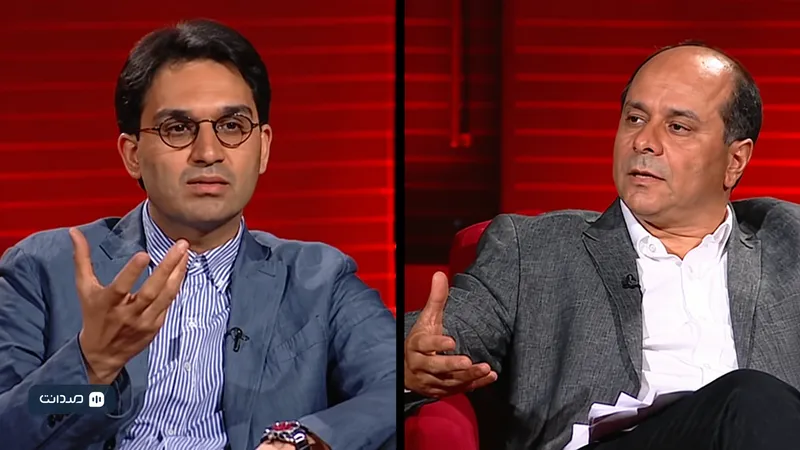
Ebrahim Soltani is an Iranian physician, political science researcher, and professor of political theory. He is the former editor-in-chief of Kian Monthly and a translator of philosophy of religion texts, whose research focuses on religion and politics in the Middle East and secularism.
Ebrahim Soltani is an Iranian physician, political science researcher, and professor of political theory. He initially studied medicine and graduated from Iran University of Medical Sciences, but later shifted his academic path toward political science, political theory, and the relationship between religion and politics. He then studied at Syracuse University, where he earned his master's and doctoral degrees in political science. His page at Eastern Michigan University also introduces him as an associate professor of political science, whose areas of work are comparative and international politics and political theory.
In Iran's intellectual sphere, Soltani is best known for his association with Kian Monthly. He served as the editor-in-chief of this journal from 1998 to 2000; a journal that, in the 1990s, was one of the most important platforms for discussions on religious intellectualism, philosophy of religion, religious reform, new theology, and the relationship between religion and democracy. His academic profile also states that he was the editor-in-chief of Kian and that his research primarily focuses on religion and politics in the Middle East, secularism, and immigration.
Soltani's significance lies in bridging two domains: on one hand, the discussions of philosophy of religion and new theology in Iran, and on the other, political theory and studies of religion and politics in the American academic environment. He has also played a role in translating and introducing philosophy of religion texts into Persian and, along with Arash Naraghi, who also wrote under the name Ahmad Naraghi at the time, has translated several important works into Persian.
Philosophical Theology is a collection of articles in the field of philosophy of religion and philosophical theology. This book was significant in the intellectual atmosphere of 1990s Iran because it introduced the Persian-speaking audience to classic and new questions in the philosophy of religion; questions about the existence of God, the rationality of faith, the problem of evil, the relationship between religion and ethics, and the possibility of a philosophical defense of religious belief. The details of existing publications also record this book as translated by Ebrahim Soltani and Ahmad Naraghi and published by Serat Publishing.
Bibliography
Writings and transcribed lectures1 title
Articles and research in the fields of religion and politics, secularism, political theory, and the Middle East
Translations2 titles
Philosophical Theology
Reason and Religious Belief: An Introduction to the Philosophy of Religion