Psychology
Why Were Abdolkarim Soroush's Ideas So Appealing to the Youth for a Decade?
The appeal of Abdolkarim Soroush's thought for young people over the course of a decade was rooted in the complexity, novelty, uncertainty, and provocative tension of theories such as 'The Theoretical Contraction and Expansion of the Sharia,' which transformed religion into a human possibility.
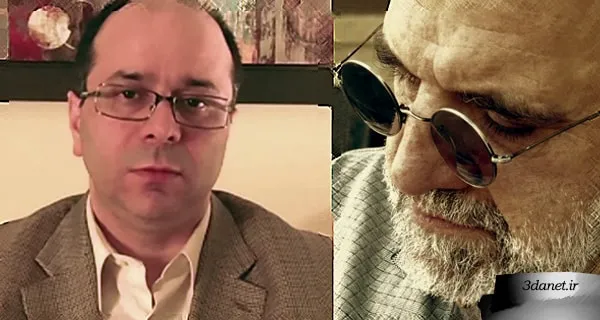
Abdolkarim Soroush was, for at least a decade, the most creative, controversial, and appealing Iranian intellectual. This appealing creativity blossomed with the publication of the series of articles "The Theoretical Contraction and Expansion of the Sharia" in 1988, and with the publication of the important article "The Expansion of the Prophetic Experience" in 1997, it reached its peak in the dust of the tumultuous era after the second of Khordad, 1376, but was less noticed. In this short note, I will try, with the help of some research in the realm of "the psychology of appeal," to answer the question of why the ideas of this intellectual were appealing to me, and to many of my friends. My answer to this question is an answer based on personal experiences, formulated within psychological concepts. It is clear that this is not the only way to answer such a question, and for example, the "appeal of phenomena" can be subject to sociological analysis and explanation.
An appealing intellectual arouses the curiosity of their audience, influences their reason and emotion, and transforms their patterns of thought and behavior. Which characteristics give the thoughts of an intellectual such power? Psychological research has shown that we humans find a phenomenon appealing when it possesses at least four distinguishing characteristics: complexity, novelty, uncertainty, and conflict creation. We must not forget that these characteristics are relative in the deepest possible sense. That is, they are born in the interaction between the appealing phenomenon and the individual who finds that phenomenon appealing. In other words, a phenomenon that, within the framework of individual "A's" intellectual horizon, is considered complex, novel, ambiguity-creating/certainty-dissolving, and conflict-creating, may appear simple, outdated, clear, and devoid of conflict in relation to the intellectual system of individual "B." Another simple but important point is that a phenomenon or idea that is complex, novel, ambiguity-creating, and conflict-creating today may not play such a role in the future. I pass over these preliminary considerations and try to explain why the thoughts and ideas of Abdolkarim Soroush, in the years that, compared to a not-so-distant future, resembled the calm before the storm—that is, between 1988 and 1997—were, for me and many of my friends, complex, novel, certainty-dissolving, conflict-creating, and, in a word, appealing.
Soroush's theological ideas and theories possessed an appeal-creating "complexity." A simple definition of complexity can be offered: compared to simple phenomena, complex phenomena, including ideas, have more elements and components; these elements and components are diverse; and because of these two characteristics (multiplicity and diversity), bringing them together into a coherent system is a difficult task. "The Theoretical Contraction and Expansion of the Sharia" was, in our eyes, a complex theory: this theory sought, by bringing into play the concepts and theories of the philosophy of science, philosophy of religion, philosophy of language, and hermeneutics, to examine the relationship between religious knowledge and non-religious knowledge, and by relying on a set of philosophical-historical arguments, to convince its audience that religious knowledge is a human and evolving knowledge. The discussion of the theory escalated, and its proponents and opponents wrote articles, among other things, in the field of the philosophy of logic. It was even deemed necessary to compile the scattered arguments and claims in the multiple articles of "Contraction and Expansion" into a neat and tidy summary: "The Quintessence of the Theoretical Contraction and Expansion of the Sharia."
Soroush's theological ideas and theories were "novel" and fresh. "Novel" is a slippery concept. But by placing this concept at the center of a network of related concepts, one might perhaps grasp, to some extent, the complex meaning of this seemingly simple concept. It seems that novelty is akin to concepts such as unpredictability and question-provoking. Whatever Soroush's theories were, they were not unpredictable and question-provoking. "Contraction and Expansion" was unpredictable and question-provoking not only for us, who were young students reading Soroush's works from afar in those days, but also, as I later heard and witnessed, for his close friends and professional audience. It was at the station of "Contraction and Expansion" that Soroush disembarked from the train of the revolution.
Soroush's religiological ideas and theories were "ambiguity-creating and certainty-destroying." The ambiguity-creating and certainty-destroying nature of a theory can, of course, stem from the complexity and novelty of that theory. But in my view, the ambiguity-creating and certainty-destroying quality of Soroush's theories was, more than anything else, the result of the incessant skepticism and desacralization woven into the very fabric of his view of religion. In "Contraction and Expansion," "The Ethics of the Gods," and "The Essential and the Accidental in Religion," he had argued that religious knowledge, religious ethics, and jurisprudence are human to the bone. By this point alone, he had traversed a long and arduous path. Yet he did not stop there, and in the turbulent course of his intellectual evolution, he arrived at the "Expansion of the Prophetic Experience," arguing that the prophetic experience itself was also a human and expanding experience. His arguments were, for us, fresh, ambiguity-creating, certainty-destroying, and desacralizing. In Charles Taylor's terms, we were experiencing the third and deepest type of secularity. In his book "A Secular Age," Taylor distinguishes three types of secularity. More precisely, he speaks of three models for understanding the secular. In the first model, which Taylor calls secularity one, the secularization of the world is considered as the expulsion of religion from public spheres such as politics, science, and economics. In the second model, which Taylor calls secularity two, the secularization of the world is seen as synonymous with the decline of religious beliefs and practices. The common feature of these two prevalent interpretations of the phenomenon of secularization is that both see secularization as accompanied by the absence of religion, from public spheres and/or from private life. Taylor, however, believes that a third model can also be offered for understanding and interpreting this phenomenon: secularity three. In a secular society, according to this model, belief in God transforms from an uncontestable belief into one option among existing options; an option that, in most cases, does not even seem to be the most acceptable one available. In this way, secularity is not merely the decline of religious beliefs and practices, but a fundamental transformation in the conditions and premises of belief. Secularity in this sense is a transformation of the context and backdrop in which our moral, spiritual, and religious experience takes place. In the secular condition, religiosity increasingly becomes a concern and preoccupation at the level of personal beliefs; religiosity becomes an option among other options that individuals can choose or abandon. Thus, by turning religion into a "possibility," the secular condition recognizes the individuation and individuality of the choosing human being, and precisely for this reason, makes religiosity more difficult and, of course, more human. At a time when the political system born of the Islamic Revolution was striving to turn religion into the only available option, Soroush, by emphasizing the human dimensions of religion, showed us that religion is merely "one human possibility" among the vast array of other possibilities open to humanity. And I cannot leave unsaid how liberating this meticulous, analytical, desacralizing, and secular view of religion was for us.
Soroush's religiological ideas and theories were "conflict-creating." From my perspective, Soroush's theories were, more than anything else, formulations of the conflicts he himself experienced as a deeply religious and practicing human being. He was raised in a traditional family and school, migrated to and studied in a modern society, helped consolidate a religious government as a young and creative theorist, and during the first decade of this religious government's life, saw with his own eyes how, as Marx said, "all that is solid melts into air, all that is holy is profaned." Abdolkarim Soroush's intellectual trajectory from "Masked Dogmatism" to "The Theoretical Contraction and Expansion of the Sharia" and "The Expansion of the Prophetic Experience" is the historical and indisputable testimony to this very "uninterrupted disturbance, endless turmoil, and uncertainty." He not only formulated the endless conflicts within himself, but also gave form, meaning, and intensity to the inner conflicts of us, his young readers, and added to our wonder, fear, and passion. Conflict was both a sign of liberation and a path to liberation.
.
.
Source: Ebrahim Soltani | Special Issue for Soroush's Birthday | 2010
.
.

Discussion1 comments
با نگاهی دیگر میشود گفت همانطور که فیلم مارمولک عجیب شهره شد, سروش جدی گرفته شد... ما گادامر خوانده بودیم و باهمان نگاه به دین چشم دوخته بودیم, و سروش جرات به خرج داد و نگاه مارا در قالب کلمات ریخت... مردی از سیستم, از تابو و توتم جهانمان حرف زد... و این جالب بود