Foreign thinker
Federico Fellini
Federico FelliniFilmmaking, screenwriting, and cinemaItalian1920–1993
Cinema is a way of expressing what cannot be said with words.

Life and Thought
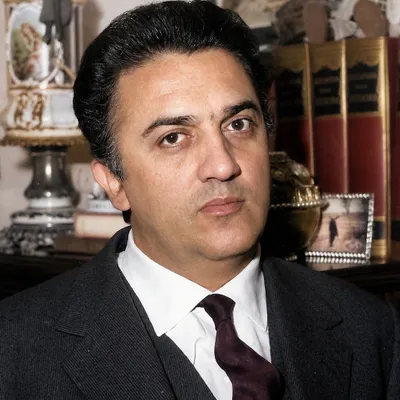
Federico Fellini was an Italian filmmaker and screenwriter and one of the greatest directors in cinema history. With works such as «La Strada», «Nights of Cabiria», «La Dolce Vita», «8½», and «Amarcord», he became known for his imaginative style, anthropological outlook, and fusion of reality and dream.
Federico Fellini was born in 1920 in Rimini, Italy. In his youth, he moved to Rome and began his career through journalism, writing, and work in the film industry. In the 1940s, Fellini collaborated with Italian Neorealism as a screenwriter and helped write the screenplay for Roberto Rossellini’s «Rome, Open City» (1945).
Fellini’s first directorial experiences took shape in the 1950s. He gradually moved away from social Neorealism and developed his own personal style, in which memories, dreams, imagination, humor, and the inner experiences of human beings merged. «La Strada» (1954) won the Academy Award for Best Foreign Language Film and brought him international renown.
Among Fellini’s most important works are «Nights of Cabiria» (1957), «La Dolce Vita» (1960), «8½» (1963), «Juliet of the Spirits» (1965), «Amarcord» (1973), and «And the Ship Sails On» (1983). «La Dolce Vita», with its critique of consumerist life and the crisis of meaning in modern humanity, and «8½», with its treatment of the artist’s crisis of creativity and identity, are regarded as among the most influential films of twentieth-century cinema.
Fellini’s cinema often erased the boundary between reality and fantasy and, through exaggerated characters, symbolic images, and personal narratives, addressed subjects such as loneliness, desire, memory, fame, death, and the search for meaning. He turned his personal experiences and childhood memories into artistic material for exploring the human condition.
Throughout his career, Fellini received numerous awards, including four Academy Awards for Best Foreign Language Film. He died in Rome in 1993 and remains one of the most important and influential figures in the history of world cinema.