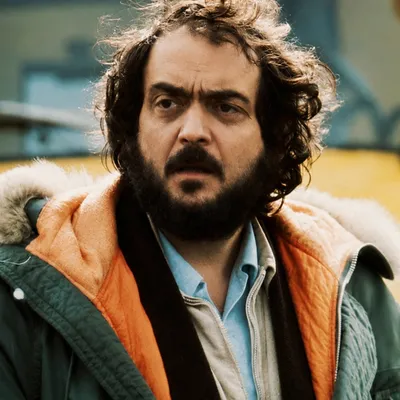
Foreign thinker
Stanley Kubrick
Stanley KubrickFilmmaking, directing, and screenwritingAmerican1928–1999
The closer a film gets to human emotions and the unconscious, the more it becomes art.
In their times
Open in the Timeline of ThoughtLife and Thought
Stanley Kubrick was an American filmmaker, screenwriter, and producer and one of the most influential directors in cinema history. His works are known for their visual precision, technical innovation, and engagement with themes such as violence, power, war, anthropology, and the crisis of meaning in modern humanity.
Stanley Kubrick was born in New York in 1928. As a teenager, he became interested in photography and worked as a photographer for Look magazine. This visual experience laid an important foundation for the precise vision and distinctive compositions that he later developed in cinema. After making several short and documentary films, Kubrick entered professional filmmaking.
His first feature films, such as «Fear and Desire» (1953) and «Killer’s Kiss» (1955), showed his effort to find a personal cinematic language. He drew the attention of critics with «The Killing» (1956) and then «Paths of Glory» (1957). «Paths of Glory», with its critical view of war and structures of power, is regarded as one of his first major works.
Kubrick went on to make a series of enduring works of world cinema. «Spartacus» (1960), «Lolita» (1962), «Dr. Strangelove» (1964), «2001: A Space Odyssey» (1968), «A Clockwork Orange» (1971), «The Shining» (1980), «Full Metal Jacket» (1987), and «Eyes Wide Shut» (1999) are among his most important films.
«2001: A Space Odyssey» is one of the turning points in the history of science-fiction cinema. By addressing human evolution, artificial intelligence, and humanity’s place in the cosmos, it raises profound philosophical questions. «A Clockwork Orange», through its examination of violence, free will, and social control, also became one of the most controversial cinematic works of the twentieth century.
Kubrick was renowned for his obsession with detail, extensive research before making a film, innovative use of technology, and meticulous control over every aspect of production. His cinema often engages with questions about human nature, the relationship between the individual and society, violence, power, and the limits of human knowledge.
He spent most of his professional life in England and died in 1999, shortly after completing «Eyes Wide Shut». Kubrick remains one of the most important and influential filmmakers in cinema history.
Sedanet articles about Stanley Kubrick