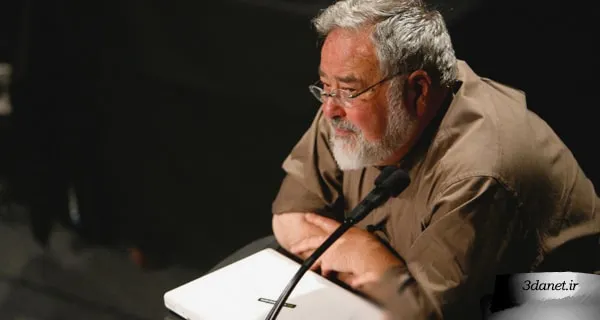
Foreign thinker
George Lakoff
George LakoffCognitive LinguisticsAmerican
Frames are mental structures that shape the way we see the world.
Life and Thought
George Lakoff is a cognitive linguist and professor emeritus at the University of California, Berkeley. He is one of the founders of conceptual metaphor theory and a key figure in proposing the idea of the 'embodied mind.' His works have demonstrated that metaphor, framing, and bodily experience play a fundamental role in shaping language, thought, ethics, and politics.
George Philip Lakoff was born on May 24, 1941, in Bayonne, New Jersey. He studied linguistics and cognitive science and was a professor of linguistics at the University of California, Berkeley, from 1972 until his retirement in 2016. Early in his career, Lakoff engaged with generative grammar and Chomskyan linguistics, but he later became one of the central figures of cognitive linguistics.
Lakoff's primary fame began with the book 'Metaphors We Live By,' which he co-authored with Mark Johnson and published in 1980. In this book, Lakoff and Johnson argued that metaphor is not merely a linguistic flourish or a literary device, but a conceptual structure that shapes our everyday thought and action. Their famous example is that we often understand 'argument' through the metaphor of 'war'; hence, we say someone defended their position, targeted an argument, or lost a debate.
In his later works, including 'Women, Fire, and Dangerous Things,' 'Philosophy in the Flesh,' and 'Where Mathematics Comes From?', Lakoff developed the theory of the embodied mind. According to this view, human abstract concepts rely on sensory, motor, emotional, and bodily experiences, and human rationality cannot be understood apart from the body, brain, language, and social lifeworld. This approach has had a broad impact on linguistics, philosophy of mind, cognitive science, metaphor theory, and meaning studies.
Lakoff also applied his theories to the realm of politics and public communication. In books like 'Moral Politics' and 'Don't Think of an Elephant!', he showed that political conflicts are not just about data and policies, but also about the 'frames' and metaphors that make reality comprehensible to people. In his analysis of American politics, he used the two metaphorical models of the 'strict father' and the 'nurturant parent' to explain the difference between conservative and progressive worldviews.