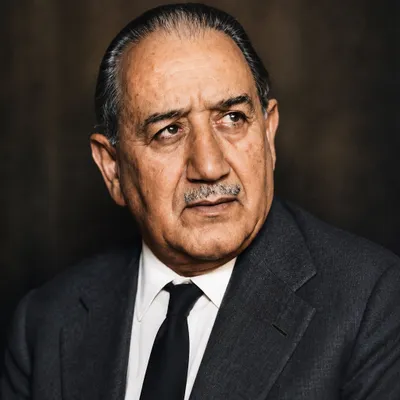
Foreign thinker
Ignazio Silone
Ignazio SiloneLiterature, Democratic Socialism, and the Critique of TotalitarianismItalian1900–1978

Life and Thought
Ignazio Silone, the pen name of Secondino Tranquilli, was an Italian writer, intellectual, and political activist whose experience of fighting fascism and breaking with Stalinist communism played a fundamental role in his works. Novels such as Fontamara, Bread and Wine, and The Seed Beneath the Snow, along with his political writings and autobiographical works, focus on individual freedom, social justice, the dignity of the underprivileged, and resistance to totalitarianism.
Ignazio Silone, the pen name of Secondino Tranquilli, was born on 1 May 1900 in Pescina, in the Abruzzo region of Italy. The devastating Marsica earthquake of 1915 left him homeless and orphaned as an adolescent; this experience, together with witnessing the harsh lives of the rural poor and the underprivileged of his birthplace, had a profound influence on the formation of his social sensibility and, later, his literary world. He did not continue his formal education and went to Rome as a young man, where he became politically active in the socialist movement.
Silone was one of the founders of the Italian Communist Party in 1921 and engaged in clandestine political activity during the years of fascist rule. Gradually, however, due to his opposition to Stalinism and the direction of the Comintern, he distanced himself from the Communist Party and broke with it at the beginning of the 1930s. His stay in Switzerland and this political rupture marked a turning point in his life: party activity increasingly gave way to literature and reflection on the relationship between freedom, justice, ethics, and political power. He later advocated a democratic, humanist socialism imbued with ethical and Christian elements.
His first major novel, Fontamara, narrates the lives of the poor peasants of Abruzzo against the backdrop of the establishment of the fascist dictatorship, depicting the political and social oppression of the underprivileged. Bread and Wine and The Seed Beneath the Snow are also among his most important works, in which the conflict between revolutionary commitment, individual conscience, faith, and freedom is prominent. The School for Dictators is a political work on the origins and nature of modern dictatorships, and the collection Emergency Exit is particularly important for understanding Silone's intellectual, political, and ethical trajectory. In The Story of a Humble Christian, by centering on Pope Celestine V, he once again pursues the question of faith, poverty, conscience, and resistance to power.
Silone returned to Italy after the war and was active in socialist politics again for a time, gaining a seat in the Italian Constituent Assembly, but eventually distanced himself from party activity. Together with Nicola Chiaromonte, he founded the journal Tempo Presente, through which he defended cultural freedom and a democratic, humanist socialism. His personal experience of communism and fascism led the critique of ideological domination and the defense of the independence of individual conscience to become enduring axes of his thought and literature.
In Silone's works, politics and ethics are inseparable. His heroes are often confronted with the question of how to stand against injustice without sacrificing individual freedom and conscience to the party, ideology, or power. At the same time, the link between socialist demands for justice and values such as brotherhood, voluntary poverty, and self-sacrifice became more prominent in his later works. Silone died in Geneva on 18 August 1978 and is recognized as one of the major anti-totalitarian Italian writers of the twentieth century and a literary voice in defense of the underprivileged, freedom, and moral independence.