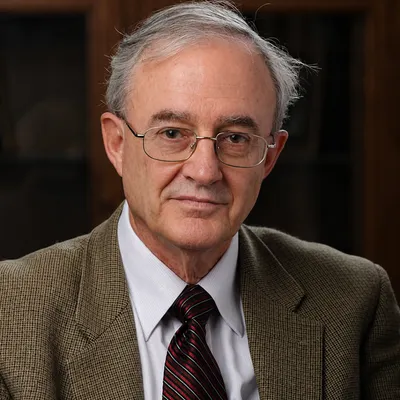
Foreign thinker
John Finnis
John FinnisPhilosophy of law and natural law theoryAustralianb. 1940


Life and Thought
John Finnis is an Australian legal philosopher and jurist, and one of the leading contemporary theorists of natural law. Through a reinterpretation of Thomas Aquinas’s moral and legal philosophy, he developed an influential account of basic human goods, practical reason, and the relationship between morality and law.
John Mitchell Finnis was born on July 28, 1940, in Adelaide, Australia. He studied law at the University of Adelaide and went to University College, Oxford, as a Rhodes Scholar. Finnis received his doctorate from the University of Oxford in 1965; his dissertation examined the concept of judicial power, with special reference to Australian constitutional law. He later became Professor of Law and Legal Philosophy at the University of Oxford and also taught at Notre Dame Law School.
Finnis is regarded as a central figure in the revival of natural law theory in contemporary legal philosophy. His most important work is Natural Law and Natural Rights, first published in 1980. In that book, he reconstructs natural law theory not merely as a collection of religious or moral precepts, but as an account of the rational reasons for action and the conditions of human flourishing.
In Finnis’s theory, life, knowledge, play, aesthetic experience, friendship, practical reasonableness, and religion are basic human goods: goods valuable in themselves and not rankable by a single quantitative measure. Practical reason, in his view, must bring these goods into harmony, while law, at its best, serves the common good and human flourishing.
In addition to philosophy of law, Finnis has written on ethics, political theory, constitutional law, human rights, intention in moral action, and the philosophical tradition of Aquinas. Works such as Fundamentals of Ethics, Moral Absolutes, and Aquinas: Moral, Political, and Legal Theory have secured his position in contemporary debates in normative ethics and legal theory.