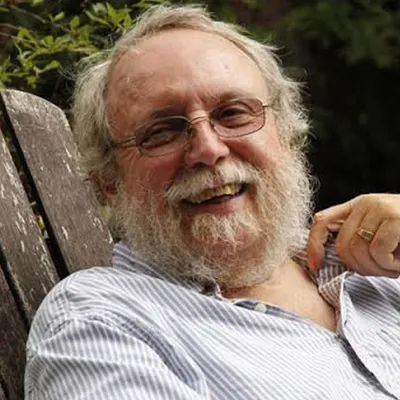
Foreign thinker
Michael Ruse
Michael RusePhilosophy of Biology, Philosophy of ScienceCanadian-British
Darwinism tells us where we came from, but it does not necessarily mean that our lives have no meaning; the compatibility of science and religion lies in understanding the limits and boundaries of each.
Life and Thought
Michael Ruse is a prominent philosopher of science and one of the pioneers of the philosophy of biology, best known for his research on Darwinian evolution and its relationship to ethics and religion. He holds a neo-Darwinian position, but unlike militant atheists, he emphasizes the possibility of compatibility between Darwinian evolution and theism. His numerous works have had a profound impact on modern debates concerning the origins of morality and the epistemology of biology.
Michael Ruse is a British-Canadian philosopher of science and one of the principal founders of the field of "philosophy of biology" in the twentieth century. He completed his education in Britain and Canada and taught and conducted research for many years at the University of Guelph and Florida State University. The main focus of his biophilosophy has been the examination of the fundamental concepts of Darwin's theory of evolution, the philosophy of evolutionary ethics, and the relationship between biological knowledge and religious beliefs.
Ruse, an atheist/agnostic, is renowned for his staunch and scientific defense of the principle of evolution and Darwinism against "Creationism" and "Intelligent Design"; so much so that he testified as an expert witness in the historic court cases challenging the teaching of creationism in American schools. However, unlike radical non-theists such as Richard Dawkins, he believes that Darwinian evolution is not contradictory to religious faith and rational theism, and that a kind of coexistence and compatibility can be established between these two worldviews.
In the field of moral philosophy, Ruse is also a proponent of "evolutionary ethics." He argues that moral sentiments and concepts of good and evil in humans are biological tools shaped through the process of natural selection to enhance cooperation and the survival of the human species; a view that sees morality not as a transcendentally plural entity, but as a functional product of biology.