Iranian thinker
Mostafa Mastoor
Mostafa MastoorContemporary Iranian fiction (philosophical-existential novels and short stories)Iranianb. 1964
In their times
Open in the Timeline of ThoughtLife and Thought
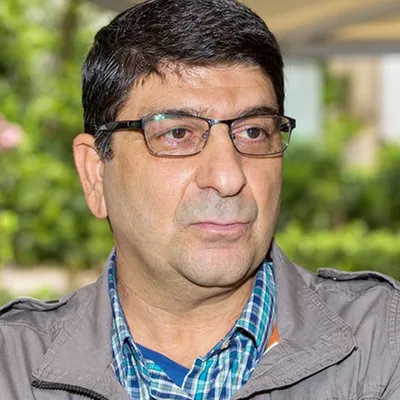
Mostafa Mastoor is an Iranian writer, translator, and researcher, and a leading figure of the "third generation" of post-revolutionary Iranian fiction, known for his simple, minimalist prose exploring existential questions, faith, doubt, and the loneliness of the modern individual. His novel "Kiss the Face of God's Moon" is his best-known work and has made him one of the most widely read contemporary Iranian authors.
Mostafa Mastoor was born in 1964 in Ahvaz and spent his childhood in the city's working-class neighborhoods. He began his university studies in civil engineering at Shahid Chamran University of Ahvaz, but his passion for literature led him to earn a master's degree in Persian language and literature from the same university.
His first short story, "Two Wet Eye-Sockets," was published in the magazine Kian; like much of his later work, it engaged with philosophical questions about the meaning of life. Mastoor went on to publish essays and interviews on world fiction — including a piece on J. D. Salinger — in journals such as "Ketab-e Mah-e Adabiyat va Falsafeh" and "Adabiyat-e Dastani," and also worked on translating and retelling stories by writers such as Raymond Carver.
His best-known work is the novel "Kiss the Face of God's Moon," the story of a man grappling with existential questions and religious doubt within a devout society; the book became one of the best-selling and most widely read novels in contemporary Iranian fiction. His other fiction includes "Pig's Bone and the Leper's Hands," "I Am Not a Sparrow," "I Am the Omniscient," "A Few Authentic Narratives," and "A Love Story Without Q, Without Sh, Without a Dot." In "Wandering Around Life," he paired short literary texts with a collection of photographs by Iranian and international photographers, bridging literature and photography.
Mastoor's work is generally described by its minimalist, simple prose and its recurring themes of love, loneliness, faith and doubt, fear of death, and the meaning or meaninglessness of life — qualities that have made him a leading figure among the third generation of post-revolutionary Iranian fiction writers. He also received a certificate of honor at the first Sadegh Hedayat short story competition.