Iranian thinker
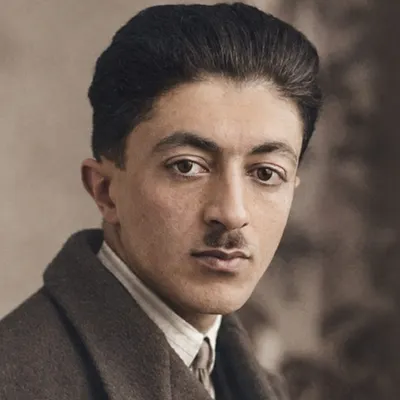
Sadegh Hedayat
Sadegh HedayatFiction writing, translation, and literary intellectualismIranian
There are wounds in life that, like a leprosy, slowly gnaw and consume the soul in solitude.
Life and Thought
Sadegh Hedayat was a prominent Iranian fiction writer, translator, and intellectual, regarded alongside Mohammad-Ali Jamalzadeh and Bozorg Alavi as one of the pioneers of modern Iranian fiction. His novella, The Blind Owl, is considered the most important and best-known work of modern Persian fiction worldwide.
Sadegh Hedayat (1903 – 1951) was a pioneering Iranian writer, translator, and researcher. Born into a prominent, cultured family in Tehran, he studied at the Dar ul-Funun and Saint Louis schools before traveling to France and Belgium to pursue dentistry and later architecture. However, his passion for literature and writing led him toward deeper studies of psychology, European literature, and Iranian studies.
Hedayat's unparalleled masterpiece is the novella The Blind Owl, first published in mimeograph in Bombay. With its modern, surrealist structure and deep psychological layers, this work created a fundamental transformation in Persian prose and fiction. Among his other important works of fiction are Buried Alive, Three Drops of Blood, The Stray Dog, Alaviyeh Khanum, and sharply critical satires such as The Pearl Cannon. Hedayat was also one of the first researchers to collect Iranian folklore and translate ancient Pahlavi texts into modern Persian.
Hedayat's thought and works were influenced by a profound confrontation with the absurdity of existence, isolation, criticism of superstition and traditional dogmatism, and a bitter, chiaroscuro view of humanity and contemporary society. He ended his life in Paris on April 9, 1951, and was buried in the Père Lachaise Cemetery, but his literary and intellectual current left a deep and lasting impact on several generations of Iranian writers and intellectuals.