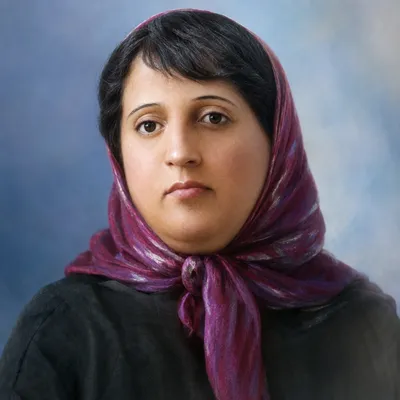
Iranian thinker
Parvin Etesami
Parvin EtesamiEthical poetry, debate composition, and didactic literatureIranian
Wherever there is affection and serenity, it stems from serenity of mind and from truth and purity.
Life and Thought
Parvin E'tesami is one of the most renowned female poets of Iran and the most famous contemporary composer of odes and debates. By blending the tradition of didactic and ethical poetry with themes of social criticism, the pursuit of justice, and compassion for the oppressed, she holds a prominent place in the history of Persian literature.
Rakhshandeh E'tesami, known as Parvin E'tesami (1907 – 1941), was born in Tabriz. She was the daughter of Yussef E'tesami (E'tesam al-Molk), one of the prominent writers and translators of the Constitutional era. From childhood, under her father's guidance and during the family's relocation to Tehran, she became acquainted with great figures such as Dehkhoda and Malek al-Sho'ara Bahar and learned Persian, Arabic, and English well.
Her only enduring work is the "Divan of Parvin E'tesami," which includes various odes, fragments, and debates. Parvin's unparalleled fame lies in her use of the "debate" form; she uses the language of objects, animals, and abstract concepts (such as the debate between garlic and onion, thread and needle, or the cricket and the onion) to express the deepest ethical concepts, wisdom, and social pathology.
Parvin's poetry revolves, above all, around ethics, an invitation to rationalism, criticism of oppression and injustice, attention to women's rights and the deprived masses, and sincere empathy with the afflicted members of society. She died of typhoid fever at the age of 34, but her works remain immortal as a brilliant example of ethical poetry and humanistic thought in Persian culture.