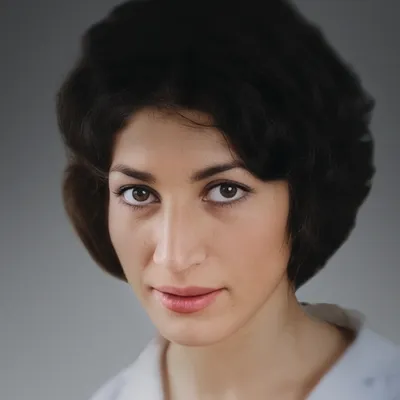
Iranian thinker
Forough Farrokhzad
Forough FarrokhzadModern Poetry, Cinema, and Social CritiqueIranian
Only voice endures.
Life and Thought
Forugh Farrokhzad was a poet, filmmaker, and one of the prominent modernists of contemporary Iranian literature. Through a structural and conceptual transformation in Persian poetry, she brought an unveiled feminine voice, a confrontation with existential concepts, and a critique of traditional relations to the literary arena. The collections Another Birth and Let Us Believe in the Beginning of the Cold Season, along with the documentary The House is Black, are considered among her highest artistic achievements.
Forugh al-Zaman Farrokhzad was born on January 5, 1935, in Tehran. She began her literary activity within the frameworks of Nimaic poetry and, with the publication of the collections Captive, The Wall, and Rebellion, emerged as a new and bold voice in contemporary literature. In addition to poetry, Forugh was also active in cinema and editing, and by making the documentary film The House is Black about the Baba Baghi leper colony in Tabriz, she created one of the masterpieces of Iran's documentary and poetic cinema.
A fundamental transformation in Forugh's thought and poetic language occurred with the collection Another Birth, where she moved beyond her early personal and emotional experiences and achieved a mature, philosophical language with deep social and existential dimensions. Her poetry is a naked narrative of the suffering of contemporary humanity, loneliness, decay, time, and the confrontation with death. She challenged the concepts of tradition, modernity, and the position of the Iranian woman with unparalleled audacity and opened new horizons in contemporary Persian poetry.
Her final poetry collection, Let Us Believe in the Beginning of the Cold Season, published after her sudden death, represents the peak of her intellectual maturity and existential thought. Forugh Farrokhzad died on February 13, 1967, at the age of 32, due to a car accident and was buried in Tehran's Zahir al-Dowleh Cemetery, but the influence of her thought and literary style on modern Iranian poetry and art remains enduring.