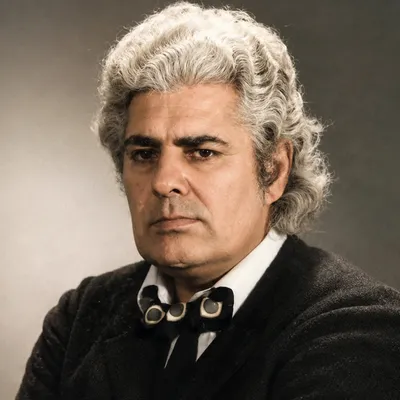
Iranian thinker
Ahmad Shamlou
Ahmad ShamlouModern poetry, literature, and translationIranian1925–2000
"I am the common pain; call out for me."
Life and Thought
Ahmad Shamlou was an Iranian poet, writer, translator, and journalist, and one of the most influential figures in modern Persian literature. By developing Persian free verse and introducing an innovative poetic language, he left a lasting impact on contemporary Iranian literature.
Ahmad Shamlou was born on December 12, 1925, in Tehran. He spent his childhood and adolescence in different cities of Iran and developed an early interest in literature and cultural and political activities. He published his first poetry collection, "Forgotten Songs", in 1947, but his major literary transformation came later with his departure from traditional poetic forms and the development of Persian free verse.
Shamlou is regarded as one of the most important poets of modern Persian literature. Influenced by Nima Yooshij and drawing on his own personal, social, and linguistic experiences, he developed a form of free poetry in which the music of language, imagery, human concerns, and social themes played central roles. Collections such as "Fresh Air", "The Mirror Garden", "Ayda in the Mirror", and "Abraham in the Fire" are among his most significant works.
Beyond poetry, Shamlou was active in translation, literary research, journalism, and the documentation of Persian popular culture. His translations of world literature and his compilation of "Ketab-e Kucheh" (The Book of the Alley), a vast work on Persian folklore and language, form important parts of his cultural legacy.
Shamlou's poetry and thought are often associated with themes such as freedom, human dignity, justice, love, and resistance to oppression. His poetic language combined literary expression, everyday speech, and the musical capacities of Persian, giving him a distinctive place in contemporary Iranian literary history.