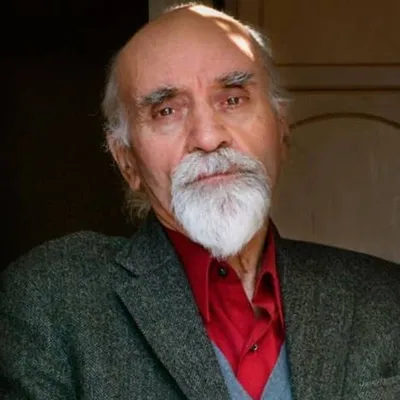
Iranian thinker
Reza Baraheni
Reza BaraheniLiterature, poetry, and literary criticismIranian1935–2022
“Language is the house of the poet’s existence.”

Life and Thought
Reza Baraheni was an Iranian poet, writer, literary critic, and literary theorist, and one of the prominent figures of contemporary Iranian literature. Through his modern poetry, novels, literary criticism, and views on language and literary structure, he had a significant influence on Iranian literary movements in recent decades.
Reza Baraheni was born in 1935 in Tabriz, Iran. He continued his academic studies in English language and literature and, after receiving his doctorate from the University of Istanbul, engaged in teaching, research, and literary activities. His social and political experiences were reflected in his literary works and criticism.
From the 1960s onward, Baraheni became known as a poet and literary critic. His book “Gold in Copper” is among his most important works of literary criticism, in which he examined modern Persian poetry, especially Nimaic poetry and later movements. His poetry collections such as “Address to the Butterflies” and novels such as “The Song of the Slain” established his place in contemporary Iranian literature.
A central aspect of Baraheni’s thought was his attention to the role of language in literary creation. He emphasized the independence of poetic language, the creative capacities of Persian, and new possibilities of literary expression. For him, literature was not merely a reflection of social reality but also a field for creating meaning and transforming human experience.