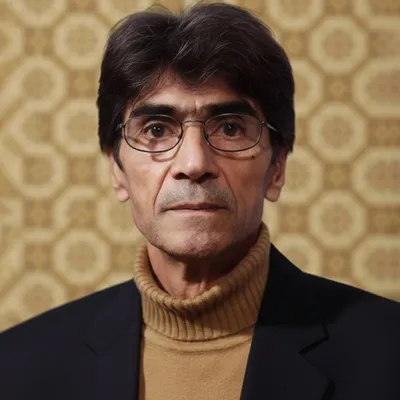
Iranian thinker
Nasser Taghvai
Nasser TaghvaiFilmmaking, screenwriting, and literatureIranianb. 1941


Life and Thought
Nasser Taghvai is an Iranian writer, filmmaker, and screenwriter, and one of the important figures of the Iranian New Wave. He is known for works such as Tranquility in the Presence of Others, Captain Khorshid, and Unruled Paper, distinguished by his precise attention to Iranian society, literature, and human experience.
Nasser Taghvai was born in 1320 in Abadan. He began his artistic career with short-story writing and documentary filmmaking, and before entering narrative cinema in earnest, he also made television series and documentaries. His interest in literature and storytelling has always been strongly present in his filmmaking.
Taghvai is regarded as one of the most important filmmakers of the Iranian New Wave. His first feature film, Tranquility in the Presence of Others (1349), was based on a story by Gholamhossein Saedi and offered a critical view of loneliness, the disintegration of human relationships, and social crises. Owing to its distinctive atmosphere and realistic perspective, the film is considered one of the important works of Iranian cinema.
Among his other notable works is Captain Khorshid (1365), a free adaptation of Ernest Hemingway’s novel To Have and Have Not, which is one of the successful examples of Iranian indigenous cinema. Drawing on the culture of southern Iran, precise characterization, and a distinctive atmosphere, the film holds a special place in the history of Iranian cinema. Long Live Iran (1368) and Unruled Paper (1380) are among his other important films.
In addition to filmmaking, Taghvai has worked in screenwriting and literature. His television series My Uncle Napoleon (1355), based on the novel by Iraj Pezeshkzad and directed by him, is regarded as one of the most enduring works of Iranian television.
Taghvai’s cinema is known for its attention to the details of everyday life, language, local culture, and the psychological complexities of characters. He is among the filmmakers who established a deep connection between literature and cinema, and his works often approach Iranians’ lived experience from a human and social perspective.