Literature
Foreword to Iran Nameh No. 39 by Dariush Shayegan on Sadegh Hedayat
In the foreword to Irannameh, Dariush Shayegan examines Sadegh Hedayat's metaphysical standing and why he appeared like a shooting star in Iran's paralysed sky. The Blind Owl is the summit of a philosophical vision of life's futility, born of the failure to bridge East and West.
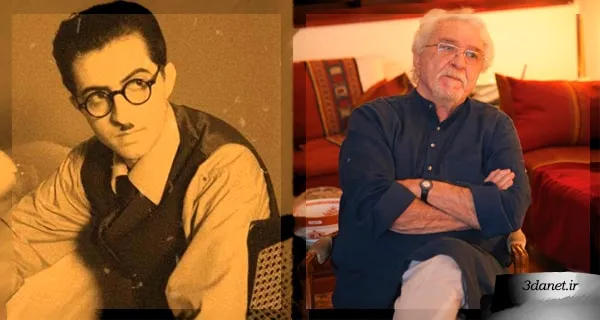
Sadegh Hedayat is without doubt the greatest fiction writer of contemporary Iran. Much has been said about him and his works, and researchers have endeavored to discover the sources of inspiration for his writings and to demonstrate, as far as possible, the influence that Western literature had on his mentality. These same scholars have pointed out the satirical and humorous aspects, and the strange and sometimes delirious facets of Hedayat's imagination, whose roots often draw, in a pathological manner, from a dark world beyond critical reason. There have also been those who have interpreted The Blind Owl in the direction of Freudian and Jungian depth psychology. Some other researchers have traced the influence of Buddhist thought, Shivaism, and Khayyamism in his writings, and finally, some have posited a kind of affinity between Hedayat on the one hand and Poe, Nerval, Rilke, and Kafka on the other. Undoubtedly, each of these researchers and interpreters has offered fresh and varied readings of these works to the devotees of Hedayat's oeuvre.
But as far as we know, one fundamental matter has not been clarified by anyone, and that is this: what is the metaphysical position of the great contemporary Iranian writer? In what layer of consciousness does Hedayat truly reside? Why does he suddenly appear like a piercing meteor in the paralyzed sky of 1930s Iran, that is, coinciding with the very period when Iranian history was awakening from a thousand-year slumber? And why, despite the difficulties of the era, does he emerge like a tall tree amidst a thicket of short saplings? In one sense, Hedayat is like a chosen essence who looks with a contemptuous gaze upon the fools, clowns, and mindless ones who have infected the world with putrefaction. With his genius, Hedayat transformed the concept of the futility of life into a kind of inner event and adventure, and his masterpiece, The Blind Owl, is in fact the apex of this philosophical vision. Hedayat's inability to weld the rift between the two worlds of East and West itself became the abundant wellspring of his exceptional work, and just as, in Jung's words, Faust took possession of Goethe's soul, The Blind Owl is also a book that has taken its author captive, spellbound. Moreover, Hedayat possesses a particular skill in using the structural elements of poetry—novel similes, metaphor, concision, and repetition—and in his symbolic and rhythmic writings, especially The Blind Owl and "Three Drops of Blood," which are reminiscent of Rilke's works, he uses the symbols of the "shadow" and the "double" in a manner rare in Iranian literature. Dr. Hillmann, who was the initiator and organizer of the "Sadegh Hedayat and Persian Literature" conference at the University of Texas at Austin, has also spared no effort in compiling the articles and book reviews for this special issue of Iran Nameh, and has collaborated with admirable precision, patience, and diligence in editing and reviewing them.
.
.
PDF file of Dariush Shayegan's foreword on Sadegh Hedayat
.
.
This foreword was published in the summer of 1992 in Iran Nameh magazine (No. 39).
.
.

Discussion2 comments
آیا میتوان گفت که دایوش شایگان اسفاده از صادق هدایت برده است؟
عکس صادق هدایت نیست