Foreign thinker
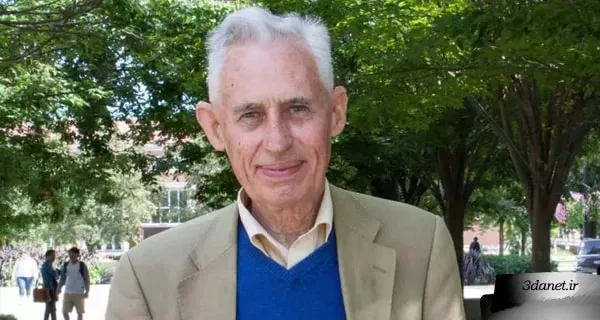
Richard Swinburne
Richard SwinburnePhilosophy of Religion and Analytic TheismBritish
By God, I mean a mind or person without a body who is eternal, omnipotent, omniscient, and perfectly good.
Life and Thought
Richard Swinburne (born 1934) is a prominent British analytic philosopher and former holder of the Nolloth Chair at the University of Oxford. He is recognized as one of the most important philosophical defenders of theism in the contemporary analytic tradition. By employing probabilistic arguments and Bayesian statistics, Swinburne has made innovative efforts to demonstrate the rationality of belief in the existence of God and the truth of Christian doctrines.
Richard Swinburne was born in 1934 in Britain. He began his higher education at the University of Oxford in Philosophy, Politics and Economics (PPE) and then the philosophy of science. After years of teaching at the Universities of Hull and Keele, Swinburne returned to the University of Oxford and held the prestigious Nolloth Chair in the Philosophy of Religion from 1985 to 2002. He is also a Fellow of the British Academy and has played a pivotal role in the revival of analytic philosophy of religion in the second half of the twentieth century.
Swinburne's intellectual fame and reputation is largely due to his famous trilogy on theism: The Coherence of Theism (1977), The Existence of God (1979), and Faith and Reason (1981). The unique feature of his methodology is the use of the principles of inductive logic and Bayesian probability to evaluate cosmological, teleological, and religious experience evidence. He claims that although there is no conclusive proof for the existence of God, the totality of cosmological evidence together makes the hypothesis of God's existence more probable than His non-existence.
Another part of Swinburne's research is devoted to the philosophical explanation of the problem of evil, consciousness, and the defense of mind-body dualism. In books such as The Problem of Evil and The Evolution of the Soul, he claims that the possibility of natural and moral evils is a necessary requirement for the existence of human free will and the possibility of his moral and spiritual growth. Swinburne's works are considered classic and reference texts in analytic philosophy of religion.