Foreign thinker
Simon Critchley
Simon CritchleyContinental Philosophy, Ethics and Political PhilosophyEnglish
Philosophy begins in disappointment.
Life and Thought
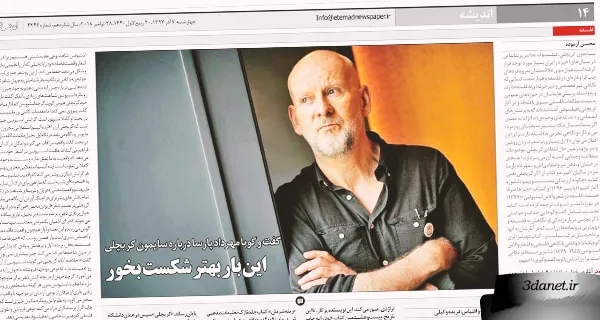
Simon Critchley is an English philosopher born in 1960 and a professor of philosophy at the New School for Social Research in New York. He is one of the well-known figures of contemporary continental philosophy, and his works address ethics, politics, phenomenology, literature, death, humor, and tragedy. His importance lies in connecting traditions such as Levinas, Derrida, and Heidegger with more general questions about ethical commitment, political resistance, and everyday life.
Simon Critchley, full name Simon James Critchley, was born in 1960 in England. He studied philosophy at the University of Essex and later also studied at the University of Nice in France. Critchley has been teaching at the New School for Social Research in New York since 2004 and holds the Hans Jonas Professor of Philosophy title at this institution.
His main area of work is contemporary continental philosophy, particularly in relation to phenomenology, ethics, political theory, literature, and psychoanalysis. In his works, Critchley engages with thinkers such as Emmanuel Levinas, Jacques Derrida, Martin Heidegger, Maurice Blanchot, Lacan, and Hegel, and has sought to reformulate the relationship between ethics and politics.
Among his important works are Very Little... Almost Nothing, Infinitely Demanding, The Book of Dead Philosophers, The Faith of the Faithless, On Humour, Things Merely Are, and writings on Greek tragedy, Shakespeare, football, David Bowie, and suicide. The range of his subjects shows that for Critchley, philosophy is not merely an academic discussion, but a way of thinking about death, commitment, humor, suffering, politics, and public culture.
In Critchley's thought, ethics is linked to the experience of responsibility before the other, and politics emerges from the heart of this very ethical demand. Against pessimism, nihilism, and political passivity, he emphasizes the possibility of commitment, resistance, and forms of collective action, although he does not consider this possibility simple, definitive, or without contradiction.