Foreign thinker
Sophie Leroy
Sophie LeroyOrganizational psychology and management; research on attention, focus, and workplace interruptionsFrench
Life and Thought
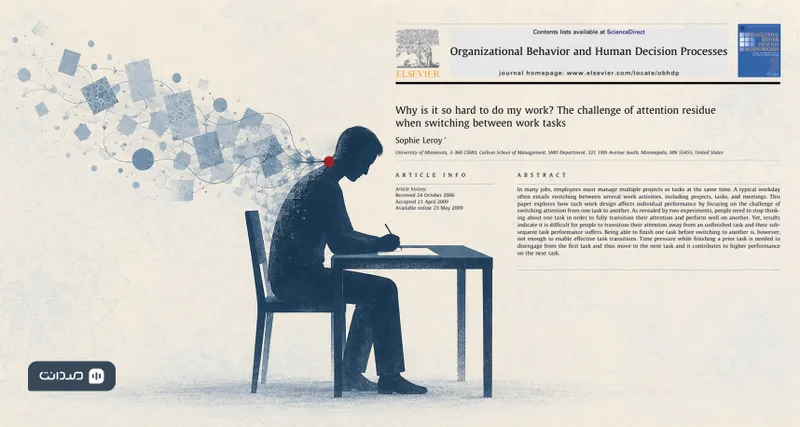
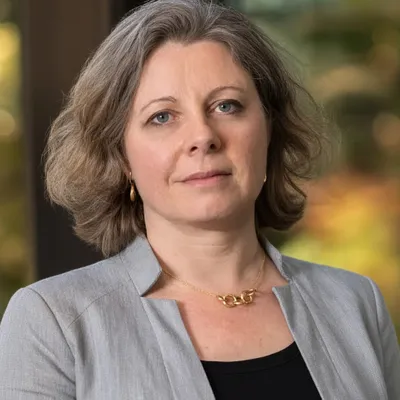
Sophie Leroy is Professor of Management and Dean of the School of Business at the University of Washington Bothell, who formulated the concept of "Attention Residue" in 2009 — the phenomenon whereby the mind remains partly engaged with a prior task after switching to a new one, undermining focus on the task at hand. Her research, published in leading journals such as Organization Science and Academy of Management Annals, has shaped models for managing interruptions and task resumption.
Sophie Leroy began her studies in France, earning her undergraduate and master's degrees in management from HEC Paris, during which she also studied as an exchange student at Columbia Business School in New York. She then pursued doctoral studies in the United States, earning her Ph.D. in Organizational Behavior from NYU's Stern School of Business in 2007.
Before joining the University of Washington Bothell in 2014, Leroy was a faculty member at the Carlson School of Management, University of Minnesota. Her most significant intellectual contribution is the concept of "Attention Residue," introduced in a 2009 paper in Organizational Behavior and Human Decision Processes. The concept explains why, after switching from an unfinished task to a new one, part of a person's attention remains tied to the earlier task — diminishing performance on the new one.
Building on this line of research, Leroy and her collaborators — publishing in journals including Organization Science and Academy of Management Annals — examined the mechanics of interruptions and task-switching, and strategies such as "ready-to-resume" plans that mitigate the negative effects of interruptions. Her work has also examined the interruption landscape of remote work during the COVID-19 pandemic.
Now Professor of Management and Dean of the School of Business at UW Bothell, Leroy teaches courses in leadership, managing high-performance teams, global management, and ethical decision-making, and has received numerous awards, including UW Bothell's Distinguished Research Award in 2024.