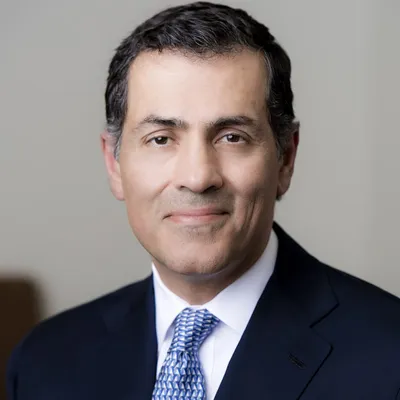
Iranian thinker
Vali Nasr
Vali NasrInternational Relations and Islamic StudiesIranian-American
Life and Thought
Vali Nasr is an Islamicist, professor of international relations, and a leading analyst of Middle Eastern and Islamic world affairs. He holds the Majid Khadduri Chair at the Johns Hopkins University School of Advanced International Studies and has addressed the relationship between Islam, politics, the state, Shiism, and social change in the Muslim world in his works.
Seyyed Vali Reza Nasr, known as Vali Nasr, was born in 1960 in Tehran. He is the son of Seyyed Hossein Nasr and grew up in an intellectual environment intertwined with Islamic studies, philosophy, and Iranian culture. Nasr later studied and taught in the United States, becoming recognized as an Islamicist, university professor, and commentator on international affairs.
Nasr received his PhD from MIT and Tufts University and has taught at institutions including Stanford and the University of California, San Diego. He holds the Majid Khaddouri Chair in International Relations at the Johns Hopkins University School of Advanced International Studies, where he served as dean from 2012 to 2019. He has also been a senior fellow at the Brookings Institution and a member of the Council on Foreign Relations.
Vali Nasr's significance lies in bridging Islamic studies with comparative politics and international relations. In his works, he has addressed the role of political Islam, the state, sectarianism, Shiism, the middle class in the Muslim world, and developments in the Middle East. His major books include "The Vanguard of the Islamic Revolution: The Jama'at-i Islami of Pakistan," "Mawdudi and the Making of Islamic Revivalism," "Islamic Leviathan: Islam and the Making of State Power," "The Shia Revival," and "Forces of Fortune."
Nasr is also a well-known figure in the public and policy arenas. He served as an advisor to Richard Holbrooke during the Barack Obama administration and was previously among Obama's advisors during the 2008 presidential election. His presence in American foreign policy debates and his analysis of Middle Eastern developments have solidified his position as one of the most influential commentators on Islamic world affairs.