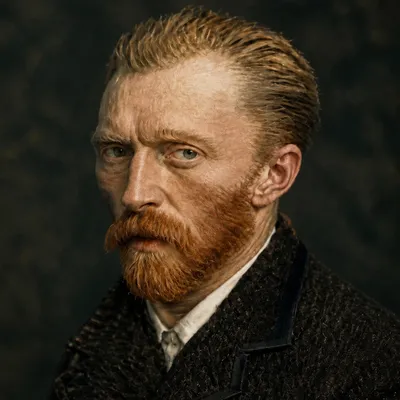
“What would life be if we had no courage to attempt anything?”

Life and Thought
Vincent van Gogh was a Dutch painter and one of the leading figures of Post-Impressionism. The vivid colours, energetic brushwork, and emotional expression of his work had a profound influence on modern art and later Expressionist movements.
Vincent van Gogh was born on 30 March 1853 in Zundert, the Netherlands. Before deciding, at about the age of twenty-seven, to become an artist, he had worked in the art trade, as a teacher, and as a preacher. His early years in the Netherlands focused on the lives of labourers and peasants; The Potato Eaters is one of the best-known works from this period.
His stay in Paris from 1886 deepened his engagement with Impressionism, Post-Impressionism, and Japanese prints, leading to a brighter and bolder use of colour. In Arles, from 1888, he produced some of his most celebrated works, including the Sunflowers series, The Bedroom in Arles, and landscapes of southern France. He later spent time at the asylum in Saint-Rémy, where he painted The Starry Night.
Van Gogh worked in Auvers-sur-Oise during the final months of his life and died there on 29 July 1890. In a career of little more than a decade, he produced over two thousand works, including paintings, drawings, and works on paper. His paintings render personal experience and the emotional force of nature through intense colour, undulating forms, and visible brushstrokes.