Foreign thinker
Jean-François Lyotard
Jean-François LyotardPostmodern PhilosophyFrench
"Simplifying to the extreme, I define postmodern as incredulity toward metanarratives."
Life and Thought
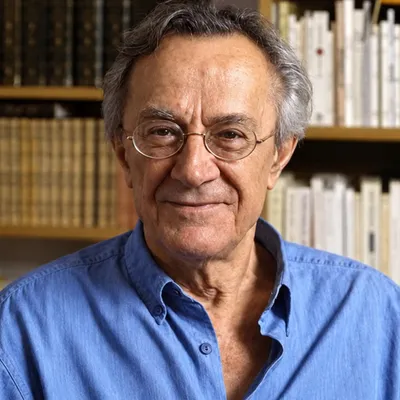
Jean-François Lyotard was a French philosopher and one of the influential figures of postmodern thought. His fame primarily rests on the book The Postmodern Condition, a work in which he defined postmodernism as "incredulity toward metanarratives" and initiated a significant discussion about knowledge, legitimacy, and language in the contemporary world.
Jean-François Lyotard was born in 1924 in Versailles, France, and died in Paris in 1998. He studied philosophy and taught for many years in universities and intellectual institutions in France and other countries. At the beginning of his intellectual career, Lyotard was engaged with leftist politics and Marxist critique, but he later distanced himself from grand emancipatory narratives and turned to the question of the multiplicity of languages, judgments, and diverse forms of experience.
Lyotard's global renown is most closely tied to the book The Postmodern Condition: A Report on Knowledge. Published in 1979, this book offers an analysis of the transformation of knowledge's status in advanced societies and shows that in the new world, knowledge is increasingly measured by criteria of efficiency, technology, power, and information exchange. His famous definition of the postmodern, namely "incredulity toward metanarratives," refers to the collapse of the grand narratives that previously legitimized science, history, emancipation, progress, or rationality.
Among his other important works, one can mention The Differend and The Inhuman. In The Differend, Lyotard addresses situations where a suffering or a claim cannot be expressed and adjudicated within the language of the dominant system; it is from this point that the issue of justice, language, and the inability of certain voices to be heard becomes prominent in his thought. Lyotard's thinking had a widespread impact on the philosophy of language, aesthetics, art theory, the philosophy of science, and cultural studies, and his name became linked to one of the principal formulations of postmodern thought in the twentieth century.